
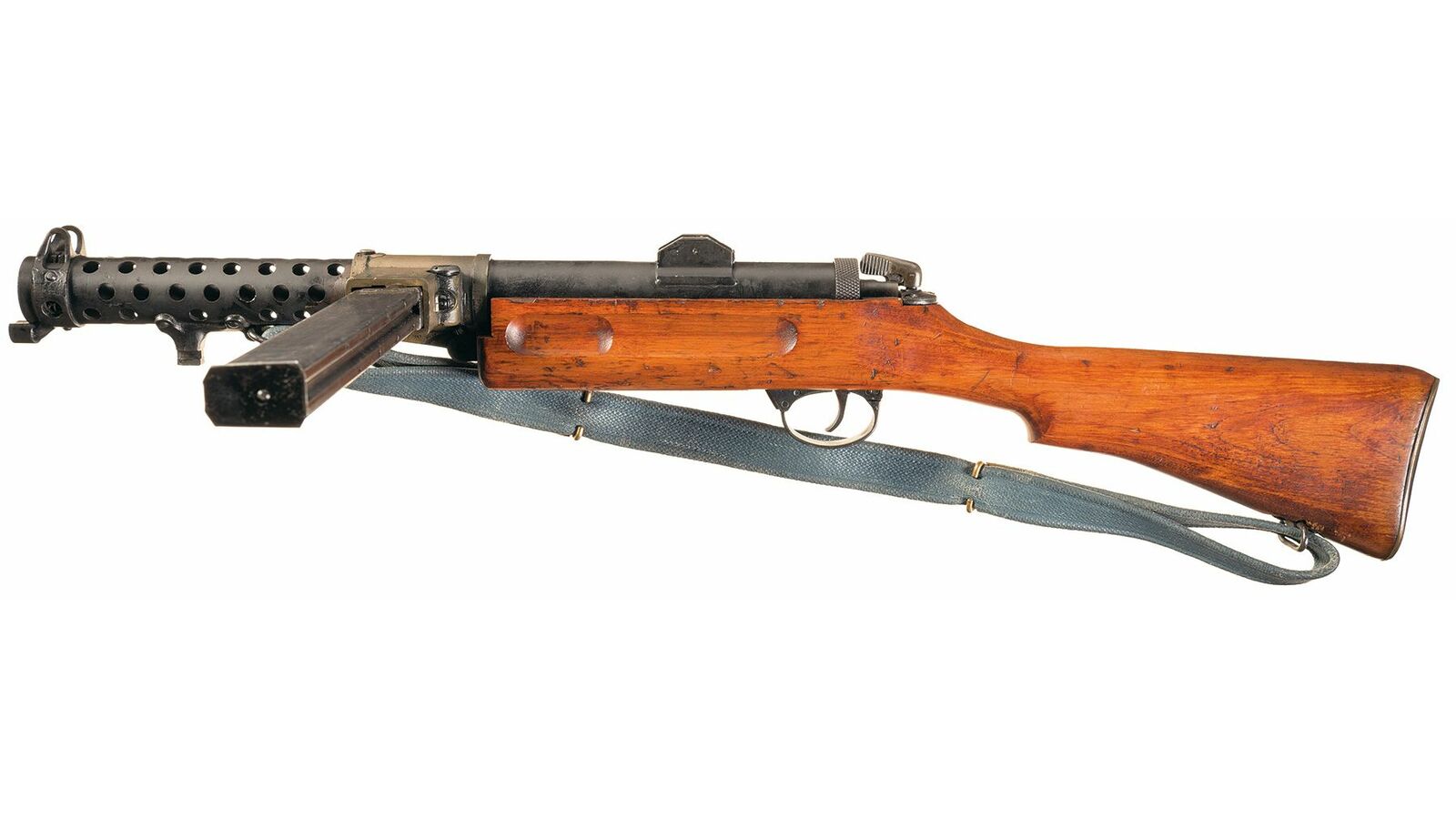
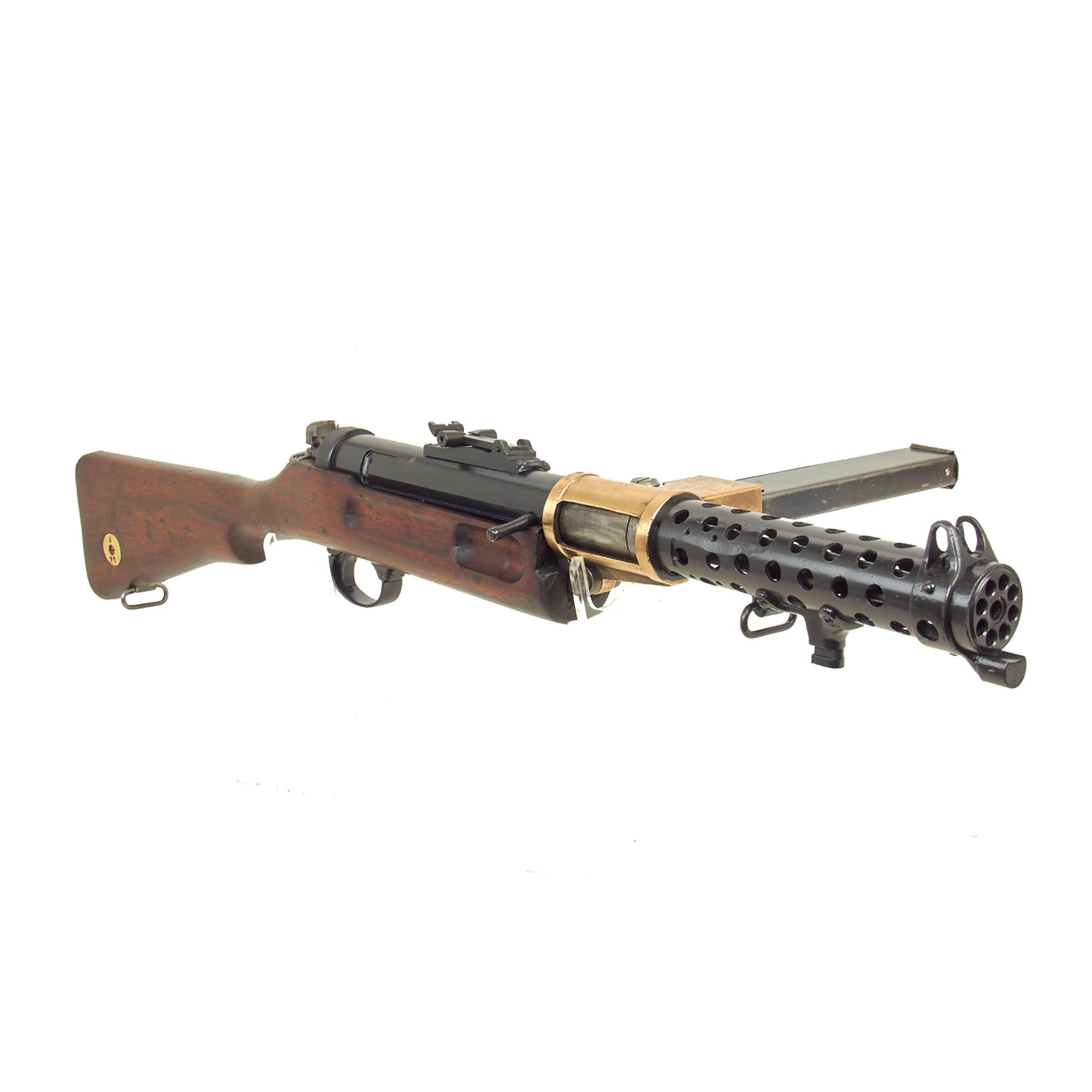
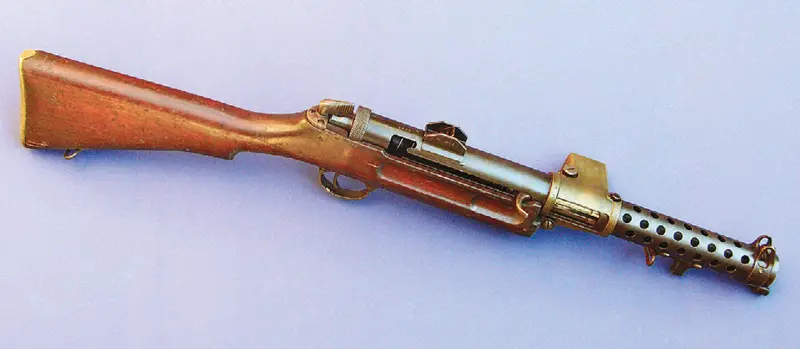
Photo source: cdn.rockislandauction.com, ima-usa.com, swatmag.com
Lanchester Mk. II
Lanchester Mk. II submachine gun in .45 inch: specs, history, ammo and Colorado legal notes from the CO Boots gun library. Want hands-on time with a firearm like the Lanchester Mk. II? Our certified instructors cover safe handling, operation and marksmanship in every firearms training class.
| Library ID | GT-740 |
|---|---|
| Manufacturer | Lanchester |
| Type | Submachine Gun |
| Caliber | .45 inch |
| Action | Submachine gun |
| Barrel Length | The barrel length of the Lanchester Mk. II is 10.5 inches (267 mm). |
| Country of Origin | United Kingdom |
| Year of Production | 1941 |
| Production Status | Discontinued |
| Typical Users | Military, Law Enforcement |
| Rating | 4.2 |
Lanchester Mk. II: Technical Specifications
The Lanchester Mk. II is a British submachine gun developed during World War II, primarily used by the British Armed Forces. It is chambered for the 9×19mm Parabellum cartridge, offering effective firepower in close-quarters combat. The overall length of the Mk. II is approximately 33.5 inches (850 mm), with a barrel length of about 10 inches (250 mm).
Weighing around 8.5 pounds (3.9 kg) when unloaded, it features a stamped steel construction that enhances durability while keeping production costs down. The Mk. II utilizes a blowback operating system and has a cyclic rate of fire of around 500 rounds per minute.
Unique engineering aspects include its top-mounted magazine, which holds 34 rounds, allowing for a low profile during firing. The Lanchester Mk. II is also notable for its simple design, facilitating ease of manufacture and maintenance, which was crucial during wartime. Overall, it exemplifies functional military design of its era.
Lanchester Mk. II: Performance Characteristics
The Lanchester Mk. II is a British submachine gun developed during World War II, primarily for use by the British Army and Home Guard. It employs a simple blowback operation and is chambered for the .45 ACP cartridge, which enhances stopping power.
Accuracy: The Lanchester has a maximum effective range of approximately 100-150 meters, with decent accuracy at close quarters, making it suitable for urban combat.
Reliability: Known for its robust construction, the Lanchester is reliable under diverse conditions. Its simpler mechanics reduce the likelihood of malfunctions.
Handling: Weighing around 9.25 lbs, it is relatively heavy but well-balanced. The stock can be folded, aiding maneuverability in confined spaces.
Rate of Fire: The Lanchester has a cyclic rate of fire around 500-600 rounds per minute, allowing for effective suppressive fire.
Overall, the Lanchester Mk. II is valued for its reliability, ease of use, and effectiveness in close-quarters combat, although its weight can be a drawback in some scenarios.
Lanchester Mk. II: Design Features
The Lanchester Mk. II is a British submachine gun designed during World War II. Its design features include a simple, robust construction primarily from stamped metal, enhancing durability and ease of mass production. The weapon has a compact, boxy shape, contributing to its ergonomic handling, with a wooden stock that allows for stability during firing.
Safety mechanisms include a manual safety catch that prevents accidental discharge, located on the right side of the receiver. The gun operates using a blowback action, which simplifies the design and reduces weight.
Aesthetically, the Lanchester Mk. II has a utilitarian look, characterized by its straight lines and functional form, devoid of unnecessary embellishments. It features a distinctive magazine well at the front, capable of holding 30-round magazines. Innovative aspects include its compatibility with the Sten magazine, allowing for logistical efficiency. Overall, the Lanchester Mk. II emphasizes practicality and reliability in combat.
Lanchester Mk. II: Historical Context
The Lanchester Mk. II was a British submachine gun developed during World War II, designed by George Lanchester and produced from 1941. Its design was influenced by the German MP 28 and reflected the need for a reliable, compact firearm for close combat. The Mk. II featured a blowback operation, a 9mm caliber, and a distinctive magazine housing.
Key milestones include its adoption in 1941 and use by British forces in various theaters, notably in the Pacific and North Africa. The Lanchester was utilized by the Royal Navy and other military branches, proving effective in urban warfare and close quarters.
Although it was eventually overshadowed by more advanced designs like the Sten and later submachine guns, the Lanchester influenced subsequent firearm design by demonstrating the viability of mass-produced submachine guns. Its production ended in 1945, but it remains a notable example of wartime innovation in small arms.
Lanchester Mk. II: User Experience
The Lanchester Mk. II, a British submachine gun from World War II, is noted for its user-friendly design and comfortable handling. Users appreciate its relatively lightweight and ergonomic shape, which allows for effective maneuverability in various combat scenarios. The weapon features a simple blowback operation that contributes to its ease of use, making it accessible even for less experienced soldiers.
Durability is another praised aspect; the Lanchester is built robustly, able to withstand harsh conditions and heavy use. However, some users report issues with the magazine system, noting occasional jamming or misfeeding, which can hinder performance in critical situations. Additionally, the open bolt design can lead to concerns about dirt accumulation affecting reliability.
Overall, the Lanchester Mk. II garners positive feedback for comfort and ease of operation, though users highlight the need for consistent maintenance to mitigate reliability issues.
Lanchester Mk. II: Ammunition Information
The Lanchester Mk. II is a British submachine gun primarily chambered for the .45 ACP (Automatic Colt Pistol) cartridge, which is known for its stopping power and manageable recoil. This caliber is compatible with various brands of ammunition, including those manufactured by Federal, Winchester, Remington, and Hornady, among others.
For optimal performance, it is recommended to use high-quality, jacketed hollow point (JHP) ammunition for self-defense and law enforcement applications, as these rounds offer better expansion and lethality. Full metal jacket (FMJ) ammunition can be used for training purposes, providing reliable feeding and function in the Lanchester Mk. II.
Additionally, subsonic .45 ACP rounds can be employed if a suppressor is fitted, allowing for quieter operation. Users should ensure that any ammunition chosen is within the specifications for use in the Lanchester Mk. II to maintain reliability and safety.
Lanchester Mk. II: Usage Tips and Best Practices
The Lanchester Mk. II submachine gun, designed for reliability, requires careful handling.
Cleaning & Maintenance:
- Clean after every use. Disassemble the weapon, and use a bore brush and solvent to clean the barrel. Wipe down the exterior with a cloth to remove moisture and dirt.
- Lubricate moving parts with a light oil, avoiding over-lubrication which can attract dirt.
- Check the magazine and feed lips for wear; replace if damaged.
Shooting Tips:
- Maintain a firm grip and stance, ensuring your body is stable to control recoil.
- Use short, controlled bursts to improve accuracy and prevent muzzle rise.
- Practice regularly to familiarize yourself with the weapon's handling and trigger response.
Common Mistakes:
- Avoid using substandard ammunition; always use the recommended type.
- Don’t neglect safety; ensure the weapon is pointed in a safe direction and your finger is off the trigger until ready to shoot.
- Skip the maintenance schedule at your own risk; regular checks ensure reliability.
Legal Considerations in Colorado
The Lanchester Mk. II is a British submachine gun produced during World War II. As a fully automatic firearm, its legal status in civilian hands varies significantly across jurisdictions. In the United States, the National Firearms Act (NFA) classifies it as a Title II weapon, meaning it is subject to strict regulations, including registration, background checks, and a $200 tax for transfers. Civilian ownership is allowed in some states, while others, such as California and New York, have outright bans on such firearms.
Military use remains legal, as the Lanchester is used primarily by military forces and collectors. Notable legal cases involving the Lanchester are scarce, but its classification under the NFA has been challenged in broader cases regarding automatic weapons. Always consult local laws, as state regulations can change frequently and may impose additional restrictions.
Lanchester Mk. II: Reviews and Ratings
User reviews for the Lanchester Mk. II generally highlight its reliability and solid construction, with many praising its performance in various shooting conditions. Reviewers consistently note that the firearm functions well with minimal jams or malfunctions, making it a dependable choice for enthusiasts. Accuracy is another recurring theme, with users reporting satisfactory precision at both short and medium ranges, though some mention that it may require adjustments for optimal performance.
Customer service experiences vary, with some users expressing satisfaction with prompt responses and helpful assistance, while others report delays or unresponsive support. Overall satisfaction tends to be high, particularly among collectors and those who appreciate its historical significance. However, a few users suggest improvements in ergonomics and weight distribution. The consensus is that the Lanchester Mk. II is a reliable and enjoyable firearm, particularly for those interested in classic military models.
Lanchester Mk. II: Appearances in Media
The Lanchester Mk. II firearm has appeared in various movies, TV shows, and video games. Here’s a brief list highlighting some notable appearances:
Movies
1. "The Imitation Game" (2014) - Features the Lanchester Mk. II during scenes depicting World War II.
2. "The Eagle Has Landed" (1976) - This war film includes British soldiers using the Lanchester.
TV Shows
1. "Band of Brothers" (2001) - The miniseries set during World War II includes scenes with British troops armed with the Lanchester.
2. "The Pacific" (2010) - Similar to "Band of Brothers," this series features various firearms from the WWII era, including the Lanchester.
Video Games
1. "Call of Duty: World at War" - The Lanchester Mk. II appears as a weapon that players can use in the game set during World War II.
2. "Hell Let Loose" - This multiplayer tactical shooter features the Lanchester Mk. II among its arsenal of WWII-era weapons.
These appearances highlight the Lanchester Mk. II's historical significance and its use as a visual and gameplay element in various media.
Related Firearms in the Library



More Submachine Gun firearmsMore Lanchester manufacturer firearmsMore 45 inch caliber firearmsMore United Kingdom country firearmsBrowse all firearms