


Photo source: cdn.rockislandauction.com, wwiiafterwwii.wordpress.com, static.wikia.nocookie.net
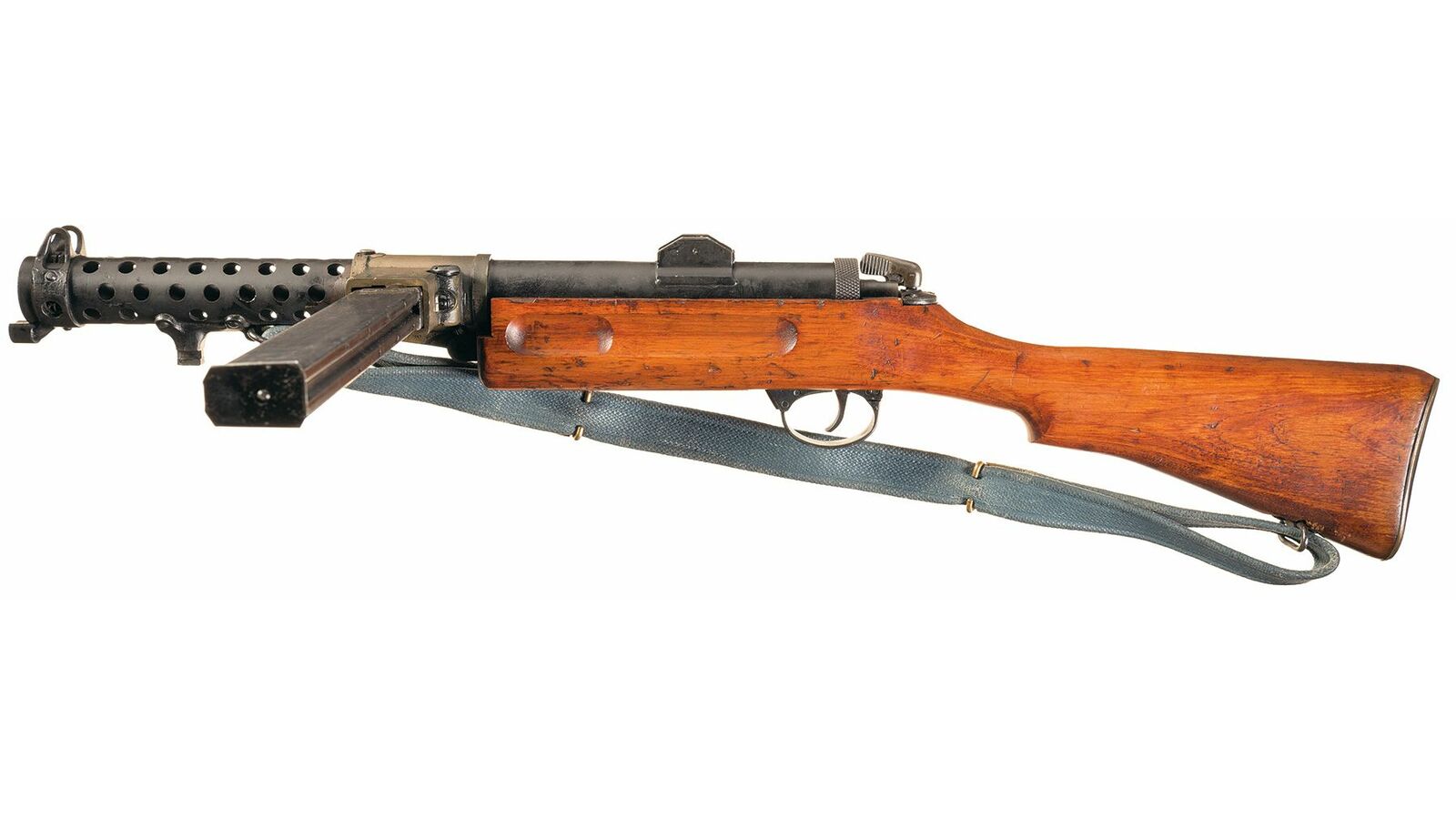
Lanchester Mk. I
Lanchester Mk. I submachine gun in .45 inch: specs, history, ammo and Colorado legal notes from the CO Boots gun library. Want hands-on time with a firearm like the Lanchester Mk. I? Our certified instructors cover safe handling, operation and marksmanship in every firearms training class.
| Library ID | GT-739 |
|---|---|
| Manufacturer | Lanchester |
| Type | Submachine Gun |
| Caliber | .45 inch |
| Action | Blowback-operated |
| Barrel Length | The barrel length of the Lanchester Mk. I is 10.5 inches (267 mm). |
| Country of Origin | United Kingdom |
| Year of Production | 1916 |
| Production Status | Discontinued |
| Typical Users | Military, Law Enforcement |
| Rating | 4.2 |
Lanchester Mk. I: Technical Specifications
The Lanchester Mk. I is a British submachine gun developed during World War II. Key specifications include:
- Caliber: .45 ACP (11.43×23mm)
- Barrel Length: Approximately 9.5 inches (240 mm)
- Weight: Around 8.5 lbs (3.9 kg) when loaded
- Overall Length: About 33.5 inches (850 mm)
Material: The Lanchester Mk. I features a combination of steel and wood. The receiver and barrel are made of steel, while the stock is often wooden.
Unique Engineering Aspects: The Lanchester operates on a blowback mechanism, utilizing a simple open bolt design. It has a high-capacity magazine, typically holding 32 rounds. The gun is known for its reliability and ease of use, with a simplistic design that allows for easy maintenance. The Lanchester also features a folding stock, making it more compact for transport and use in confined spaces. Its design was influenced by the German MP 28, reflecting a blend of British engineering and captured technology.
Lanchester Mk. I: Performance Characteristics
The Lanchester Mk. I is a British submachine gun developed in the early 1940s, primarily used during World War II. It has a unique blowback operation and fires the 9×19mm Parabellum cartridge, providing a good balance of power and control.
Accuracy: The Lanchester Mk. I exhibits respectable accuracy at typical engagement ranges (up to 100 meters). Its fixed sights, while basic, are sufficient for combat scenarios.
Reliability: Known for its robust construction, the Lanchester is generally reliable, though it can be sensitive to fouling due to its blowback design. Proper maintenance is crucial.
Handling: Weighing approximately 9.5 lbs, it can be cumbersome but is well-balanced. The wooden stock aids in comfort during use, and the magazine is easy to change.
Rate of Fire: The Lanchester has a cyclic rate of fire around 550-600 rounds per minute, allowing for effective suppression in combat.
Overall, the Lanchester Mk. I performs well under the conditions it was designed for, embodying reliability and ease of use in close-quarters combat.
Lanchester Mk. I: Design Features
The Lanchester Mk. I, a British submachine gun developed during World War II, features a robust and utilitarian design. Its ergonomic aspects include a straightforward layout with a wooden stock and front grip that provide stability and comfort during firing. The magazine is positioned in a well-balanced manner, allowing for controlled handling.
Safety mechanisms include a manual safety catch located on the right side, which prevents accidental discharge. The gun operates on a blowback system, ensuring reliability in various conditions.
Aesthetically, the Lanchester Mk. I has a simple, functional appearance characteristic of wartime firearms, with a blued finish that offers some corrosion resistance. Innovative features include its use of a detachable box magazine, compatible with Sten magazines, enhancing logistical efficiency. The folding stock variant allows for compact storage and ease of transport, making it suitable for close-quarters combat. Overall, the design prioritizes functionality and reliability over ornate features.
Lanchester Mk. I: Historical Context
The Lanchester Mk. I submachine gun was developed in the early 1940s in the UK, designed by the engineer Henry Lanchester. It emerged from the need for a reliable close-quarters weapon during World War II, particularly for the Royal Navy and Airborne troops. Influenced by the German MP 28 and the British Sten gun, the Lanchester was characterized by its robust design and use of the 9mm Parabellum cartridge.
Key milestones include its first production in 1941, with over 100,000 units manufactured by the end of the war. It was primarily used by British forces during WWII, especially in the Pacific and in the European theater, and continued to serve in various conflicts until the 1960s.
The Lanchester's impact on firearm design included reinforcing the concept of mass-produced submachine guns with simple manufacturing processes. Its design principles influenced subsequent models, contributing to advancements in automatic weaponry and tactical firearm development.
Lanchester Mk. I: User Experience
The Lanchester Mk. I submachine gun, favored during World War II, is often praised for its comfortable handling and ergonomic design. Users appreciate its balanced weight distribution, which allows for ease of use during prolonged engagements. The Mark I’s simple blowback operation contributes to its reliability, making it easy for soldiers to operate under various conditions.
Durability is a notable strength, with many users reporting that the weapon withstands harsh environments well. However, some complaints arise regarding the magazine capacity and feeding issues, particularly with older models or worn components. Additionally, while the Lanchester is generally regarded as accurate, some users find the sights less intuitive compared to modern firearms. Overall, the Lanchester Mk. I garners respect for its robust construction and user-friendly operation, although it does face criticism for certain design limitations.
Lanchester Mk. I: Ammunition Information
The Lanchester Mk. I is a British submachine gun chambered for .45 ACP (Automatic Colt Pistol) ammunition. This caliber was chosen for its stopping power and effectiveness in close-quarters combat. The Lanchester was designed to use standard .45 ACP cartridges, which come in various types such as full metal jacket (FMJ), hollow point (HP), and subsonic rounds.
While the Lanchester is primarily designed for .45 ACP, it is compatible with ammunition from various manufacturers, including Remington, Winchester, and Federal, as long as it meets the .45 ACP specifications. For optimal performance, FMJ ammunition is often recommended for reliable feeding and cycling, especially in military applications. Hollow point ammunition can be used for law enforcement and self-defense scenarios, providing enhanced terminal ballistics.
Subsonic rounds are also available, which can be beneficial when using suppressors, although the Lanchester's original design did not typically incorporate suppressors. Always ensure the ammunition is of high quality to maintain the firearm's functionality and longevi
Lanchester Mk. I: Usage Tips and Best Practices
The Lanchester Mk. I is a British submachine gun known for its reliability and ease of use. Here are some best practices:
Usage Tips:
1. Grip: Maintain a firm grip on the weapon, using the forward grip to stabilize during fire.
2. Sighting: Use the open sights effectively; practice aligning them for better accuracy, especially at range.
Cleaning & Maintenance:
1. Disassembly: Follow the manual for safe disassembly. Regularly clean the barrel, bolt, and magazine.
2. Lubrication: Use a light gun oil on moving parts. Avoid over-lubrication to prevent fouling.
3. Storage: Store in a cool, dry place to prevent rust and corrosion.
Shooting Tips:
1. Controlled bursts: Fire in short bursts to maintain accuracy and control.
2. Stance: Use a stable shooting stance; keep your elbows slightly bent.
Common Mistakes to Avoid:
1. Neglecting maintenance: Regular cleaning is essential to prevent malfunctions.
2. Overcompensating recoil: Anticipate recoil but do not overcorrect, as this can lead to inaccuracy.
By following these tips, you can enhance your experience and safety with the Lanchest
Legal Considerations in Colorado
The Lanchester Mk. I submachine gun, developed during World War II, is classified as a machine gun under the National Firearms Act (NFA) in the United States. This means it is heavily regulated and requires a federal license for possession, regardless of civilian or military use. Civilians can legally own Lanchesters if they are registered under the NFA, but this often entails significant costs and a lengthy approval process.
State regulations vary; some states, like California and New York, have stricter laws that may prohibit ownership of NFA items, while others may allow it with the proper permits.
Notable legal cases involving the Lanchester Mk. I are rare, but general NFA litigation often revolves around the legality of ownership, registration issues, and compliance with state laws. As such, prospective owners should consult local regulations and legal counsel before attempting to acquire one.
Lanchester Mk. I: Reviews and Ratings
User reviews for the Lanchester Mk. I generally highlight its robust design and historical significance, with many praising its reliability and sturdy construction. Reviewers often note that it operates smoothly, even under adverse conditions, emphasizing its dependable performance in various scenarios.
Accuracy is frequently mentioned, with users appreciating the weapon's consistent shooting capabilities, particularly at medium ranges. However, some users report a learning curve due to its unique handling characteristics.
Customer service experiences vary; while many users report positive interactions and prompt assistance, a few mention delays in response times or difficulties in obtaining spare parts.
Overall satisfaction is high among enthusiasts and collectors, who value the Lanchester Mk. I for its historical context and functionality. However, practical users sometimes express a desire for modernized features or enhancements. The recurring themes reflect a blend of admiration for its heritage and practical usability.
Lanchester Mk. I: Appearances in Media
The Lanchester Mk. I, a British submachine gun used primarily during World War II, has appeared in various movies, TV shows, and video games. Here is a brief list of notable appearances:
Movies:
1. "The Battle of Britain" (1969) - The Lanchester is depicted as part of the armament used by British forces during the war.
2. "The Dirty Dozen" (1967) - Featured among the weapons used by soldiers in the film.
TV Shows:
1. "Band of Brothers" (2001) - The Lanchester appears as part of the historical setting during World War II episodes.
2. "Foyles War" - This series set during and after WWII features various period-appropriate firearms, including the Lanchester.
Video Games:
1. "Call of Duty: World at War" (2008) - The Lanchester Mk. I is included as a weapon option in the game.
2. "Battlefield V" (2018) - The weapon is featured among the various firearms players can use during the WWII setting of the game.
3. "Hell Let Loose" (2019) - This multiplayer first-person shooter includes the Lanchester as a playable weapon in its historical gameplay.
These examples highlight the Lanchester Mk. I's representation in media related to its historical context.
Related Firearms in the Library


More Submachine Gun firearmsMore Lanchester manufacturer firearmsMore 45 inch caliber firearmsMore United Kingdom country firearmsBrowse all firearms