


Photo source: wwiiafterwwii.wordpress.com, collections.rmg.co.uk, static.wikia.nocookie.net
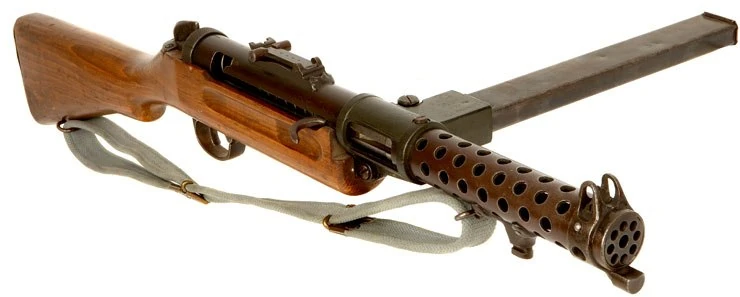
Lanchester Mk 1
Lanchester Mk 1 submachine gun in .45 inch: specs, history, ammo and Colorado legal notes from the CO Boots gun library. Want hands-on time with a firearm like the Lanchester Mk 1? Our certified instructors cover safe handling, operation and marksmanship in every firearms training class.
| Library ID | GT-727 |
|---|---|
| Manufacturer | Lanchester |
| Type | Submachine Gun |
| Caliber | .45 inch |
| Action | Blowback-operated |
| Barrel Length | The barrel length of the Lanchester Mk. 1 is 11 inches (280 mm). |
| Country of Origin | United Kingdom |
| Year of Production | 1916 |
| Production Status | Discontinued |
| Typical Users | Military, Law Enforcement |
| Rating | 4.2 |
Lanchester Mk 1: Technical Specifications
The Lanchester Mk. I is a British submachine gun developed during World War II, primarily for use by the British Armed Forces.
Caliber: The Lanchester Mk. I is chambered for the .45 ACP cartridge, which provides significant stopping power.
Barrel Length: The barrel measures approximately 9 inches (230 mm), contributing to its compact design.
Weight: The weapon weighs around 9.5 lbs (4.3 kg), making it relatively manageable for troops in various combat situations.
Material: The Lanchester Mk. I features a steel construction, ensuring durability and reliability under combat conditions. It has a wooden stock, which provides comfort and stability during use.
Unique Engineering Aspects: The Lanchester employs a blowback operating mechanism, and its design is influenced by the German MP 28, featuring a simple yet effective construction. It includes a top-mounted magazine with a capacity of 34 rounds, enhancing its firepower. The Lanchester's design emphasizes ease of manufacturing and field maintenance, crucial for wartime production.
Lanchester Mk 1: Performance Characteristics
The Lanchester Mk. 1 is a British submachine gun developed during World War II, notable for its use of the 9x19mm Parabellum cartridge.
Accuracy: The Lanchester is effective within a range of about 100-200 meters, benefiting from its simple open sights. While not match-grade, it provides sufficient accuracy for typical submachine gun engagements.
Reliability: Known for its robust construction, the Lanchester exhibits high reliability under various conditions, though it can be sensitive to ammunition quality.
Handling: Weighing around 9.5 lbs (4.3 kg), the Lanchester’s weight can hinder maneuverability, but its design allows for reasonable control during sustained fire. The magazine is positioned to promote balance.
Rate of Fire: The Lanchester has a cyclic rate of approximately 500-600 rounds per minute, allowing for effective suppression.
Overall, the Lanchester Mk. 1’s combination of reliability, adequate accuracy, and manageable handling made it a valuable asset for British forces during its service period.
Lanchester Mk 1: Design Features
The Lanchester Mk. 1 is a British submachine gun designed during World War II, notable for its practicality and robust design. Ergonomically, it features a simple yet effective layout, with a wooden stock that provides comfort and stability. The weapon is relatively lightweight, facilitating ease of handling in combat situations.
Safety mechanisms include a manual safety catch positioned on the right side of the receiver, preventing accidental discharge. The Lanchester's aesthetic design is utilitarian, characterized by its boxy shape and a distinctive magazine housing, which can accommodate a 32-round magazine.
Innovative features include its blowback operation, which simplifies the mechanism and enhances reliability. The Lanchester was also designed to be easily maintained, with minimal tools required for disassembly, making it effective for front-line troops. Its overall design emphasizes functionality over ornate details, reflecting the practical needs of wartime use.
Lanchester Mk 1: Historical Context
The Lanchester Mk. 1, developed in the early 1940s in the UK, emerged as a response to the need for a reliable submachine gun during World War II. Based on the German MP 28/II design, it was engineered by the Lanchester Engineering Company and adopted in 1941. Key milestones include its production ramp-up, with over 100,000 units manufactured by the war's end, primarily for the British Army and Royal Navy.
The Lanchester saw extensive use in various theaters, particularly in the Pacific and North Africa, where its rate of fire and reliability were valued. Though it was overshadowed by more advanced designs post-war, it influenced future British submachine guns, particularly the Sterling. The Lanchester Mk. 1's robust construction and simple mechanics exemplified early submachine gun design, contributing to the evolution of automatic firearms in military applications. Its legacy endures in the principles of firearm ergonomics and reliability.
Lanchester Mk 1: User Experience
The Lanchester Mk. 1 submachine gun, used primarily during WWII, is often praised for its comfortable handling and solid construction. Users appreciate its ergonomic design, which allows for a secure grip and manageable weight, making it suitable for extended use. The weapon's blowback operation contributes to its ease of use, enabling quick follow-up shots.
Durability is a strong point, as the Lanchester is built to withstand harsh conditions, which is vital for military applications. However, some users report issues with magazine reliability, specifically jamming or misfeeds, which can hinder performance in critical situations. Additionally, while its accuracy at close to medium ranges is generally commended, some users have noted that it can be less effective at longer distances.
Overall, the Lanchester Mk. 1 is well-regarded for its comfort and reliability in combat, though attention to magazine maintenance is essential to mitigate occasional performance issues.
Lanchester Mk 1: Ammunition Information
The Lanchester Mk. 1 is a British submachine gun primarily chambered for the .45 ACP (Automatic Colt Pistol) cartridge. This caliber was chosen for its stopping power and effectiveness in close-quarters combat, making it suitable for military and paramilitary applications during World War II.
The Lanchester Mk. 1 is compatible with various brands of .45 ACP ammunition, including options from Winchester, Remington, and Federal. Standard ball ammunition is typically used for general purposes, while hollow-point rounds may be favored for self-defense applications due to their increased terminal performance.
For optimal performance, manufacturers often recommend using high-quality, factory-loaded ammunition to ensure reliability and accuracy. Subsonic .45 ACP loads are also available for use with suppressors, enhancing stealth capabilities. Overall, the Lanchester Mk. 1 is designed to function reliably with a wide range of .45 ACP ammunition types.
Lanchester Mk 1: Usage Tips and Best Practices
Lanchester Mk. 1 Usage Tips and Best Practices:
- Shooting Tips:
- Always ensure the weapon is clear before loading. Use the safety catch when not firing.
- Practice proper stance and grip; keep both hands firm on the weapon for stability.
- Aim for controlled bursts rather than continuous fire to maintain accuracy.
- Cleaning and Maintenance:
- Clean the barrel and action after each use. Use a cleaning rod with appropriate brushes and patches.
- Lubricate moving parts lightly with gun oil to prevent rust and ensure smooth operation.
- Regularly inspect the magazine and feed mechanism for debris or wear.
- Common Mistakes to Avoid:
- Avoid resting the barrel on surfaces while shooting; it can affect accuracy.
- Don’t neglect regular maintenance; a dirty firearm can lead to malfunctions.
- Do not exceed the recommended ammunition; it may cause jams.
By following these tips, you can maximize the performance and longevity of your Lanchester Mk. 1.
Legal Considerations in Colorado
The Lanchester Mk. 1 is a British submachine gun developed during World War II, primarily for military use. As a fully automatic firearm, its legal status in the U.S. is regulated under the National Firearms Act (NFA) of 1934. Civilians can own it only if it was manufactured before May 19, 1986, and they must undergo a rigorous application process, including fingerprinting, background checks, and a $200 tax stamp.
State regulations vary significantly. Some states, like California and New York, have strict bans on fully automatic weapons, while others, like Texas and Arizona, allow ownership under NFA regulations. Notable legal cases involving the Lanchester Mk. 1 are rare; however, cases involving automatic weapons often hinge on interpretations of the NFA and local laws, impacting ownership and use.
Always consult local laws and regulations, as they are subject to change and can be complex.
Lanchester Mk 1: Reviews and Ratings
User reviews for the Lanchester Mk. 1 generally highlight its historical significance and unique design, often appreciated by collectors and enthusiasts. Reliability is a recurring theme, with many users noting its dependable performance in various conditions. However, some reviews mention occasional feed issues, particularly with certain ammunition types.
Accuracy is frequently praised, with users reporting tight groupings at the range, which enhances its appeal for target shooting. The weight and balance of the firearm are also noted positively, contributing to its manageable handling.
Customer service experiences vary; while some users report prompt and helpful responses, others express frustration with delays in parts availability or service. Overall satisfaction is generally high among collectors, though some casual shooters suggest it may not be the best choice for everyday use due to its historical nature and weight. Overall, the Lanchester Mk. 1 is well-regarded for its reliability and accuracy, with a niche appeal in the firearm community.
Lanchester Mk 1: Appearances in Media
The Lanchester Mk. 1, a British submachine gun used during World War II, has appeared in various movies, TV shows, and video games. Here’s a brief list:
Movies
1. "The Imitation Game" (2014) - Features Lanchester Mk. 1 as part of the World War II setting.
2. "The Guns of Navarone" (1961) - Used by British soldiers in the film.
3. "The Battle of the River Plate" (1956) - Depicts naval warfare with British forces, including the Lanchester.
TV Shows
1. "Band of Brothers" (2001) - Shows British soldiers utilizing the weapon during the series.
2. "Foyle's War" (2002-2015) - Set in World War II, includes various firearms including the Lanchester.
Video Games
1. "Call of Duty: World at War" (2008) - Features the Lanchester Mk. 1 as a weapon players can use.
2. "Battlefield V" (2018) - The weapon is included as part of the game's World War II arsenal.
3. "World War III" (2018) - The Lanchester Mk. 1 is included as a playable weapon in this multiplayer tactical shooter.
This list is not exhaustive but highlights notable appearances of the Lanchester Mk. 1 in popular media.
Related Firearms in the Library


More Submachine Gun firearmsMore Lanchester manufacturer firearmsMore 45 inch caliber firearmsMore United Kingdom country firearmsBrowse all firearms