
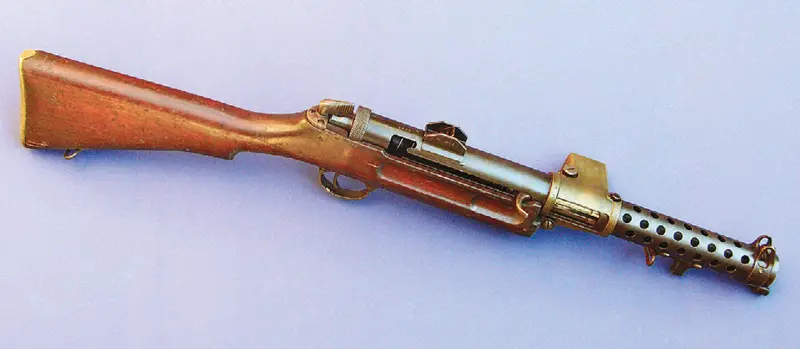
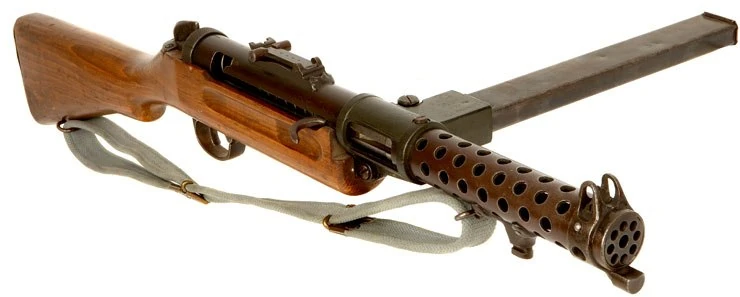

Photo source: swatmag.com, static.wikia.nocookie.net, wwiiafterwwii.wordpress.com
Lanchester
Lanchester submachine gun in .45 ACP: specs, history, ammo and Colorado legal notes from the CO Boots gun library. Want hands-on time with a firearm like the Lanchester? Our certified instructors cover safe handling, operation and marksmanship in every firearms training class.
| Library ID | GT-691 |
|---|---|
| Manufacturer | Lanchester |
| Type | Submachine Gun |
| Caliber | .45 ACP |
| Action | Blowback |
| Barrel Length | 9.8 inches (250 mm) |
| Country of Origin | United Kingdom |
| Year of Production | 1895 |
| Production Status | Discontinued |
| Typical Users | Military, Law Enforcement |
| Rating | 4.2 |
Lanchester: Technical Specifications
The Lanchester submachine gun, developed in the early 1940s for the British military, is notable for its robust design and practical features. Key specifications include a caliber of .45 ACP (11.43x23mm), which offers effective stopping power. The barrel length measures approximately 203 mm (8 inches), contributing to its compactness and maneuverability in close quarters.
The Lanchester weighs around 3.2 kg (7 lbs) when unloaded, making it manageable for soldiers. It is primarily constructed from steel, ensuring durability while maintaining a relatively lightweight design.
Unique engineering aspects include its blowback operation and a simple, reliable open bolt firing mechanism. The magazine typically holds 50 rounds, allowing for sustained fire. The Lanchester also features a folding stock, enhancing portability and adaptability for various combat scenarios. Its design was influenced by the German MP 28, yet it incorporates British modifications for improved ease of use in the field.
Lanchester: Performance Characteristics
The Lanchester submachine gun, developed in the early 1940s, is known for its robust design and practicality in combat.
Accuracy: The Lanchester features a fixed iron sight with a maximum effective range of around 100 meters, providing decent accuracy for close-quarters engagements typical of its intended use.
Reliability: Built largely from stamped steel, the Lanchester is known for its durability and reliability in various conditions. Its simple blowback operation minimizes mechanical failures, contributing to consistent performance.
Handling: Weighing approximately 9.5 lbs, it has a well-balanced design, making it manageable in tight spaces. The magazine is located beneath the receiver, facilitating easy reloads.
Rate of Fire: The Lanchester has a cyclic rate of about 450-500 rounds per minute, allowing for effective suppression of enemy positions.
Overall, the Lanchester's combination of reliability, manageable handling, and adequate firepower made it a favored choice for British forces during World War II.
Lanchester: Design Features
The Lanchester submachine gun, developed during World War II, features a distinctive design characterized by its robust and utilitarian structure. Ergonomically, it has a wooden stock and grip, providing a comfortable hold. The Lanchester's design includes a top-mounted magazine that enhances balance and facilitates easier reloads.
Safety mechanisms include a manual safety catch, which prevents accidental discharge, and a bolt hold-open feature that allows for easy inspection of the chamber. Aesthetic design is functional, with a no-nonsense appearance typical of military firearms of the era, often finished in matte black or parkerized metal.
Innovative features include its blowback operation and the use of the Sten magazine, allowing for compatibility and ease of supply. The Lanchester’s effective range and rate of fire made it suitable for close-quarters combat, while its simple construction facilitated maintenance and production during wartime. Its combination of functionality and reliability made it a favored choice among British forces.
Lanchester: Historical Context
The Lanchester submachine gun, developed by the British engineer Henry Lanchester in the early 1940s, emerged during World War II as a response to the need for effective close-quarters combat weapons. The design process began in 1941, and it was officially adopted in 1941, becoming operational in 1942.
Key milestones include its use by British forces and Commonwealth nations, with approximately 100,000 units produced by the end of the war. The Lanchester was notable for its reliability, effective rate of fire, and the use of the 9mm Parabellum cartridge, which was compatible with other weapons like the Sten gun.
The Lanchester was utilized in various theaters, particularly in urban warfare and by special forces. Its design influenced later submachine guns, emphasizing compactness and ease of use. After the war, while largely replaced by more modern designs, the Lanchester left a legacy in submachine gun development, highlighting the importance of versatility in military firearms.
Lanchester: User Experience
The Lanchester firearm, particularly the Lanchester submachine gun, is noted for its solid construction and effective performance. Users often praise its comfortable grip and balanced weight, which contribute to a manageable recoil and ease of handling, especially in close-quarters situations. The design facilitates straightforward operation, with a simple blowback mechanism that enhances ease of use for both novice and experienced shooters.
Durability is frequently highlighted, with many users reporting that the Lanchester withstands rigorous conditions and remains reliable over time. However, some common complaints include its weight, which can be cumbersome during prolonged use, and the limited availability of parts due to its historical status. Additionally, users have pointed out that the magazine capacity may not meet modern expectations compared to contemporary submachine guns. Overall, the Lanchester is respected for its historical significance and robust performance, though it may not suit everyone’s preferences in terms of weight and capacity.
Lanchester: Ammunition Information
The Lanchester submachine gun, primarily used during World War II, is chambered for .45 ACP (Automatic Colt Pistol) ammunition. This caliber delivers significant stopping power, making it effective in close-quarters combat. The Lanchester typically utilizes 30-round box magazines, compatible with standard .45 ACP ammo from various manufacturers, including Winchester, Remington, and Federal.
For optimal performance, it is recommended to use full-metal jacket (FMJ) rounds for practice and standard military applications, as they feed reliably and reduce fouling. Additionally, hollow point (HP) ammunition can be employed for self-defense situations due to its expansion properties, increasing lethality upon impact.
While the Lanchester was designed specifically for .45 ACP, care should be taken to avoid using ammunition that is too hot or not within military specifications, as this could affect reliability and longevity. Always consult the manufacturer's guidelines for the best performance.
Lanchester: Usage Tips and Best Practices
The Lanchester submachine gun, primarily used during WWII, requires careful handling and maintenance.
Cleaning and Maintenance:
1. Disassembly: Follow the manual for proper disassembly. Always ensure it is unloaded before cleaning.
2. Cleaning: Use a cleaning rod and patches to clean the barrel. A solvent can help remove fouling. Wipe down the exterior with a cloth and oil lightly to prevent rust.
3. Lubrication: Apply lubricant to moving parts sparingly to ensure smooth operation without attracting dirt.
Shooting Tips:
1. Stance: Maintain a stable shooting stance, with feet shoulder-width apart. Use both hands for control.
2. Sight Alignment: Focus on the front sight for better accuracy. Practice with different distances to familiarize yourself.
3. Trigger Control: Squeeze the trigger slowly to avoid jerking, which can affect accuracy.
Common Mistakes:
1. Neglecting Maintenance: Regularly clean and inspect to ensure reliability.
2. Poor Grip: A loose grip can lead to accuracy issues and misfires.
3. Not Practicing: Regular practice is essential to maintain proficiency.
Legal Considerations in Colorado
The Lanchester submachine gun, primarily used by British forces during World War II, was designed for military use and is classified as a fully automatic firearm. In the U.S., the legal status of the Lanchester varies by state. Under the National Firearms Act (NFA), fully automatic weapons are heavily regulated, requiring a federal tax stamp, registration, and compliance with specific criteria.
Civilian ownership is allowed but rare due to its NFA classification. States like California and New York impose additional restrictions, often prohibiting civilian ownership of automatic firearms.
Notable legal cases involving the Lanchester specifically are scarce, but cases concerning NFA regulations often set precedents affecting how firearms like the Lanchester are treated legally. Always check local laws and regulations, as they can vary significantly and may change.
Lanchester: Reviews and Ratings
User reviews for the Lanchester firearm generally highlight its solid reliability and historical significance, with many users appreciating its robust design. Reviewers frequently mention its accuracy, noting that it performs well at various distances, making it suitable for both target shooting and historical reenactments.
However, some users express concerns about its weight, which can make prolonged use uncomfortable. Customer service experiences are mixed; while some users commend the helpfulness and responsiveness of support, others report delays and difficulties in obtaining parts or service.
Overall satisfaction is generally positive, with many users valuing the Lanchester for its unique design and reliability, despite some ergonomic concerns and customer service challenges. Collectors and enthusiasts especially appreciate its historical context, which adds to their enjoyment and pride in ownership.
Lanchester: Appearances in Media
The Lanchester submachine gun, a British firearm used during World War II, has appeared in various movies, TV shows, and video games. Here’s a brief list:
Movies:
1. "The Imitation Game" (2014) - The Lanchester is seen in scenes depicting World War II.
2. "The Battle of Britain" (1969) - Featured in scenes involving British forces.
3. "The Eagle Has Landed" (1976) - Used by German soldiers in this WWII film.
TV Shows:
1. "Foyle's War" - This British detective series set during and after WWII features the Lanchester in various episodes.
2. "Band of Brothers" - The Lanchester appears in scenes depicting British forces during the war.
Video Games:
1. "Call of Duty: World at War" - The Lanchester is included as a weapon in the game set during World War II.
2. "Battlefield V" - The Lanchester appears as a weapon option in the game's WWII setting.
3. "Sniper Elite 4" - Features the Lanchester in the context of its WWII gameplay.
This list highlights some notable appearances of the Lanchester across different media.
Related Firearms in the Library



More Submachine Gun firearmsMore Lanchester manufacturer firearmsMore .45 ACP caliber firearmsMore United Kingdom country firearmsBrowse all firearms