
The Ultimate Guide to Defensive Handgun Training for Beginners: Comparing Courses
December 8, 2026 · Firearm Training / Defensive Shooting / Beginner Courses
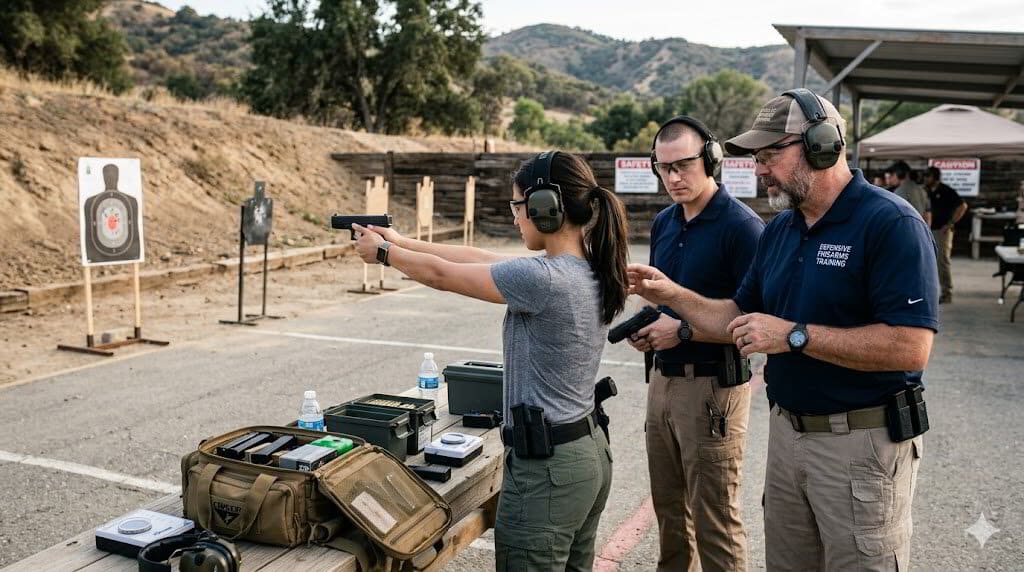
Learning to handle a firearm responsibly is one of the most important decisions you can make for personal protection and safety. In today's world, understanding defensive handgun training for beginners has become increasingly relevant for law-abiding citizens who want to protect themselves and their families. Whether you're completely new to firearms or have limited experience, proper training forms the foundation of safe and effective handgun use.
The journey from complete novice to confident shooter requires structured learning, professional guidance, and comprehensive understanding of both technical skills and legal responsibilities. Many individuals feel overwhelmed when considering their first steps into firearms training, wondering which course best suits their needs and experience level. This uncertainty often stems from the wide variety of available programs, each designed to address different aspects of handgun proficiency.
Defensive handgun training encompasses much more than simply learning to shoot accurately. It involves developing situational awareness, understanding legal implications, mastering proper handling techniques, and building the confidence necessary to make split-second decisions under pressure. The right training program will address all these elements while providing a safe, supportive environment for learning.
This comprehensive guide examines various defensive handgun courses available to beginners, comparing their objectives, curricula, and benefits to help you make an informed decision about your firearms education journey.
What is Defensive Handgun Training?
Defensive handgun training represents a specialized form of firearms education focused on preparing individuals to use handguns effectively for personal protection. Unlike recreational shooting or competitive marksmanship, defensive training emphasizes real-world scenarios where quick, accurate responses may be necessary to protect oneself or others from immediate threats.
The primary objectives of defensive handgun training include developing fundamental marksmanship skills, understanding proper firearm handling and safety protocols, learning tactical shooting techniques applicable to self-defense situations, and gaining comprehensive knowledge of legal requirements and responsibilities. These programs are specifically designed to build both technical proficiency and mental preparedness for potential defensive encounters.
Key skills developed through defensive handgun training encompass multiple critical areas. Accuracy forms the cornerstone of effective defensive shooting, requiring students to master sight alignment, trigger control, and breathing techniques. However, defensive accuracy differs from target shooting, emphasizing rapid target acquisition and shooting under stress rather than precision at extended ranges. Students learn to engage targets at typical defensive distances while maintaining acceptable accuracy standards.
Confidence building represents another crucial component of defensive training. Many beginners experience anxiety or uncertainty when handling firearms, which can significantly impact their ability to respond effectively in emergency situations. Professional instruction helps students overcome these concerns through progressive skill development, creating a solid foundation of knowledge and experience that translates into genuine confidence.
Legal knowledge forms an essential element often overlooked in basic shooting instruction. Defensive handgun training addresses when and where firearms may be legally used for protection, understanding local and state laws governing concealed carry, and recognizing the legal consequences of defensive firearm use. This education helps students make informed decisions about carrying and potentially using firearms for protection.
Modern defensive handgun training also incorporates stress inoculation techniques, teaching students to maintain composure and execute proper techniques under pressure. This includes scenario-based training, time-limited exercises, and decision-making drills that simulate real-world defensive situations. The goal is developing automatic responses based on sound training principles rather than relying on untested reactions during actual emergencies.
Benefits of Defensive Handgun Training for Beginners
Participating in structured defensive handgun training provides numerous advantages that extend far beyond basic shooting skills. For beginners, these benefits create a comprehensive foundation for responsible firearm ownership and effective personal protection capabilities.
Enhanced skills and confidence represent the most immediate benefits of professional training. Beginning shooters often struggle with basic fundamentals like grip, stance, and sight alignment. Quality instruction addresses these elements systematically, ensuring students develop proper techniques from the start rather than having to correct bad habits later. As students master these fundamentals, their confidence grows naturally, creating a positive feedback loop that accelerates learning and skill development.
Professional training also provides expert feedback and correction that self-taught shooters cannot access. Instructors identify and address specific weaknesses or errors that students might not recognize independently. This guidance prevents the development of poor habits that could prove dangerous or ineffective in actual defensive situations.
Understanding laws and regulations constitutes another critical benefit of formal training programs. Colorado's concealed carry laws, self-defense statutes, and firearm regulations can be complex and confusing for newcomers. Professional instruction ensures students understand their rights and responsibilities as armed citizens, reducing the risk of unintentional legal violations. This knowledge proves invaluable for those seeking concealed carry permits or simply wanting to understand their options for legal self-defense.
Self-defense readiness encompasses both physical and mental preparation for potential threats. Defensive handgun training teaches students to recognize dangerous situations, make appropriate tactical decisions, and execute effective responses when necessary. This preparation includes understanding the continuum of force, de-escalation techniques, and when firearm use may be legally and ethically justified.
Training programs also provide safe environments for learning and practice. Professional ranges and instructors maintain strict safety protocols, ensuring students can focus on learning without worrying about dangerous conditions or inadequate supervision. This safety-first approach helps beginners develop good habits and respect for firearms that will serve them throughout their shooting careers.
Additionally, structured training provides progressive skill development that builds upon previous learning. Rather than attempting to learn everything simultaneously, students advance through carefully designed curricula that introduce concepts and skills in logical sequences. This approach maximizes learning efficiency while ensuring solid mastery of fundamental concepts before advancing to more complex techniques.
The social aspect of group training classes offers additional benefits, including learning from other students' questions and experiences, building relationships with like-minded individuals interested in responsible firearm ownership, and accessing ongoing support and advice from instructors and fellow students.
Comparing Defensive Handgun Courses
Selecting the appropriate defensive handgun course requires understanding the various options available and how they align with individual goals, experience levels, and learning preferences. Different courses target specific skill levels and objectives, making careful comparison essential for maximizing training value and ensuring proper progression through defensive handgun education.
The Colorado Concealed Carry License Training course serves as an excellent starting point for beginners seeking legal authorization to carry concealed firearms. This program focuses primarily on legal requirements, basic safety protocols, and fundamental shooting skills necessary to qualify for a concealed carry permit. The course covers Colorado-specific laws governing concealed carry, use of force statutes, and places where firearms are prohibited. Students learn basic marksmanship principles and complete required shooting qualifications. This course is ideal for individuals whose primary goal is obtaining legal carry authorization while establishing fundamental safety habits.
The Handgun Fundamentals Course provides comprehensive introduction to handgun operation, safety, and basic shooting skills. This program targets complete beginners with little or no firearms experience, covering everything from basic terminology to fundamental marksmanship principles. Students learn proper handling techniques, loading and unloading procedures, and basic maintenance requirements. The course emphasizes safety above all else while building confidence through progressive skill development. This option suits individuals who want thorough grounding in handgun basics before advancing to more specialized training.
The NRA Basic Pistol Course offers nationally recognized certification and standardized curriculum covering fundamental pistol shooting skills. This program provides excellent foundation training with emphasis on safety, basic marksmanship, and responsible ownership. The NRA curriculum has been refined over decades and provides consistent, quality instruction regardless of location. Students receive official NRA certification upon completion, which may be recognized by other training organizations or required for certain advanced courses.
Advanced courses like the Advanced Handgun Shooting Techniques and Advanced Pistol Course target students who have mastered basic skills and want to develop more sophisticated defensive capabilities. These programs introduce tactical shooting techniques, advanced marksmanship skills, and scenario-based training. Students learn shooting from various positions, engaging multiple targets, and performing under time pressure. These courses are appropriate for individuals who have completed basic training and want to enhance their defensive capabilities.
Specialized courses address specific aspects of defensive handgun use. The Selecting a Handgun Course helps students understand different handgun types, features, and selection criteria for defensive use. The Choosing the Holster Course covers carry methods, holster selection, and proper draw techniques. These specialized programs allow students to focus on particular areas of interest or need.
Personalized coaching and one-on-one sessions provide customized instruction tailored to individual needs and goals. This format allows instructors to address specific weaknesses, accelerate learning in particular areas, or provide intensive preparation for specific objectives. Private instruction works well for students with unique scheduling needs, specific learning challenges, or those who prefer individual attention over group settings.
When choosing appropriate courses, beginners should consider their ultimate goals, current experience level, available time commitment, and learning preferences. Those seeking concealed carry permits should prioritize courses that include legal education and qualification requirements. Complete novices benefit from comprehensive fundamental courses before advancing to specialized training.
Course Breakdown: What to Expect in Each Defensive Handgun Course
Understanding the specific curriculum, duration, and format of each course helps students make informed decisions about their training path and set appropriate expectations for their learning experience.
The Colorado Concealed Carry License Training typically spans 4-6 hours and combines classroom instruction with practical shooting exercises. The classroom portion covers Colorado concealed carry laws, including where carrying is permitted and prohibited, legal use of force requirements, and permit application procedures. Students learn about different types of permits, reciprocity with other states, and renewal requirements. The practical component includes basic firearm safety review, fundamental shooting positions, and completion of required qualification shooting. Students must demonstrate basic marksmanship competency by achieving minimum scores at specified distances. This course concludes with permit application assistance and information about ongoing legal responsibilities.
The Handgun Fundamentals Course extends over 6-8 hours, providing comprehensive introduction to handgun operation and shooting. Classroom instruction covers firearm safety rules, basic handgun types and operation, ammunition selection and handling, and fundamental shooting principles. Students learn proper grip techniques, stance options, sight alignment, and trigger control methods. The practical portion includes hands-on familiarization with different handgun types, supervised loading and unloading practice, and progressive shooting exercises starting at close distances. Students advance from basic accuracy drills to more challenging exercises as skills develop. This course emphasizes building confidence through successful completion of increasingly difficult tasks.
The NRA Basic Pistol Course follows standardized national curriculum over approximately 8 hours. Classroom topics include gun safety rules, pistol parts and operation, ammunition knowledge, shooting fundamentals, and cleaning procedures. The course covers different pistol types, proper storage methods, and basic maintenance requirements. Practical exercises include proper handling demonstrations, loading and unloading procedures, and supervised shooting practice. Students complete written examinations and practical demonstrations to earn NRA certification. The standardized format ensures consistent quality and recognition across different training providers.
Advanced courses like the Advanced Handgun Shooting Techniques typically require 8-12 hours and assume students have mastered basic skills. These programs introduce tactical shooting concepts including shooting from cover, engaging multiple targets, and performing under time pressure. Students learn advanced shooting positions, one-handed shooting techniques, and malfunction clearance procedures. Scenario-based exercises simulate real-world defensive situations, requiring students to make tactical decisions while executing shooting skills. These courses often include stress inoculation training designed to test performance under pressure.
The Advanced Pistol Course builds upon basic skills with emphasis on precision shooting and advanced techniques. Students learn to engage targets at extended distances, perform rapid target transitions, and maintain accuracy while shooting quickly. The course covers advanced sight alignment techniques, trigger control refinement, and shooting position variations. Practical exercises challenge students with demanding accuracy standards and time limits.
Specialized courses like Selecting a Handgun focus on equipment knowledge and decision-making. Students examine different handgun types, comparing features like size, capacity, and reliability. The course covers factors affecting handgun selection including intended use, physical considerations, and budget constraints. Hands-on evaluation allows students to handle various models and understand practical differences between options.
Instructor qualifications vary by course but typically include NRA certification, extensive shooting experience, and ongoing professional development. Many instructors hold multiple certifications and bring diverse backgrounds including law enforcement, military service, or competitive shooting. Colorado Boots instructors maintain current knowledge of Colorado laws and regulations while staying updated on latest training techniques and equipment developments. Class sizes are typically limited to ensure adequate individual attention and maintain safe training environments.
Success Stories: Beginner Experiences with Defensive Handgun Training
Real-world experiences from students who have completed defensive handgun training for beginners provide valuable insights into the transformative impact of professional instruction and the practical benefits of structured learning programs.
Sarah, a Colorado Springs resident with no prior firearms experience, enrolled in the Handgun Fundamentals Course after experiencing a break-in attempt at her apartment. Initially nervous about handling firearms, she found the progressive curriculum and patient instruction helped her overcome anxiety while building genuine competence. "I never thought I could feel comfortable with a handgun, but the instructors created such a supportive environment," Sarah explains. "By the end of the course, I was hitting targets consistently and felt confident about my ability to handle the firearm safely." Six months after completing her initial training, Sarah obtained her concealed carry permit and continues practicing regularly.
Mark, a business owner who travels frequently throughout Colorado, decided to pursue concealed carry training after learning about increasing crime rates in areas he visits regularly. Having limited shooting experience from childhood, he chose the Colorado Concealed Carry License Training to meet legal requirements while refreshing his basic skills. "The legal education portion was incredibly valuable," Mark notes. "I had no idea about the complexity of concealed carry laws or the serious responsibilities involved." The course not only prepared him for the permit process but also motivated him to pursue additional training to improve his defensive capabilities.
Jennifer, a single mother and healthcare worker, initially felt intimidated by the prospect of firearms training but recognized the importance of being prepared to protect her family. She started with personalized coaching sessions to address her specific concerns and build confidence in a one-on-one setting. "The individual attention allowed me to progress at my own pace without feeling pressure from other students," Jennifer shares. "My instructor was incredibly patient and helped me understand that being nervous was completely normal." After completing private instruction, she joined group classes and eventually earned her concealed carry permit.
These success stories highlight common themes among beginning students: initial nervousness or uncertainty that transforms into confidence through proper instruction, appreciation for the comprehensive nature of professional training programs, and recognition that defensive handgun skills require ongoing practice and development. Many students report that professional training exceeded their expectations and provided knowledge they never would have gained through independent study.
Students consistently emphasize the value of learning proper techniques from the beginning rather than developing bad habits through trial and error. The structured progression of professional courses allows beginners to build skills systematically while maintaining safety and building confidence. Most graduates continue their firearms education through advanced courses or regular practice sessions, demonstrating the foundation that quality initial training provides for lifelong learning and skill development.
Conclusion and Next Steps
Choosing the right defensive handgun training for beginners represents a crucial first step toward responsible firearm ownership and effective personal protection capabilities. The comparison of available courses demonstrates that different programs serve specific needs and skill levels, making careful selection essential for maximizing your training investment and ensuring proper skill development.
Whether you're seeking concealed carry authorization through Colorado Concealed Carry License Training, comprehensive foundation skills through Handgun Fundamentals courses, or nationally recognized certification via NRA programs, professional instruction provides invaluable benefits that extend far beyond basic shooting skills. The combination of technical instruction, legal education, and confidence building creates a solid foundation for lifelong learning and responsible firearm use.
Remember that defensive handgun training is not a one-time event but rather the beginning of an ongoing journey toward mastery and preparedness. Initial courses provide essential foundation skills, but regular practice and advanced training ensure continued improvement and readiness. The investment in professional instruction pays dividends through enhanced safety, improved skills, and the confidence that comes from proper preparation.
The time to begin your defensive handgun training is now. Waiting until you "need" these skills means waiting too long. Professional instruction provides the knowledge, skills, and confidence necessary to handle firearms safely and effectively while understanding the legal responsibilities of armed citizenship.
Ready to start your defensive handgun training journey? Colorado Boots Firearms Instruction offers comprehensive courses designed specifically for beginners, taught by experienced professionals in a safe, supportive environment. From basic fundamentals to advanced techniques, our programs provide the foundation you need for confident, responsible firearm ownership. Contact us today at 719-782-8793 or visit https://coloradobootsfirearmsinstruction.com/ to schedule your training and take the first step toward enhanced personal protection and peace of mind. Your safety and confidence are worth the investment – sign up for a course today!
Tags: defensive handgun training beginners, beginner firearm defense courses, handgun self defense classes
Latest Blog & Articles
The Ultimate Guide to Defensive Handgun Training in Colorado
In an increasingly uncertain world, mastering defensive handgun training is essential for responsible gun ownership and personal safety. Co…
Read more →
Best Practices for Defensive Handgun Training: A Comprehensive Guide
In a world where personal safety is increasingly vital, mastering defensive handgun training is essential for anyone considering firearm ow…
Read more →
The Ultimate Guide to Firearm Training Courses in El Paso County, Colorado
In an age where firearm safety and education are paramount, Colorado Boots is proud to provide the definitive guide to firearm training cou…
Read more →