
Mastering Advanced Handgun Techniques: A Professional's Guide
February 17, 2026 · Firearms Training / Tactical & Defensive Skills / Professional Shooting Guides
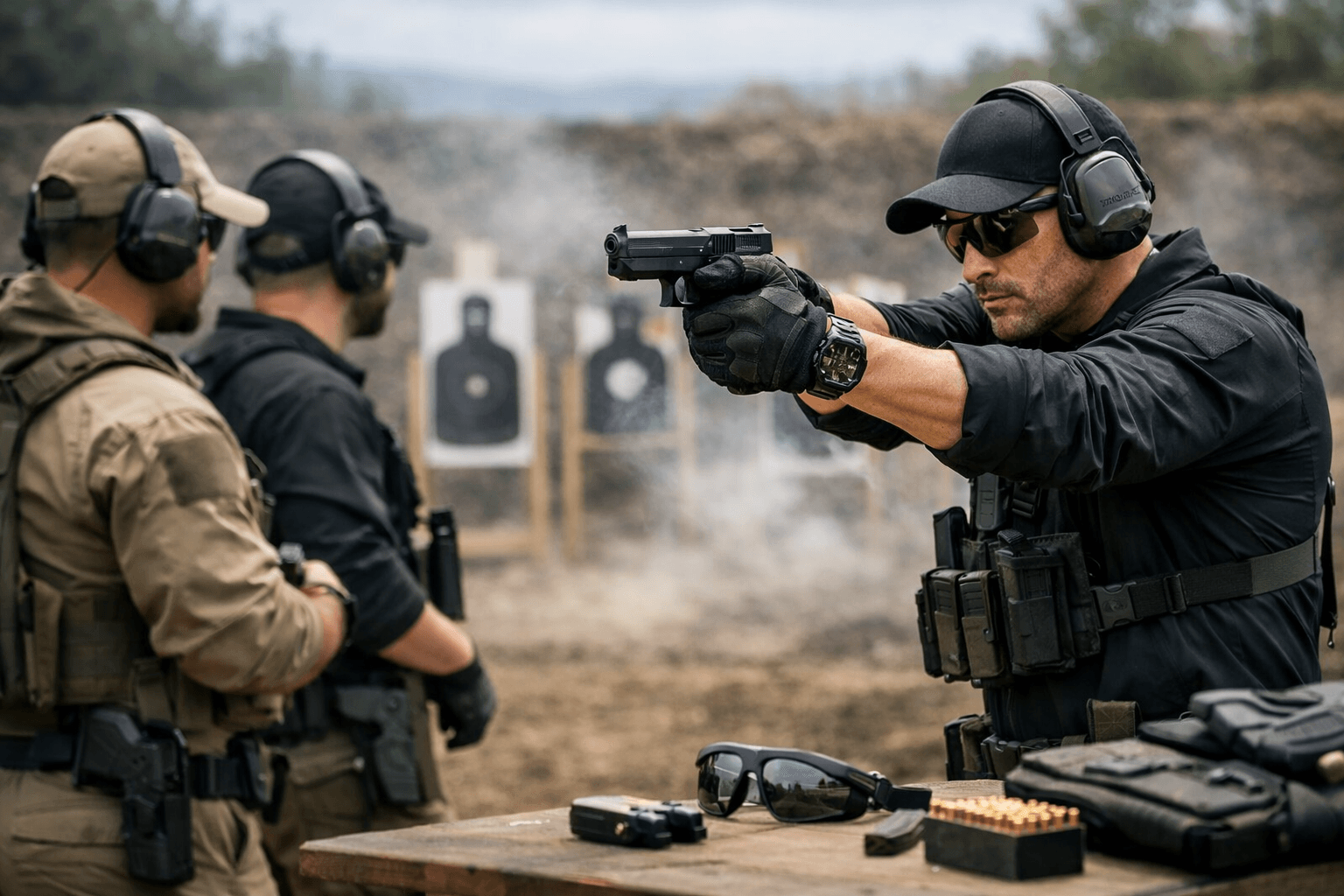
Professional marksmanship extends far beyond basic shooting fundamentals, demanding
precision, control, and tactical awareness that separates skilled practitioners from casual
shooters. Advanced handgun techniques for professionals represent the culmination of
disciplined training, combining mechanical accuracy with real-world application scenarios
that demand split-second decision-making under pressure.
Whether you're a law enforcement officer, security professional, or dedicated civilian seeking
to elevate your self-defense capabilities, mastering these sophisticated techniques requires
structured learning and consistent practice. The progression from basic marksmanship to
advanced proficiency involves understanding complex shooting dynamics, equipment
optimization, and tactical movement principles that transform competent shooters into true
professionals.
This comprehensive guide explores the essential components of advanced firearms training,
from foundational marksmanship principles to complex tactical scenarios. We'll examine
equipment considerations, precision shooting techniques, and real-world application strategies
that form the backbone of professional shooting competency. Each element builds upon previous
skills, creating a comprehensive framework for developing advanced handgun techniques for
professionals who demand excellence in their shooting performance and tactical readiness.
Understanding the Fundamentals of
Marksmanship
Advanced shooting performance begins with mastering fundamental marksmanship principles
that serve as the foundation for all sophisticated techniques. Professional-level accuracy demands
precise grip consistency, maintaining identical hand placement and pressure for every shot. The
dominant hand provides primary control while the support hand applies steady pressure, creating
a stable shooting platform that minimizes movement during recoil.
Stance selection significantly impacts shooting performance, with the isosceles and Weaver
stances offering distinct advantages for different scenarios. The isosceles stance provides natural
body alignment and equal arm extension, ideal for precision shooting situations. Conversely, the
Weaver stance offers superior recoil management and faster target transitions, making it valuable
for dynamic shooting environments where movement and speed are critical.
Sight alignment and sight picture represent the visual foundation of accurate shooting, requiring
consistent eye positioning and front sight focus. Professional shooters develop the ability to maintain
proper sight alignment while processing peripheral information, essential for tactical situations
requiring environmental awareness. The front sight post should appear crisp and centered
within the rear sight notch, with equal light gaps on both sides.
Breathing control and trigger manipulation work together to ensure precise shot placement.
Natural respiratory pause provides the optimal firing window, allowing shooters to break shots
without breathing-induced movement. Trigger control involves straight-back finger pressure using
the pad of the index finger, maintaining consistent pressure until the shot breaks. Follow-through
includes maintaining sight picture and trigger pressure momentarily after the shot, preventing
premature movement that affects accuracy. These marksmanship skills form the essential
foundation for developing advanced handgun techniques for professionals.
Essential Equipment for Advanced Handgun
Training
Professional-grade handgun training requires carefully selected equipment that supports
advanced technique development and consistent performance under demanding conditions.
Full-size service pistols typically provide the best platform for learning advanced shooting
techniques, offering longer sight radius, reduced recoil, and enhanced accuracy potential
compared to compact alternatives. Popular choices include the Glock 17, Smith & Wesson
M&P9, and SIG Sauer P320, each providing reliable performance and extensive customization
options.
Holster selection plays a crucial role in advanced training effectiveness, with quality
retention holsters ensuring consistent draw mechanics and weapon security during dynamic
movements. Professional-grade holsters should provide adjustable retention, smooth draw
characteristics, and secure weapon positioning that remains consistent regardless of body
position or movement. Consider holsters from manufacturers like Safariland, BlackHawk, or
Galco that offer proven reliability and professional acceptance.
Proper eye and ear protection remains non-negotiable for safe training environments, while
quality shooting gloves can improve grip consistency and reduce hand fatigue during extended
practice sessions. Electronic hearing protection allows shooters to maintain environmental
awareness while protecting hearing, essential for tactical training scenarios.
Training accessories enhance skill development and provide measurable performance
feedback. Shot timers enable precise measurement of draw times, split times, and overall stage
completion, providing objective data for tracking improvement. Quality targets designed for specific
training purposes help develop different skills, from precision bullseye targets to tactical silhouettes
and reactive targets that provide immediate feedback.
Weapon-mounted lights and laser sights introduce additional complexity to advanced training,
requiring shooters to master their use while maintaining fundamental shooting principles. These
accessories can significantly enhance performance in low-light conditions but require dedicated
practice to integrate effectively into shooting techniques. Quality equipment forms the foundation
for developing reliable advanced handgun techniques for professionals.
Techniques for Enhanced Shooting Accuracy
Advanced accuracy techniques separate professional shooters from recreational practitioners,
requiring mastery of both precision and combat shooting methodologies. Precision shooting
emphasizes maximum accuracy at extended distances, utilizing careful sight alignment, controlled
breathing, and deliberate trigger manipulation to achieve tight shot groups. This discipline develops
the mechanical skills necessary for consistent shot placement under ideal conditions.
Combat shooting prioritizes speed and accuracy balance, recognizing that real-world scenarios
rarely provide ideal shooting conditions. Professional shooters must develop the ability to deliver
accurate shots quickly while moving, under stress, and against multiple targets. This requires
modified shooting stances, faster sight acquisition techniques, and the ability to accept
combat-accurate shot placement rather than perfect precision.
Essential shooting drills for advanced practitioners include:
• Ball and dummy drill for identifying and correcting flinch responses
• Dot torture drills for precision shooting development
• Bill drill for rapid-fire accuracy and recoil management
• Mozambique drill for tactical shot placement and target transitions
• Five-by-five drill combining speed and accuracy measurements
Follow-up shot techniques represent a critical advanced skill, requiring shooters to manage
recoil recovery, sight reacquisition, and trigger reset efficiently. Proper follow-up shots depend on
maintaining consistent grip pressure throughout the shooting sequence, allowing natural sight
alignment return after recoil. Advanced shooters develop the ability to call their shots, predicting
point of impact based on sight picture at the moment of firing.
Split times between shots provide measurable metrics for tracking improvement in follow-up
shot capabilities. Professional-level shooters typically achieve split times under 0.25 seconds for
close-range targets while maintaining acceptable accuracy standards. Consistent practice with
these advanced shooting techniques develops the muscle memory and visual processing speed
essential for professional-level performance, establishing the foundation for advanced handgun
techniques for professionals.
Advanced Shooting Strategies
Professional shooting scenarios demand sophisticated strategies that integrate movement,
tactical positioning, and target engagement principles beyond static range shooting. Shooting
while moving represents a fundamental advanced skill, requiring shooters to maintain accuracy
while navigating terrain and changing positions. Effective movement techniques include the tactical
glide, minimizing vertical movement while maintaining sight alignment, and understanding when to
shoot versus when to move to cover.
Movement timing becomes critical in tactical situations, with professional shooters learning to
recognize optimal shooting windows during movement sequences. The concept of "shooting on
the move" versus "moving then shooting" depends on threat proximity, available cover, and
engagement distance. Close-quarters scenarios often require continuous movement and
shooting, while longer distances may favor movement to superior positions before engaging.
Cover and concealment utilization forms another essential component of advanced shooting
strategies. Cover provides physical protection from incoming fire, while concealment only hides
the shooter's position. Professional shooters must understand the difference and select
positions accordingly. Effective use of cover involves minimizing exposure while maintaining
adequate shooting angles, requiring practice with shooting from various positions and angles.
Shooting around barriers demands modified shooting positions and sight alignment techniques.
Strong-side and weak-side shooting positions around cover require different body mechanics and
sight pictures. Advanced practitioners develop ambidextrous shooting capabilities, enabling
effective engagement from either side of available cover without exposing unnecessary body
parts to potential threats.
Multiple target engagement requires systematic approaches to ensure efficient threat
neutralization while maintaining situational awareness. Target prioritization considers factors like
proximity, threat level, and tactical advantage. Smooth target transitions involve efficient eye
movement, sight tracking, and trigger control while moving between targets. Professional shooters
develop the ability to engage multiple threats rapidly while maintaining accuracy standards and
ammunition conservation. These strategic elements combine to form comprehensive advanced
handgun techniques for professionals operating in complex tactical environments.
Preparing for Real-World Scenarios
Real-world application of advanced handgun techniques requires mental preparation and
stress management skills that extend beyond mechanical shooting proficiency. Situational
awareness forms the foundation of tactical preparedness, involving constant environmental
scanning and threat assessment capabilities. Professional shooters develop the ability to process
multiple information streams simultaneously while maintaining readiness to respond to developing
threats.
Threat assessment involves rapid evaluation of potential dangers, considering factors like
behavior patterns, positioning, and capability indicators. Advanced practitioners learn to distinguish
between actual threats and false alarms while maintaining appropriate response readiness. This
skill requires extensive scenario-based training that simulates realistic stress conditions and
decision-making pressure.
Decision-making under pressure represents perhaps the most challenging aspect of
professional shooting applications. High-stress situations compress decision timelines while
consequences become potentially life-altering. Training must include scenario-based exercises
that replicate physiological stress responses, including elevated heart rate, tunnel vision, and
auditory exclusion effects that commonly occur during critical incidents.
Mental preparedness techniques help shooters maintain performance under stress through
visualization, breathing control, and positive self-talk strategies. Visualization involves mentally
rehearsing successful responses to various scenarios, building confidence and familiarity with
appropriate actions. Controlled breathing helps manage physiological stress responses and
maintains fine motor control necessary for accurate shooting.
Stress inoculation training gradually exposes shooters to increasing stress levels while
maintaining performance standards. This might include time pressure, physical exertion, or
competitive elements that simulate real-world pressure. The goal is developing automatic
responses that function effectively even when conscious decision-making becomes impaired
by stress. These mental preparation elements are essential components of comprehensive
advanced handgun techniques for professionals.
Conclusion and Next Steps
Mastering advanced handgun techniques requires dedication, professional instruction, and
consistent practice that builds upon fundamental marksmanship principles while developing
tactical applications for real-world scenarios.
Ready to elevate your shooting skills to the professional level? Colorado Boots Firearms
Instruction offers comprehensive Advanced Handgun Shooting Techniques and Advanced
Pistol Courses designed to develop the sophisticated skills covered in this guide. Our
experienced instructors provide personalized coaching and scenario-based training that
transforms competent shooters into tactical professionals.
Contact Colorado Boots Firearms Instruction at 719-782-8793 or
visit https://coloradobootsfirearmsinstruction.com/ to enroll in our advanced training programs.
Whether you need NRA handgun courses, specialized self-defense training, or personalized
one-on-one coaching sessions, we provide the professional instruction necessary to master
advanced handgun techniques safely and effectively.
Tags: Advanced Handgun Training, Tactical Shooting Techniques, Firearms Skills
Latest Blog & Articles
The Ultimate Guide to Defensive Handgun Training in Colorado
In an increasingly uncertain world, mastering defensive handgun training is essential for responsible gun ownership and personal safety. Co…
Read more →
Best Practices for Defensive Handgun Training: A Comprehensive Guide
In a world where personal safety is increasingly vital, mastering defensive handgun training is essential for anyone considering firearm ow…
Read more →
The Ultimate Guide to Firearm Training Courses in El Paso County, Colorado
In an age where firearm safety and education are paramount, Colorado Boots is proud to provide the definitive guide to firearm training cou…
Read more →