
Essential Firearms Training Tips for Beginners: Master Your Skills Safely
March 24, 2026 · Gun Safety & Education / Firearms Training / Beginner Guides
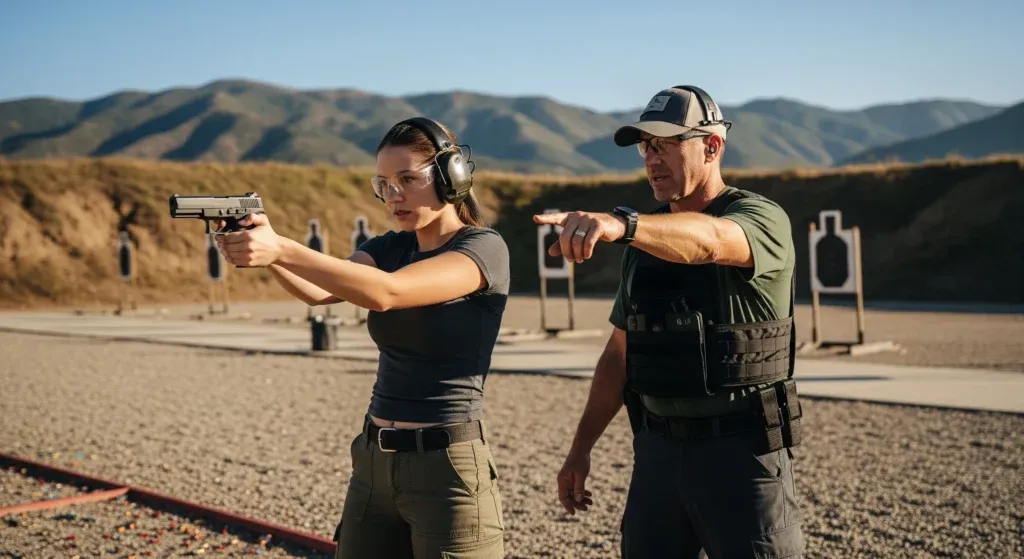
Proper firearms training forms the foundation of responsible gun ownership and safe
handling practices. Whether you're considering firearm ownership for personal protection,
sport shooting, or professional requirements, comprehensive training ensures you develop
the knowledge, skills, and confidence necessary to handle firearms safely and effectively.
The importance of firearms training extends beyond basic operation. Quality instruction
encompasses understanding firearm safety rules, developing proper shooting techniques,
and comprehending the legal framework surrounding firearm ownership and use. The four
fundamental firearm safety rules serve as the cornerstone of all training: treat every firearm
as if it's loaded, never point the muzzle at anything you don't intend to destroy, keep your finger
off the trigger until ready to shoot, and be certain of your target and what lies beyond it.
Understanding the legal framework is equally crucial, particularly in Colorado where specific
laws govern firearm ownership, concealed carry permits, and self-defense situations. Proper
training programs address these legal considerations alongside technical skills, ensuring you
operate within established guidelines while developing proficiency. Professional instruction
provides structured learning environments where beginners can ask questions, practice under
supervision, and build confidence gradually. This foundation prevents the development of bad
habits that can be difficult to correct later and establishes safety-first mindsets that last throughout
your firearms journey.
Key Firearm Types and Their Uses
Understanding different firearm types helps beginners make informed decisions about their
training focus and eventual purchases. The three primary categories handguns, rifles, and
shotguns—each serve distinct purposes and require specific handling techniques.
Handguns, including revolvers and semi-automatic pistols, offer portability and versatility.
Revolvers feature simple mechanisms with visible ammunition chambers, making them excellent
choices for beginners learning basic principles. Semi-automatic pistols provide higher capacity
and faster reloading but require understanding of more complex mechanisms. Both types excel
in self-defense training Colorado programs and concealed carry applications.
Rifles deliver superior accuracy at longer distances due to their longer barrels and stock
contact points. They're ideal for hunting, sport shooting, and precision training. Semi-automatic
rifles offer rapid follow-up shots, while bolt-action rifles emphasize accuracy and deliberate shot
placement. Rifles typically use more powerful cartridges than handguns, requiring respect for their
increased range and penetration capabilities.
Shotguns excel in close-range applications, firing multiple projectiles simultaneously or single
slugs for specific purposes. Their versatility makes them popular for home defense, hunting
various game types, and sport shooting disciplines like trap and skeet.
Choosing the right firearm for training depends on your intended use. Self-defense training
typically begins with handguns, while hunting applications might emphasize rifles or shotguns.
Ammunition selection significantly impacts performance, with factors including bullet weight,
powder charge, and construction affecting accuracy, recoil, and terminal performance.
Professional instruction helps beginners understand these relationships and select appropriate
combinations for their training goals and eventual applications.
Essential Firearms Training Tips for Beginners
Mastering fundamental techniques forms the core of effective firearms training tips for
beginners. These building blocks create the foundation for advanced skills and consistent
performance.
Grip and Stance Fundamentals
Proper grip establishes control and consistency. For handguns, use a firm, high grip with
your strong hand, placing the web between thumb and index finger as high as possible on
the backstrap. Your support hand should fill remaining grip space, with thumbs positioned
forward and parallel. This two-handed grip provides maximum control and recoil management.
Stance affects stability and recoil control. The isosceles stance positions your body square to
the target with equal weight distribution, while the Weaver stance angles your body with the
strong-side foot back. Both offer advantages—experiment under professional guidance to
determine your preference.
Sight Alignment and Trigger Control
Sight alignment creates accuracy potential. Align the front sight post centered in the rear
sight notch with equal light gaps on both sides. Focus your eye on the front sight, allowing
the target to appear slightly blurred. This sight picture ensures consistent bullet placement.
Trigger control transforms sight alignment into accurate shots. Use the pad of your index
finger, applying straight-back pressure steadily and smoothly. Follow through by holding the
trigger back momentarily after the shot breaks, then release it only far enough to reset for the
next shot.
Safety Protocols at the Range
Range safety protocols protect everyone present. Always keep firearms pointed downrange,
follow range officer commands immediately, and wear appropriate eye and ear protection.
Understand range-specific rules regarding loading, unloading, and movement procedures.
Practice proper muzzle discipline consistently. Whether loading, unloading, or addressing
malfunctions, maintain downrange muzzle direction. Develop habits of checking your firearm's
condition regularly and communicating with others when handling firearms.
These beginner shooting techniques require consistent practice under qualified supervision.
Professional instruction accelerates learning while preventing dangerous habits that compromise
safety and accuracy.
Common Mistakes to Avoid
Beginning shooters often develop counterproductive habits that hinder progress and potentially
compromise safety. Recognizing these common pitfalls helps beginners focus their training efforts
effectively.
Neglecting Safety Measures
The most serious mistake involves treating safety as secondary to performance. Beginners
sometimes become focused on hitting targets while ignoring fundamental safety protocols.
This includes improper muzzle control, inadequate hearing protection, or rushing through safety
checks. Professional firearm safety tips emphasize that safety habits must become automatic
responses, not conscious decisions made each time.
Inconsistent Practice Routines
Many beginners practice sporadically or focus exclusively on shooting without developing
supporting skills. Effective firearms training tips for beginners emphasize regular dry-fire practice,
physical conditioning, and mental preparation alongside live-fire sessions. Inconsistent training
leads to skill degradation and prevents muscle memory development essential for competent
firearm handling.
Another common error involves practicing incorrect techniques repeatedly. Without professional
guidance, beginners may reinforce poor grip, stance, or trigger control habits that become
increasingly difficult to correct. This highlights the importance of quality instruction early in the
learning process.
Ignoring the importance of Professional Training
Self-taught shooters often plateau quickly or develop dangerous habits. Professional instruction
provides structured progression, immediate feedback, and safety oversight that individual practice
cannot match. Attempting to learn complex skills like improving shooting accuracy without proper
guidance frequently results in frustration and poor performance.
Additionally, beginners sometimes choose inappropriate training progression, attempting
advanced techniques before mastering fundamentals. This approach creates confusion and
potentially unsafe situations. Professional instructors ensure appropriate skill development
sequences that build competence systematically while maintaining safety standards throughout
the learning process.
How to Choose a Training Course
Selecting appropriate training requires careful evaluation of your current skill level, learning
objectives, and instructor qualifications. The right course accelerates your progress while ensuring
safety and legal compliance.
Considering Your Skill Level
Honest self-assessment determines appropriate course selection. Complete beginners benefit
from foundational courses covering basic safety, firearm operation, and fundamental shooting
techniques. Those with some experience might consider intermediate programs focusing on
specific skills like improving shooting accuracy or advanced firearms training techniques.
Consider your comfort level with firearms. Timid beginners often benefit from smaller class
sizes or personalized instruction that allows questions and proceeds at comfortable paces. More
confident students might thrive in standard group settings with diverse skill levels.
Evaluating Instructors and Course Content
Research instructor credentials, including certifications, experience, and teaching philosophy
. Quality instructors maintain current certifications from recognized organizations and demonstrate
ongoing education in their field. NRA pistol courses, for example, require certified instructors who
meet specific training and testing requirements.
Course content should align with your goals. Those seeking concealed carry classes need
programs covering legal requirements, while sport shooters might prioritize accuracy and
technique development. Comprehensive programs address both technical skills and practical
applications relevant to your intended firearm use.
Understanding Certifications and What They Signify
Different certifications serve various purposes. Basic safety courses provide foundational
knowledge, while specialized programs like concealed carry classes meet specific legal
requirements. Advanced certifications demonstrate higher skill levels and may qualify you for
additional training opportunities or competitive participation.
Research certification recognition and transferability, particularly for concealed carry permits
that may have reciprocity agreements with other states.
Conclusion: Building Confidence through
Training
Mastering essential firearms training tips for beginners requires commitment to safety,
consistent practice, and professional instruction. The journey from novice to competent
shooter involves developing technical skills alongside safety awareness and legal understanding.
Remember that competence builds gradually through structured learning and regular practice
under qualified supervision.
The fundamental principles covered proper grip and stance, sight alignment, trigger control,
and unwavering attention to safety form the foundation for all advanced skills. These basics
require continuous reinforcement even as you progress to more sophisticated techniques.
Professional training accelerates this development while ensuring you avoid common mistakes
that can hinder progress or compromise safety.
Choosing appropriate training courses matched to your skill level and goals maximizes learning
efficiency. Whether pursuing self-defense capabilities, recreational shooting, or competitive
participation, quality instruction provides structured progression and expert guidance that self
-teaching cannot match. The investment in professional training pays dividends in improved
performance, enhanced safety, and increased confidence.
Building competence takes time, patience, and dedication. Embrace the learning process,
celebrate incremental improvements, and maintain focus on safety above all else. With proper
training and consistent practice, you'll develop the knowledge, skills, and confidence necessary
for responsible firearm ownership and use.
Ready to begin your firearms training journey? Colorado Boots Firearms Instruction
offers comprehensive courses for all skill levels, from basic safety to advanced techniques.
Whether you're interested in our Handgun Fundamentals Course, concealed carry classes,
or personalized coaching sessions, our professional instructors provide the expert guidance
you need to develop competence safely. Contact us at 719-782-8793 or visit
https://coloradobootsfirearmsinstruction.com/ to explore our complete course offerings and start
building your firearms skills today.
Tags: Beginner Firearms Training, Firearm Safety Tips, Shooting Fundamentals
Latest Blog & Articles
The Ultimate Guide to Defensive Handgun Training in Colorado
In an increasingly uncertain world, mastering defensive handgun training is essential for responsible gun ownership and personal safety. Co…
Read more →
Best Practices for Defensive Handgun Training: A Comprehensive Guide
In a world where personal safety is increasingly vital, mastering defensive handgun training is essential for anyone considering firearm ow…
Read more →
The Ultimate Guide to Firearm Training Courses in El Paso County, Colorado
In an age where firearm safety and education are paramount, Colorado Boots is proud to provide the definitive guide to firearm training cou…
Read more →