
Essential Colorado Springs Handgun Safety Tips: A Comprehensive Guide for All Shooters
November 24, 2026 · Firearm Safety / Safety Education / Handgun Training
Introduction
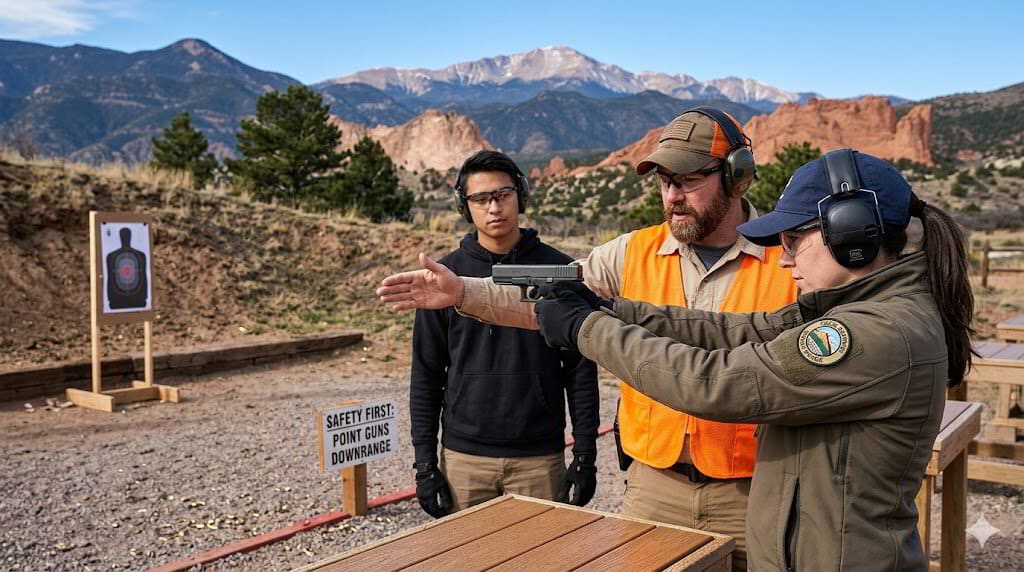
In the beautiful city of Colorado Springs, nestled against the backdrop of the Rocky Mountains, responsible firearm ownership and proper handgun safety practices are fundamental to maintaining a safe community. Whether you're a first-time gun owner feeling apprehensive about handling a firearm or an experienced shooter looking to refine your techniques, understanding comprehensive Colorado Springs handgun safety tips is essential for everyone who handles firearms.
This guide serves as your complete resource for developing and maintaining safe handgun practices that protect you, your loved ones, and your community. From basic safety fundamentals to advanced shooting techniques, we'll explore every aspect of responsible handgun ownership and operation. Colorado's unique legal landscape and diverse shooting environments require specific knowledge that goes beyond generic safety advice.
Our comprehensive approach addresses the needs of beginners who may feel intimidated by firearms, intermediate shooters seeking to improve their skills, and advanced practitioners looking to master complex techniques. By following these proven safety protocols and investing in proper training, you'll develop the confidence and competence necessary to handle handguns safely and effectively in any situation.
Understanding Handgun Safety
Handgun safety encompasses a comprehensive set of principles, practices, and protocols designed to prevent accidents, injuries, and fatalities while handling firearms. At its core, handgun safety represents a mindset that prioritizes responsibility, awareness, and respect for the deadly potential of firearms. This foundation extends beyond simple rule memorization to develop ingrained habits that become second nature through consistent practice and reinforcement.
Every shooter, regardless of experience level, must understand that handgun safety applies universally. Beginners often assume safety rules are primarily for novices, while experienced shooters sometimes develop overconfidence that leads to complacency. However, statistics consistently demonstrate that accidents occur across all skill levels, making continuous safety awareness crucial for everyone who handles firearms.
In Colorado, handgun owners bear significant legal responsibilities that extend far beyond basic safety practices. State law requires secure storage when minors could access firearms, mandates background checks for most transfers, and establishes clear guidelines for concealed carry permit holders. Understanding these legal obligations protects you from criminal liability while ensuring community safety.
The consequences of negligent handgun handling extend beyond legal ramifications to include devastating personal impacts. Accidental discharges can result in serious injuries, property damage, and psychological trauma that affects entire families. Professional firearm training Colorado programs emphasize that proper safety habits prevent these tragic outcomes while building the foundation for skilled, confident shooting.
Colorado Springs' unique environment presents specific challenges that make handgun safety education particularly important. High altitude affects ballistics, diverse terrain creates varied shooting conditions, and proximity to wilderness areas requires additional safety considerations for outdoor shooting activities.
Essential Safety Tips for Colorado Springs Shooters
The foundation of all Colorado Springs handgun safety tips begins with the cardinal rule: always treat every firearm as if it's loaded, regardless of your certainty about its condition. This principle eliminates the most common cause of accidental discharges—assuming a firearm is unloaded. Even when you've personally verified a handgun's condition, maintain this mindset consistently. This habit prevents the dangerous mental shortcuts that lead to tragic accidents.
Knowing your target and what lies beyond it represents another critical safety principle that takes on special significance in Colorado Springs' diverse environment. Whether shooting at indoor ranges, outdoor facilities, or on private property, bullets can travel significant distances beyond your intended target. Colorado's varied terrain means projectiles might travel farther than expected due to altitude and atmospheric conditions. Always ensure adequate backstops and consider the trajectory of missed shots or over-penetration scenarios.
Trigger discipline forms the cornerstone of safe handgun handling. Keep your finger completely off the trigger and outside the trigger guard until you've made the conscious decision to shoot. This practice prevents accidental discharges during drawing, holstering, or movement. Your trigger finger should rest along the frame of the handgun, maintaining this position until your sights are aligned on target and you're ready to fire.
Secure firearm storage protects children, prevents theft, and demonstrates responsible ownership. Colorado law requires secure storage when children might access firearms, but best practices extend beyond legal minimums. Invest in quality gun safes, trigger locks, or secure storage systems that prevent unauthorized access while allowing quick access for authorized users. Consider biometric safes for bedside storage that balance security with accessibility.
Proper safety equipment protects your hearing, vision, and overall well-being during shooting activities. Eye protection shields against brass ejection, debris, and potential malfunctions, while hearing protection prevents permanent damage from repeated exposure to gunshot noise. Quality equipment enhances comfort and performance while providing essential protection. Never compromise on safety gear, regardless of shooting duration or environment.
Maintaining situational awareness extends safety beyond mechanical considerations to include environmental factors. Be aware of other shooters, range conditions, weather impacts, and potential distractions that might affect safe shooting. Colorado Springs' variable weather conditions can impact visibility, stability, and equipment function, requiring additional attention to environmental factors that influence safe shooting practices.
Preparing for Range Sessions
Successful range sessions begin with thorough preparation that ensures safety, maximizes learning opportunities, and creates positive shooting experiences. Start by assembling essential equipment including eye and ear protection, appropriate ammunition, cleaning supplies, and any tools needed for your specific handgun. Create a checklist to ensure nothing important gets forgotten, as missing safety equipment can derail entire training sessions.
Selecting appropriate ammunition requires understanding your handgun's specifications, intended use, and range requirements. Consult your owner's manual for approved cartridge specifications, paying attention to bullet weight, powder charges, and overall cartridge length. Different ammunition types serve various purposes—target loads for practice, defensive rounds for self-protection, and specialized cartridges for competitive shooting. Never use ammunition that exceeds your firearm's specifications or shows signs of damage, corrosion, or defects.
Range etiquette encompasses the unwritten rules that ensure everyone's safety and enjoyment during shooting activities. Arrive early to familiarize yourself with facility-specific rules, range commands, and emergency procedures. Respect other shooters by maintaining appropriate spacing, avoiding distractions during shooting, and following established protocols for target changes and equipment handling. Understanding common range commands like "cease fire," "range is hot," and "range is cold" prevents confusion and maintains safety protocols.
Preparation also includes mental readiness for focused, disciplined shooting practice. Review your training goals, safety procedures, and specific techniques you plan to practice. Approach each range session with clear objectives rather than simply shooting for entertainment. This professional mindset maximizes improvement while reinforcing safe habits that transfer to real-world situations where handgun skills might be needed.
Basics of Handgun Handling
Proper handgun grip forms the foundation for accurate, controlled shooting while maintaining safety throughout the firing process. Establish a firm, consistent grip using your dominant hand positioned high on the backstrap, with your support hand filling remaining space around your shooting hand. This two-handed grip provides maximum control during recoil while maintaining consistent sight alignment. Avoid excessive tension that causes trembling, but ensure sufficient grip strength to control the firearm during rapid fire or stress situations.
Shooting stance significantly impacts accuracy, recoil management, and overall shooting performance. The isosceles stance positions your body square to the target with equal weight distribution, while the Weaver stance angles your body with the support side forward. Both techniques offer advantages depending on shooting scenarios and individual preferences. Experiment with different stances during handgun safety courses to determine which provides optimal stability and comfort for your body type and shooting goals.
Sight alignment and trigger control work together to deliver accurate shots consistently. Proper sight picture aligns the front sight post centered in the rear sight notch, with equal light gaps on both sides. Focus your vision on the front sight rather than the target, allowing the target to appear slightly blurred. Smooth, straight-back trigger pressure using the pad of your index finger prevents shot disturbance while maintaining sight alignment throughout the firing process.
Reloading techniques vary depending on your handgun type, but fundamental principles apply universally. Practice reloading procedures until they become automatic, ensuring you can perform them safely under stress. For revolvers, master both speed loaders and individual cartridge loading. Semi-automatic pistols require proficiency with magazine changes, including tactical reloads when ammunition remains and emergency reloads when the gun is empty. Always maintain muzzle discipline during reloading, keeping the handgun pointed in a safe direction throughout the process.
Malfunction clearance represents an essential skill that ensures continued safe operation when problems occur. Learn to identify and clear common malfunctions including failure to fire, failure to extract, and double feeds. Practice these procedures regularly so they become instinctive responses rather than panic-inducing emergencies. Proper malfunction clearance maintains safety while restoring your handgun to operational status quickly and efficiently.
Advanced Handgun Techniques
Advanced firearm techniques build upon fundamental skills to address complex shooting scenarios that extend beyond basic marksmanship. Shooting under stress requires developing skills that maintain accuracy and safety when adrenaline affects fine motor control. Stress inoculation training gradually introduces pressure through time constraints, physical exertion, and scenario-based exercises that simulate real-world conditions. These advanced techniques help shooters maintain proficiency when stakes are highest.
Multiple target engagement demands rapid target acquisition, smooth transitions, and consistent accuracy across varying distances and angles. Practice engaging targets in different sequences, developing the ability to prioritize threats and allocate appropriate attention to each target. This skill proves valuable in competitive shooting and defensive scenarios where multiple threats might present themselves simultaneously. Focus on smooth, controlled movements rather than frantic rushing that compromises accuracy and safety.
Using cover and movement transforms static shooting skills into dynamic capabilities that reflect real-world applications. Learn to shoot from behind barricades, around corners, and while moving between positions. These techniques require modified stances, alternative grip configurations, and heightened awareness of muzzle direction as you navigate obstacles. Practice these skills gradually, ensuring safety protocols remain paramount even during complex movement patterns.
Shooting from unconventional positions prepares you for scenarios where standard stances aren't possible. Practice shooting while kneeling, prone, or from awkward angles that might occur in defensive situations. These positions challenge your balance, sight alignment, and recoil management while requiring adaptations to fundamental techniques. Maintain strict safety discipline as unconventional positions can compromise muzzle control if not practiced properly.
Low-light shooting addresses the reality that many defensive encounters occur in reduced visibility conditions. Learn to use weapon-mounted lights, handheld flashlights, and ambient light sources effectively while maintaining target identification and safety protocols. Low-light techniques require modified grip configurations, alternative sight pictures, and heightened awareness of backstops and bystanders who might be difficult to see in darkness.
Self-Defense Considerations
Understanding Colorado's self-defense laws provides the legal framework for responsible defensive firearm use while protecting you from criminal prosecution when force is justified. Colorado's "Make My Day" law allows defensive force in your home, while the state's general self-defense statutes permit reasonable force to protect yourself and others from imminent threats. However, these protections require that your response be proportional to the threat and that you reasonably believe force is necessary to prevent death or serious bodily injury.
De-escalation techniques often provide safer, more effective solutions than defensive force while avoiding legal complications and personal trauma associated with violent encounters. Learn to recognize escalating situations early, communicate assertively without aggression, and create distance from potential threats whenever possible. Verbal de-escalation skills can resolve many conflicts before they reach the point where defensive force becomes necessary, protecting everyone involved from harm.
Situational awareness forms your first line of defense by helping you avoid dangerous situations entirely or recognize threats early enough to respond effectively. Develop habits of scanning your environment, identifying potential escape routes, and recognizing behavioral indicators that suggest criminal intent. This awareness extends beyond paranoia to include practical observation skills that enhance personal safety in everyday situations.
After any defensive use of firearms, understand your legal obligations and practical steps that protect your interests. Contact law enforcement immediately, request medical attention for anyone injured, and avoid detailed statements until you've consulted with legal counsel. The aftermath of defensive shootings involves complex legal processes that can continue for months or years, requiring careful navigation to protect your rights and interests.
Training specifically for defensive scenarios differs significantly from recreational shooting or competitive marksmanship. Defensive training emphasizes quick decision-making, shooting under stress, and managing the psychological impacts of violent encounters. Consider advanced courses that address these unique challenges while building skills that transfer to real-world defensive situations.
Courses Offered by Colorado Boots
Colorado Boots Firearms Instruction provides comprehensive training programs designed to meet the diverse needs of shooters at every skill level, from nervous beginners to advanced practitioners seeking specialized techniques. Our Colorado Concealed Carry License Training ensures you meet all state requirements while developing practical skills that extend beyond legal minimums. This course covers Colorado law, safe handling procedures, and practical shooting skills that prepare you for responsible concealed carry.
Our Handgun Fundamentals Course serves as the perfect starting point for new shooters who want to build solid foundations in firearm safety and basic marksmanship. This program addresses common concerns and fears while providing hands-on experience in a supportive, professional environment. Students learn proper grip, stance, sight alignment, and trigger control through structured exercises that build confidence progressively.
Advanced courses including our Advanced Handgun Shooting Techniques and Advanced Pistol Course challenge experienced shooters with complex scenarios, precision shooting requirements, and tactical applications. These programs introduce concepts like shooting on the move, multiple target engagement, and stress inoculation training that elevate your skills beyond basic proficiency.
Specialized courses address specific aspects of handgun ownership and use. Our Selecting a Handgun Course helps you choose firearms that match your intended use, physical characteristics, and skill level. The Choosing the Holster Course ensures you can carry your handgun safely and accessibly. Our Kids Firearm Safety Class introduces young people to firearm safety principles in age-appropriate ways that build respect and understanding.
Personalized coaching and one-on-one sessions provide individualized attention that addresses your specific goals, challenges, and learning style. These sessions allow for customized curriculum, immediate feedback, and accelerated skill development that group classes cannot provide. Whether you're preparing for competition, addressing specific deficiencies, or seeking advanced tactical training, personalized instruction delivers results efficiently and effectively.
Conclusion
Mastering Colorado Springs handgun safety tips requires ongoing commitment to education, practice, and skill development that extends throughout your shooting career. The principles and techniques outlined in this comprehensive guide provide the foundation for safe, responsible handgun ownership and use, but they represent starting points rather than final destinations. Continuous learning through formal training, regular practice, and staying current with evolving best practices ensures your skills remain sharp and your safety habits stay strong.
Remember that handgun safety encompasses far more than mechanical rule-following—it represents a mindset that prioritizes responsibility, respect, and continuous improvement. Whether you're just beginning your journey into firearm ownership or seeking to refine advanced techniques, investing in professional training provides invaluable benefits that extend beyond basic safety to include improved accuracy, increased confidence, and enhanced enjoyment of shooting sports.
The diverse shooting opportunities available in Colorado Springs, from indoor ranges to outdoor facilities and private property, require adaptable skills and comprehensive safety knowledge that addresses varying conditions and scenarios. By following the guidelines presented in this guide and seeking ongoing education through reputable training programs, you'll develop the competence and confidence necessary to handle handguns safely and effectively throughout your shooting career.
Ready to take your handgun skills to the next level? Contact Colorado Boots Firearms Instruction at 719-782-8793 to enroll in our comprehensive training programs. Whether you need Colorado concealed carry permit training, want to master fundamental techniques, or seek advanced tactical skills, our professional instructors provide the expert guidance you need to become a safer, more confident shooter. Visit https://coloradobootsfirearmsinstruction.com/ to explore our complete course offerings and schedule your training today!
Tags: handgun safety Colorado Springs, firearm safety tips, responsible gun handling
Latest Blog & Articles
The Ultimate Guide to Defensive Handgun Training in Colorado
In an increasingly uncertain world, mastering defensive handgun training is essential for responsible gun ownership and personal safety. Co…
Read more →
Best Practices for Defensive Handgun Training: A Comprehensive Guide
In a world where personal safety is increasingly vital, mastering defensive handgun training is essential for anyone considering firearm ow…
Read more →
The Ultimate Guide to Firearm Training Courses in El Paso County, Colorado
In an age where firearm safety and education are paramount, Colorado Boots is proud to provide the definitive guide to firearm training cou…
Read more →