
Essential Beginner Rifle Shooting Techniques: Improve Your Skills Safely
September 15, 2026 · Firearm Training / Safety & Education / Marksmanship Skills
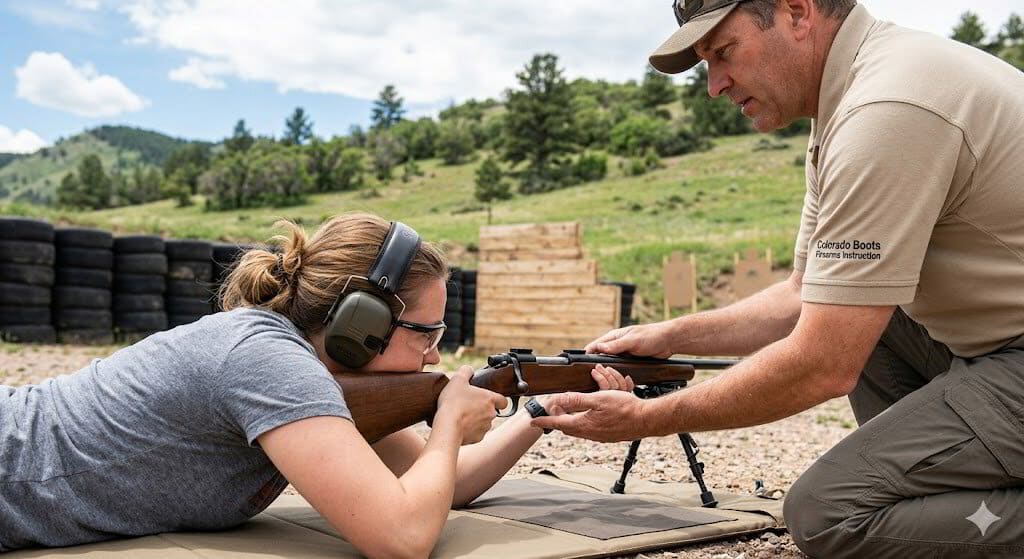
Whether you're considering rifle shooting for sport, hunting, or self-defense purposes, mastering the fundamentals is crucial for developing accuracy, confidence, and most importantly, maintaining safety. Rifle shooting requires precision, discipline, and a thorough understanding of proper techniques that can only be developed through consistent practice and expert guidance.
Many newcomers to rifle shooting feel overwhelmed by the complexity of the sport, but with the right foundation and systematic approach, anyone can develop proficient skills. The key lies in understanding that rifle shooting is both an art and a science – combining mechanical precision with mental discipline and physical control.
At Colorado Boots Firearms Instruction, we've witnessed countless beginners transform from nervous first-time shooters into confident, accurate marksmen through dedicated practice and proper instruction. This comprehensive guide will walk you through essential beginner rifle shooting techniques that form the cornerstone of effective marksmanship.
Remember, there are no shortcuts to becoming a skilled rifle shooter. Success comes from mastering the basics, practicing consistently, and always prioritizing safety above all else. Every expert marksman started exactly where you are now – with curiosity, respect for the firearm, and a commitment to learning proper techniques from the ground up.
Introduction to Rifle Shooting
Rifle shooting represents one of the most precise and rewarding disciplines within the firearms community. Unlike handgun shooting, rifle shooting offers enhanced accuracy potential due to the longer barrel length, improved sight radius, and the ability to establish multiple points of contact with your body for stability. This makes it an excellent starting point for many beginners who want to develop fundamental marksmanship skills.
The importance of mastering basic beginner rifle shooting techniques cannot be overstated. These foundational skills serve as building blocks for every aspect of rifle marksmanship, whether you're pursuing competitive shooting, hunting, or self-defense applications. Without solid fundamentals, shooters often develop bad habits that become increasingly difficult to correct as they advance in their training.
Safety must always be your primary concern when handling any firearm. The four fundamental rules of firearm safety are non-negotiable: treat every firearm as if it's loaded, never point the muzzle at anything you don't intend to destroy, keep your finger off the trigger until ready to shoot, and always be sure of your target and what's beyond it. These rules form the foundation of responsible rifle ownership and operation.
Professional instruction plays a vital role in developing proper rifle shooting techniques. While it's possible to learn through trial and error, working with qualified instructors accelerates your progress while ensuring you develop correct habits from the beginning. Experienced instructors can identify and correct minor issues before they become ingrained problems that limit your accuracy potential.
Understanding Your Equipment
Selecting the right rifle for beginners requires careful consideration of several factors including intended use, physical characteristics, and budget constraints. Bolt-action rifles are often recommended for beginners due to their mechanical simplicity, inherent accuracy, and the deliberate nature of their operation, which encourages thoughtful shot placement. Semi-automatic rifles offer faster follow-up shots but can encourage rushed shooting among inexperienced users.
Caliber selection significantly impacts the learning experience for new rifle shooters. Smaller calibers like .22 Long Rifle provide minimal recoil, allowing beginners to focus on fundamental techniques without developing flinching habits. As skills develop, shooters can progress to larger calibers like .223 Remington or .308 Winchester for different applications while maintaining the same fundamental techniques.
Understanding basic rifle components enhances your ability to operate and maintain your firearm effectively. The barrel determines accuracy potential and must be kept clean and free from damage. The action cycles ammunition and houses the firing mechanism – whether bolt-action, semi-automatic, or lever-action, each type requires specific operating procedures. The trigger system converts your finger pressure into firing pin release, making trigger quality crucial for accuracy.
The stock connects you to the rifle and affects both comfort and accuracy. Proper stock fit ensures consistent cheek weld and length of pull, allowing you to achieve the same shooting position repeatedly. Adjustable stocks accommodate different body types and shooting positions, while fixed stocks offer simplicity and reliability.
Optics selection can dramatically improve accuracy potential for beginning shooters. Quality scopes provide magnification and precise aiming points that iron sights cannot match. However, iron sights teach fundamental alignment principles that benefit all shooting disciplines. Many instructors recommend learning with iron sights before transitioning to optics to develop a complete skill set.
Rifle Shooting Stances and Grip
Proper shooting stance provides the stable foundation necessary for accurate rifle shooting. The standing position, while challenging for beginners, develops balance and muscle memory that benefits all other positions. Your feet should be shoulder-width apart with your body positioned at approximately 45 degrees to the target. Your support-side foot should be slightly forward, creating a natural, balanced stance that can be maintained comfortably.
The sitting position offers improved stability compared to standing while remaining relatively quick to assume. Cross-legged sitting provides a low, stable platform with your elbows resting on your knees for additional support. This position works well for intermediate-range shooting where prone positioning isn't practical due to terrain or vegetation.
Prone positioning delivers maximum stability and accuracy potential, making it ideal for precision shooting and long-range applications. Your body should be aligned at a slight angle to the rifle's bore axis, preventing the rifle from canting. Both elbows should contact the ground with your support elbow directly under the rifle for vertical support.
Rifle grip differs significantly from handgun grip techniques. Your firing hand should grasp the pistol grip or wrist of the stock with firm but not excessive pressure. Too much grip tension can cause tremors that negatively affect accuracy. Your support hand should pull the rifle firmly into your shoulder while providing fine adjustments for windage.
The support hand position varies depending on the rifle configuration and shooting position. For traditional rifles without vertical grips, your support hand should grasp the forend with your thumb positioned on the same side as your fingers – avoid wrapping your thumb over the top as this can create inconsistent pressure points. Your support arm should pull straight back, creating consistent shoulder contact.
Common stance and grip mistakes include leaning backward to compensate for recoil, gripping too tightly with the firing hand, and failing to establish consistent cheek weld. These errors create inconsistency that prevents accuracy development and can lead to safety issues in dynamic shooting situations.
Aiming Techniques
Sight alignment represents the most critical aspect of accurate rifle shooting. With iron sights, you must align the front sight post in the center of the rear sight notch with equal light gaps on both sides. The top of the front sight should be level with the top of the rear sight. This alignment must be perfect for each shot – even small deviations result in significant point-of-impact changes at distance.
Sight picture refers to the relationship between your aligned sights and the target. For precision shooting, center the aligned sights on your intended point of impact. Some shooting disciplines use different sight pictures, such as a six o'clock hold where the aligned sights appear below the bullseye, but center hold provides the most intuitive relationship between sight picture and bullet impact.
When using telescopic sights, proper eye relief becomes crucial for both accuracy and safety. Your eye should be positioned 3-4 inches behind the scope eyepiece to prevent scope bite during recoil. The scope image should appear perfectly round without dark crescents, indicating proper eye alignment. Consistent head position ensures repeatable scope alignment for every shot.
Breathing control directly affects shooting accuracy because your chest movement translates to the rifle. The natural respiratory pause occurs after exhaling approximately half your breath – this provides a stable platform for trigger manipulation. Avoid holding your breath for extended periods as this causes tremors and rushed shots.
Windage and elevation adjustments become necessary as distance increases or environmental conditions change. Most rifle scopes adjust in quarter-minute increments, meaning each click moves point of impact approximately one-quarter inch at 100 yards. Understanding your scope's adjustment values allows you to make precise corrections based on observed bullet impact.
Environmental factors significantly influence bullet trajectory and accuracy. Wind pushes bullets off course, with crosswinds having the greatest effect. Temperature affects powder burn rates and bullet velocity, while humidity and altitude influence air density. Beginning shooters should start in calm conditions before learning to compensate for environmental variables.
Shooting Fundamentals
Trigger control represents the most important skill in rifle marksmanship. Proper trigger manipulation requires straight-back finger movement using the pad of your index finger, not the joint. The trigger should surprise you when it breaks – this indicates you're not anticipating recoil or jerking the trigger. Smooth, consistent trigger pressure prevents disturbing sight alignment during the critical moment of bullet release.
Developing proper trigger control requires extensive dry fire practice in a safe environment. Dry firing allows you to practice trigger manipulation without the distraction of recoil or the expense of ammunition. Always ensure your rifle is completely unloaded and pointed in a safe direction before conducting dry fire exercises. Many modern rifles can be dry fired safely, but consult your owner's manual or a qualified gunsmith if uncertain.
Follow-through extends beyond trigger manipulation to include maintaining sight alignment and position after the shot breaks. Many beginners immediately lift their head or relax their position after firing, which can affect accuracy even though the bullet has already left the barrel. Proper follow-through involves calling your shot – predicting where the bullet impacted based on your sight picture when the trigger broke.
Natural point of aim eliminates muscle tension that causes tremors and inconsistent shot placement. To find your natural point of aim, assume your shooting position with eyes closed, then open them to see where your sights are pointing. If they're not on target, adjust your body position rather than muscling the rifle onto target. This technique ensures you can maintain sight alignment without fighting your natural body mechanics.
Recoil management begins with proper shooting position and grip but extends to mental preparation and follow-through. Anticipating recoil causes flinching, which typically results in low and left impacts for right-handed shooters. Focus on the front sight and trigger control rather than worrying about recoil. A properly fitted rifle with appropriate caliber selection minimizes felt recoil and allows you to concentrate on marksmanship fundamentals.
Practical Application: Range Training
Setting realistic goals for range practice ensures steady progress while maintaining motivation. Beginning shooters should focus on consistency rather than precision initially. Start with larger targets at closer distances – achieving consistent groups teaches fundamental skills more effectively than struggling with difficult shots that exceed your current ability level. As your skills improve, gradually increase distance and reduce target size.
Effective range sessions require structured practice plans rather than random shooting. Begin each session with dry fire exercises to reinforce trigger control and sight alignment. Start with your most accurate shooting position to build confidence, then progress to more challenging positions. Keep detailed shooting logs that record group sizes, environmental conditions, and equipment used – this data helps identify patterns and areas needing improvement.
Beginner shooting range tips include arriving early to select the best shooting position and familiarizing yourself with range rules and safety procedures. Bring more ammunition than you think you'll need, as running out during a productive practice session wastes the opportunity. Pack a shooting mat, hearing and eye protection, and a spotting scope or binoculars to observe your shots without walking downrange frequently.
Progress tracking requires consistent measurement and documentation. Photograph your targets with distance and date information, then file them chronologically to visualize improvement over time. Measure group sizes consistently – most shooters use center-to-center measurements of the two most widely separated holes. Focus on average group size over several sessions rather than single exceptional groups.
Equipment maintenance affects accuracy and reliability, making it an essential component of range training. Clean your rifle according to manufacturer specifications, paying particular attention to the barrel and action. A clean, properly maintained rifle eliminates equipment variables that can mask technique issues. Learn to perform basic maintenance tasks like cleaning and lubrication to ensure consistent performance.
Troubleshooting Common Issues
Identifying shooting errors requires systematic analysis of shot patterns and shooting technique. Consistent shot groups that impact away from your point of aim typically indicate sight adjustment needs rather than technique problems. Scattered shots suggest fundamental technique issues like inconsistent cheek weld, trigger control problems, or breathing irregularities. Large vertical spread often indicates breathing or trigger control issues, while horizontal spread suggests sight alignment or wind reading problems.
Flinching represents the most common accuracy problem among developing shooters. This involuntary reaction to anticipated recoil causes the muzzle to drop just before the shot breaks, typically resulting in low impacts. Dry fire practice helps overcome flinching by allowing you to focus on smooth trigger control without recoil distraction. Ball and dummy drills, where dummy rounds are randomly mixed with live ammunition, help identify and correct flinching behavior.
Understanding misfires and malfunctions ensures safe, appropriate responses to equipment failures. A misfire occurs when the trigger is pulled but the cartridge doesn't discharge. Keep the rifle pointed downrange for at least 30 seconds in case of a delayed ignition hangfire. A failure to feed occurs when the action doesn't properly chamber a cartridge, while a failure to extract leaves a spent case in the chamber.
Rifle maintenance directly impacts reliability and accuracy. Regular cleaning prevents powder fouling and copper buildup that can affect precision. Use appropriate cleaning solvents and tools designed for your rifle's caliber and barrel material. Over-cleaning can be as harmful as under-cleaning, so follow manufacturer recommendations for cleaning frequency and procedures.
Environmental factors can mask technique improvements or create apparent accuracy problems. Temperature changes affect ammunition performance and can shift point of impact. Wind conditions challenge even experienced shooters and require different techniques than calm weather shooting. Lighting conditions affect sight picture clarity and can cause apparent accuracy changes that aren't related to shooting technique.
Scope problems can create accuracy issues that appear to be shooting technique errors. Loose scope mounts allow the scope to shift during recoil, creating inconsistent point of impact. Poor scope adjustment tracking means the scope doesn't move point of impact proportionally to adjustment inputs. These mechanical issues require equipment solutions rather than technique modifications.
Advanced Tips for Progress
Recognizing when to seek personalized coaching accelerates skill development and prevents the reinforcement of bad habits. If your groups aren't improving after consistent practice, if you're developing flinching problems, or if you're unsure about safety procedures, professional instruction provides targeted solutions. One-on-one coaching allows instructors to observe your technique closely and provide immediate feedback that group classes cannot offer.
Joining shooting communities and clubs provides ongoing learning opportunities and motivation to continue improving. Local rifle clubs often have experienced members willing to share knowledge and may offer access to different shooting disciplines and longer-range facilities. Competitive shooting events provide goals and benchmarks for measuring progress while exposing you to advanced techniques and equipment.
Continuing education through books, videos, and formal courses expands your knowledge beyond basic marksmanship. Advanced courses cover topics like ballistics, wind reading, and position shooting that aren't typically included in basic instruction. NRA rifle training courses provide structured curricula that ensure comprehensive coverage of essential topics while maintaining standardized safety procedures.
Equipment upgrades should follow skill development rather than leading it. A quality trigger can improve accuracy potential, but only after you've developed sufficient trigger control to benefit from the upgrade. Better optics can reveal accuracy improvements that iron sights might mask, but they won't compensate for poor fundamental technique. Focus on developing skills with your current equipment before considering upgrades.
Practice routine development ensures consistent progress and maintains motivation during skill plateaus. Vary your practice to include different positions, distances, and target types while maintaining focus on fundamental techniques. Set specific, measurable goals for each practice session and track your progress over time. Regular practice sessions are more beneficial than infrequent long sessions for developing muscle memory and mental discipline.
Conclusion
Mastering beginner rifle shooting techniques requires dedication, patience, and a commitment to safety that extends throughout your shooting journey. The fundamentals covered in this guide – proper stance and grip, sight alignment, breathing control, and trigger manipulation – form the foundation for all advanced rifle shooting skills. These techniques remain relevant whether you progress to competitive shooting, hunting, or tactical applications.
Remember that accuracy develops gradually through consistent practice and proper instruction. Every expert marksman started with the same basic techniques you're learning now. Focus on developing smooth, repeatable processes rather than trying to achieve perfect accuracy immediately. Consistency leads to accuracy, and accuracy builds confidence in your abilities.
Safety must never be compromised in pursuit of improved performance. The four fundamental rules of firearm safety apply equally to beginners and experts. Developing safe gun handling habits from the beginning ensures these practices become automatic responses that protect you and others throughout your shooting career.
Professional instruction accelerates your progress while ensuring you develop correct techniques from the start. Self-taught shooters often struggle with bad habits that limit their accuracy potential and may compromise safety. Investing in quality instruction provides long-term benefits that far exceed the initial cost.
Continue practicing regularly and seeking opportunities to expand your knowledge and skills. Rifle shooting offers a lifetime of learning opportunities and personal satisfaction through measurable skill improvement.
Ready to master these essential rifle shooting techniques?
Colorado Boots Firearms Instruction offers comprehensive rifle training courses designed for beginners through advanced shooters.
Contact us at 719-782-8793 or visit coloradobootsfirearmsinstruction.com to schedule your Intro to Rifle Course or one-on-one session today.
Tags: Gun Safety Rules, Beginner Rifle Tips, Rifle Safety Colorado
Latest Blog & Articles
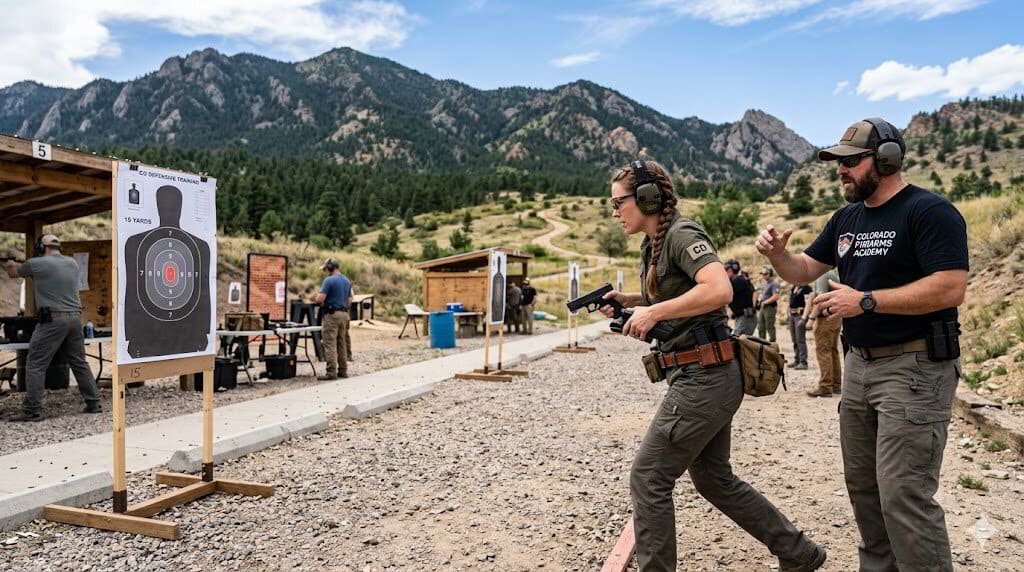
The Ultimate Guide to Defensive Handgun Training in Colorado
In an increasingly uncertain world, mastering defensive handgun training is essential for responsible gun ownership and personal safety. Co…
Read more →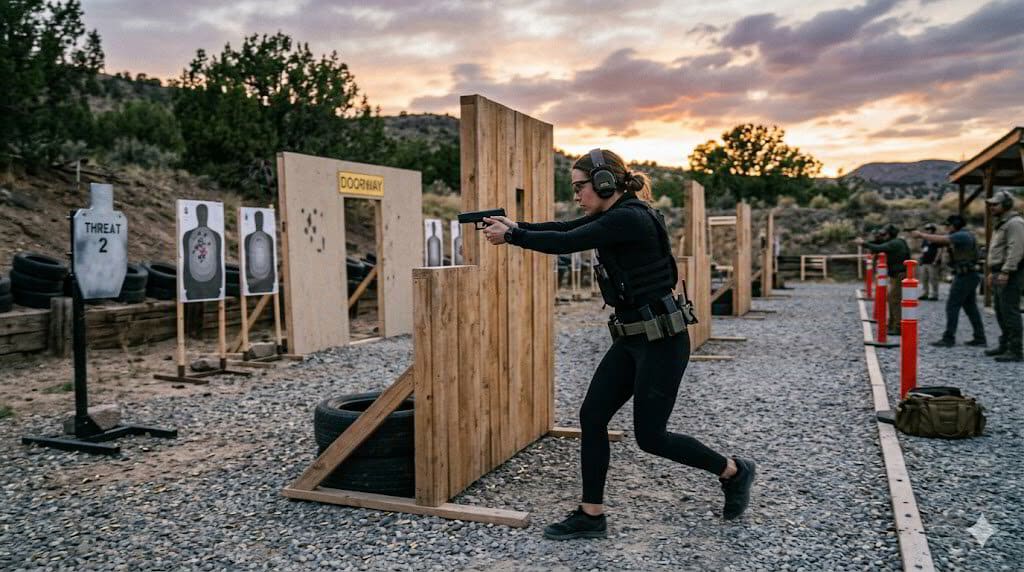
Best Practices for Defensive Handgun Training: A Comprehensive Guide
In a world where personal safety is increasingly vital, mastering defensive handgun training is essential for anyone considering firearm ow…
Read more →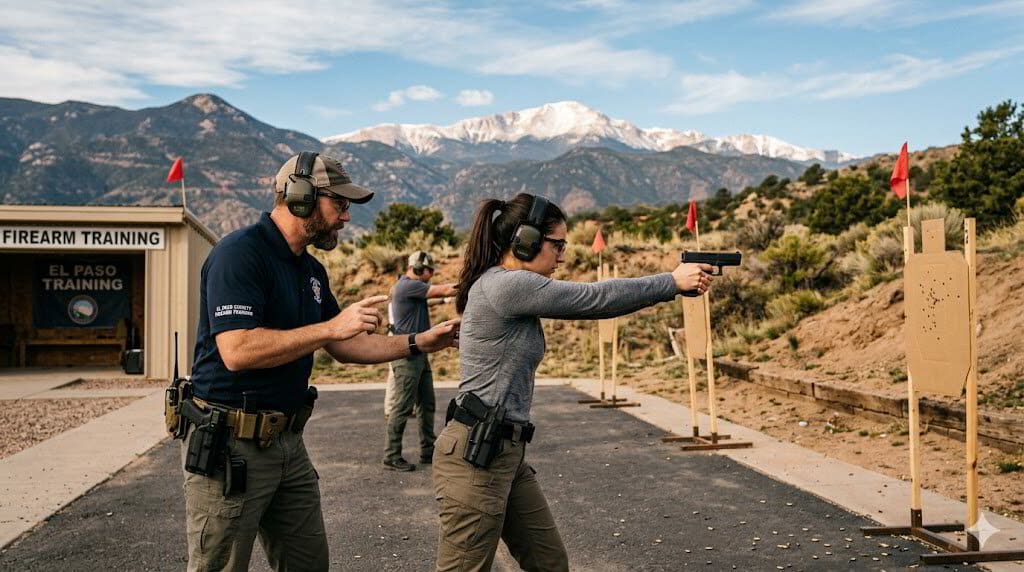
The Ultimate Guide to Firearm Training Courses in El Paso County, Colorado
In an age where firearm safety and education are paramount, Colorado Boots is proud to provide the definitive guide to firearm training cou…
Read more →