


Photo source: americanrifleman.org, centerofthewest.org, winchestergunstore.com
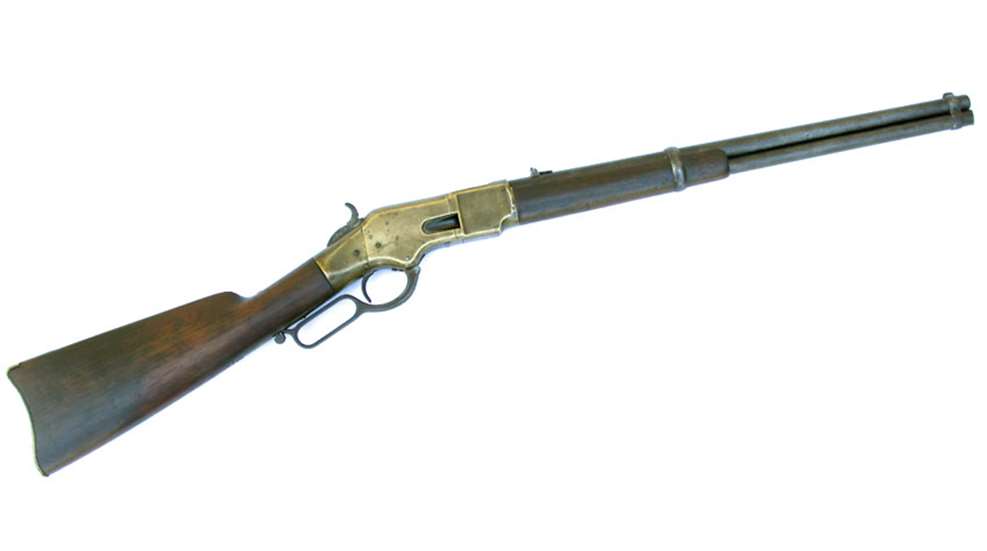
Winchester Model 1866
Winchester Model 1866 rifle in .44 Henry: specs, history, ammo and Colorado legal notes from the CO Boots gun library. Want hands-on time with a firearm like the Winchester Model 1866? Our certified instructors cover safe handling, operation and marksmanship in every firearms training class.
| Library ID | GT-1297 |
|---|---|
| Manufacturer | Winchester |
| Type | Rifle |
| Caliber | .44 Henry |
| Action | Lever-action |
| Barrel Length | 24 inches (610 mm) |
| Country of Origin | United States |
| Year of Production | 1866 |
| Production Status | Discontinued |
| Typical Users | Civilians |
| Rating | 4.5 |
Winchester Model 1866: Technical Specifications
The Winchester Model 1866, often called the "Yellow Boy," is a lever-action rifle notable for its innovative design. It is chambered primarily in .44 Henry, a rimfire cartridge. The rifle features a barrel length of 24 inches for the standard model, though variations exist with different lengths, including a 20-inch carbine model.
Weighing approximately 8.5 pounds, the Model 1866 has an overall length of around 42 inches. The receiver is made of brass, giving it a distinctive yellow appearance, while the barrel and internal components are typically crafted from steel. The rifle has a tubular magazine located beneath the barrel, with a capacity of 15 rounds in .44 Henry.
A unique engineering aspect of the Model 1866 is its improved loading mechanism, allowing for faster reloading compared to earlier models. Additionally, it features a crescent-shaped buttplate, a rear adjustable sight, and a front sight blade, enhancing accuracy and usability. The combination of materials and design made the Model 1866 a significant advancement in firearms technology of its time.
Winchester Model 1866: Performance Characteristics
The Winchester Model 1866, often called the "Yellow Boy," is a lever-action rifle renowned for its robust design and historical significance.
Accuracy: The Model 1866 typically features a 24-inch barrel, enhancing accuracy at moderate ranges. Its iron sights are adequate for quick target acquisition, but precision may vary with ammunition quality.
Reliability: Known for its dependable operation, the 1866 functions well with .44 Henry rimfire cartridges. Its simple mechanism and sturdy construction contribute to its reliability in various conditions.
Handling: Weighing about 8.5 pounds, the rifle balances well, allowing for smooth lever operation. The design promotes quick follow-up shots, making it user-friendly for shooters of different skill levels.
Rate of Fire: The lever-action mechanism allows for a rapid rate of fire, typically around 10-15 rounds per minute, depending on the shooter’s proficiency.
Overall, the Model 1866 excels in its historical context, providing a blend of performance characteristics that made it a favored firearm of its time.
Winchester Model 1866: Design Features
The Winchester Model 1866, known as the "Yellow Boy," features a distinctive lever-action mechanism, allowing for rapid firing with a 15-round tubular magazine. Its ergonomic design includes a smooth, rounded receiver, facilitating comfortable handling and operation. The crescent-shaped buttplate ensures a secure shoulder fit, while the lever is positioned for easy access.
Safety-wise, the Model 1866 incorporates a simple, reliable system without a manual safety; instead, the design minimizes accidental discharge risks through a robust lever mechanism. Aesthetically, it showcases a brass frame, giving it a unique golden hue, complemented by a walnut stock and forearm, enhancing its visual appeal.
Innovative features include the loading gate on the right side, allowing for quick reloading without removing the rifle from the shoulder. The gun's overall design reflects a blend of functionality and elegance, making it a significant advancement in firearm technology of its time.
Winchester Model 1866: Historical Context
The Winchester Model 1866, often called the "Yellow Boy," was developed by Oliver Winchester and his company following the success of the Model 1866 lever-action rifle. Designed by Benjamin Tyler Henry, it was based on the earlier Henry rifle but featured significant improvements, including a loading gate on the side and a more durable receiver.
Introduced in 1867, the Model 1866 became popular during the American Civil War and the westward expansion, providing rapid fire with its 15-round magazine. It was used by settlers, soldiers, and Native Americans, playing a notable role in conflicts like the Indian Wars.
Key milestones include its extensive use in the late 19th century and its role in shaping lever-action firearm design. The Winchester 1866 set standards for future rifles, influencing the development of subsequent models like the Winchester 1873. Its legacy endures in modern firearm design, emphasizing reliability, fire rate, and ease of use.
Winchester Model 1866: User Experience
The Winchester Model 1866 is celebrated for its blend of historical significance and practical performance. Users appreciate its comfortable design, featuring a smooth, rounded stock that fits well in the shoulder, allowing for extended shooting sessions without discomfort. The lever-action mechanism is praised for its ease of use, enabling quick follow-up shots and minimal effort in cycling rounds.
In terms of durability, the Model 1866 is well-regarded, with its solid brass receiver and robust construction standing the test of time, making it a reliable choice for both collectors and shooters. However, some users note that the weight can be a drawback, particularly for prolonged carry in the field.
Common complaints include issues with the sights, which some find inadequate for precision shooting, and concerns about the availability of parts for maintenance. Overall, the Winchester Model 1866 garners respect for its historic charm and functionality, though users suggest improvements in sight design.
Winchester Model 1866: Ammunition Information
The Winchester Model 1866, often known as the "Yellowboy," is chambered primarily for the .44 Rimfire cartridge, specifically the .44 Henry. This ammunition features a 200-grain bullet and a distinctive rimfire primer, designed for reliable ignition in lever-action rifles. The .44 Henry cartridge, though less common today, is compatible with modern reproductions and can be found from manufacturers like Winchester, CCI, and others.
While the Model 1866 is historically tied to the .44 Henry, some modern variants may also be chambered for .45 Colt or .38-40 Winchester, allowing for versatility. For optimal performance, it is recommended to use high-quality brass-cased ammunition, as it provides better extraction and reliability. Smokeless powder loads are also preferred for cleaner firing and reduced fouling, although original black powder loads can be used for historical reenactments. Always ensure that the ammunition matches the specific chambering of your firearm for safe operation.
Winchester Model 1866: Usage Tips and Best Practices
The Winchester Model 1866, known as the "Yellow Boy," requires careful handling and maintenance to ensure optimal performance.
Cleaning and Maintenance:
1. Disassemble: Remove the barrel and receiver for thorough cleaning. Use a cleaning rod with patches and a suitable bore cleaner.
2. Lubrication: Apply a light oil to moving parts, particularly the lever and bolt mechanism. Avoid over-lubricating.
3. Exterior Care: Wipe the wood stock with a soft cloth to prevent moisture damage, and condition it with a wood oil periodically.
4. Inspect Regularly: Look for signs of wear, especially on the firing pin and extractor.
Shooting Tips:
1. Stance: Use a stable, relaxed shooting stance to maintain control.
2. Sight Alignment: Ensure proper sight alignment for accuracy; adjust if necessary.
3. Trigger Control: Squeeze the trigger gently to avoid jerking the shot.
Common Mistakes to Avoid:
- Neglecting Maintenance: Regular cleaning prevents malfunctions.
- Overloading: Do not exceed recommended loads; it can damage the firearm.
- Poor Storage: Store in a dry environment to prevent rust an
Legal Considerations in Colorado
The Winchester Model 1866, a lever-action rifle, is classified as an antique firearm under U.S. federal law, meaning it was manufactured before 1899 and is not subject to the same regulations as modern firearms. As such, it can generally be purchased without a federal background check.
Civilian use is primarily for collection, historical reenactments, and sport shooting. Military use is virtually nonexistent today, as it was primarily a 19th-century weapon.
State regulations vary: some states may have specific laws regarding the sale and possession of antique firearms, while others may treat them like modern firearms. Notable legal cases involving the Model 1866 are rare, but issues may arise in context with historical preservation and ownership disputes.
In general, collectors should be aware of local laws regarding antique firearms, as they can differ significantly from state to state. Always consult specific state regulations for detailed compliance.
Winchester Model 1866: Reviews and Ratings
User reviews for the Winchester Model 1866 highlight several recurring themes.
Reliability: Many users praise the 1866 for its dependable performance, often noting that it functions well even under adverse conditions. The action is frequently described as smooth, contributing to a positive shooting experience.
Accuracy: Reviews often mention the rifle's impressive accuracy, with users expressing satisfaction in hitting targets at various distances. Shooters appreciate the sighting system, which aids in precision.
Customer Service: Feedback on customer service is mixed. While some users report positive experiences with knowledgeable staff, others highlight long wait times and difficulties in obtaining parts or repairs.
Overall Satisfaction: The majority of reviewers express high satisfaction with the Model 1866, citing its historical significance and craftsmanship. Many enjoy using it for both hunting and recreational shooting, making it a favored choice among collectors and enthusiasts alike.
Winchester Model 1866: Appearances in Media
The Winchester Model 1866, often known as the "Yellow Boy" for its distinctive brass receiver, has appeared in various movies, TV shows, and video games. Here’s a brief list:
Movies:
1. The Good, the Bad and the Ugly (1966) - The rifle is used by various characters throughout the film.
2. Django Unchained (2012) - Multiple characters utilize this rifle during the film.
3. The Hateful Eight (2015) - The rifle appears as part of the period-appropriate weaponry.
TV Shows:
1. Deadwood (2004-2007) - This series set in the American West features the Model 1866 among its historical firearms.
2. Westworld (2016-present) - The rifle is part of the Old West setting and is used by characters in the show.
Video Games:
1. Red Dead Redemption (2010) - The Winchester Model 1866 is available as a weapon in the game.
2. Call of Juarez: Gunslinger (2013) - The rifle appears as one of the weapons that players can use.
3. Fallout: New Vegas (2010) - The Model 1866 is featured as a weapon option for players.
These appearances reflect the Winchester Model 1866's iconic status as a historical firearm in various forms of media.
Related Firearms in the Library

More Rifle firearmsMore Winchester manufacturer firearmsMore United States country firearmsBrowse all firearms