
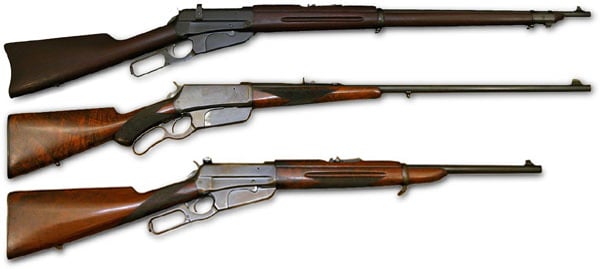

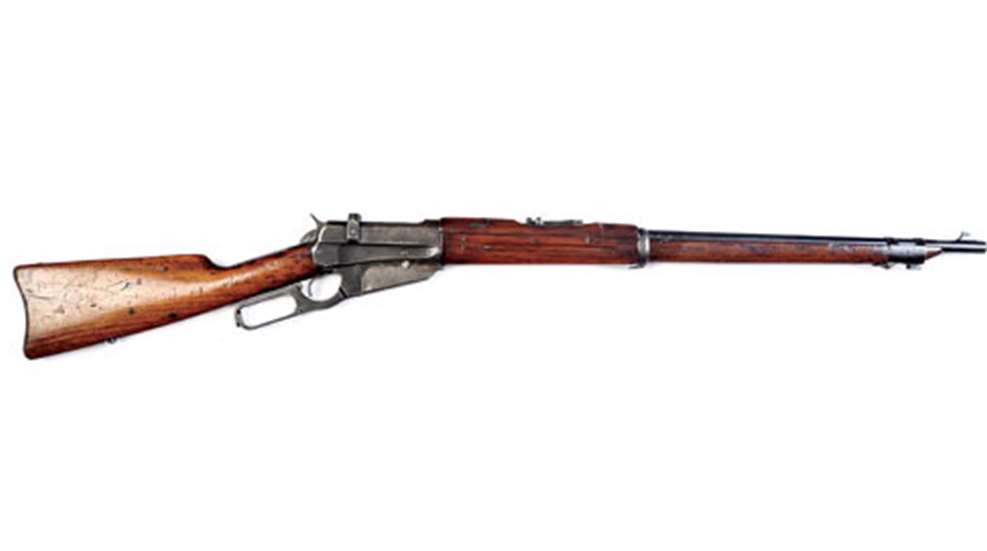
Photo source: winchestercollector.org, content.osgnetworks.tv, americanrifleman.org
Model 1895
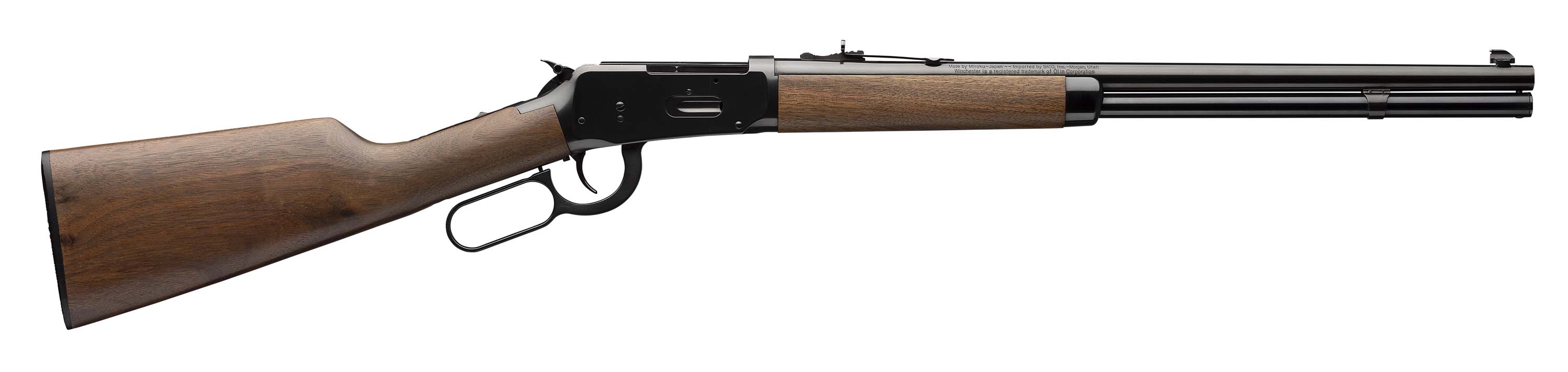
Model 1895 rifle in .30-40 Krag: specs, history, ammo and Colorado legal notes from the CO Boots gun library. Want hands-on time with a firearm like the Model 1895? Our certified instructors cover safe handling, operation and marksmanship in every firearms training class.
| Library ID | GT-281 |
|---|---|
| Manufacturer | Winchester |
| Type | Rifle |
| Caliber | .30-40 Krag |
| Action | Lever-action |
| Barrel Length | 22 inches (559 mm) |
| Country of Origin | United States |
| Year of Production | 1895 |
| Production Status | In production |
| Typical Users | Military, civilians |
| Rating | 4.5 |
Model 1895: Technical Specifications
The Model 1895, designed by Leon Nagant, is a notable bolt-action rifle primarily used in the early 20th century. Key specifications include:
- Caliber: Typically chambered for the 7.62x54mmR, a rimmed cartridge renowned for its effectiveness.
- Barrel Length: Usually has a barrel length of approximately 28 inches (710 mm), allowing for increased accuracy and range.
- Weight: The rifle weighs around 9.5 lbs (4.3 kg) when unloaded, providing stability during firing.
- Material: Constructed with a steel receiver and a wooden stock, ensuring durability and reliability.
- Unique Engineering Aspects: The Model 1895 features a distinctive gas-seal system that minimizes blowback and enhances safety. Its bolt design includes an integral magazine, providing a smooth loading experience. The rifle's straight-pull action allows for faster cycling, making it effective in combat situations.
Overall, the Model 1895 is recognized for its robust design and performance in various military applications.
Model 1895: Performance Characteristics
The Model 1895, often associated with the lever-action rifles, particularly the Winchester and Marlin variants, exhibits notable performance characteristics.
Accuracy: The Model 1895 typically delivers good accuracy, especially with well-maintained barrels and quality ammunition. Its sights can be adjusted for distance, enhancing precision at varied ranges.
Reliability: Known for its robust construction, the Model 1895 is generally reliable under diverse conditions. Lever-action mechanisms provide consistent feeding from the magazine, minimizing jams.
Handling: The design allows for smooth cycling of rounds, making it user-friendly. The balance and weight distribution contribute to comfortable handling, especially in the field.
Rate of Fire: The lever-action mechanism permits a relatively quick follow-up shot compared to bolt actions, though not as fast as semi-automatics. Experienced shooters can achieve 2-3 shots per minute effectively.
Other Metrics: The rifle is available in various calibers, with the .30-40 Krag and .45-70 Gov being popular choices. Thi
Model 1895: Design Features
The Model 1895, designed by the prominent firearms manufacturer, features a unique lever-action mechanism, making it one of the first to utilize this design in a repeating rifle. Its ergonomics are optimized for handling, with a comfortably shaped wooden stock and a smooth lever that allows for rapid cycling of cartridges. The rifle’s design includes a prominent crescent-shaped buttplate for stability during firing.
Safety mechanisms are integrated through a solid locking system that ensures the bolt remains secure when the rifle is not in use. A manual safety lever prevents accidental discharge.
Aesthetically, the Model 1895 showcases a blend of functionality and elegance, with finely crafted wood and metal finishes. The receiver is often adorned with intricate engravings, enhancing its visual appeal.
Innovative features include a side ejection port that facilitates faster loading and unloading, as well as a robust chamber designed to handle powerful cartridges, making it versatile for various shooting applications.
Model 1895: Historical Context
The Model 1895, developed by the Winchester Repeating Arms Company, was a lever-action rifle designed by John Browning. It marked a significant evolution in rifle design with its use of a box magazine, allowing for quicker reloading compared to traditional tubular magazines. Introduced in 1895, it was chambered for powerful cartridges like the .30-40 Krag, appealing to both military and civilian markets.
Key milestones include its adoption by the U.S. military during the Spanish-American War, where it was used effectively in combat. The Model 1895 was notable for its robust design and versatility, influencing future firearm designs, including semi-automatic and automatic rifles.
The rifle saw service in World War I and was favored by hunters and sport shooters for its reliability. Its design paved the way for modern magazine-fed firearms, impacting the evolution of rifles and changing the landscape of firearm technology in the 20th century.
Model 1895: User Experience
The Model 1895 is often praised for its robust design and reliable performance, appealing to both collectors and shooters. Users appreciate its comfort, particularly the ergonomic grip and smooth action, which enhance shooting experience. The lever-action mechanism offers intuitive operation, making it easy for both novice and experienced shooters to use effectively.
Durability is a strong point; made with high-quality materials, the Model 1895 withstands harsh conditions and rigorous use. Many users report it functioning well even after extensive shooting sessions, highlighting its long-lasting nature.
Common complaints include the weight of the firearm, which some find cumbersome during extended handling. Additionally, there are occasional remarks about the recoil being more pronounced than expected, particularly with heavier calibers. Overall, the Model 1895 garners high praise for its craftsmanship and functionality, with minor grievances primarily revolving around weight and recoil management.
Model 1895: Ammunition Information
The Model 1895, known for its unique lever-action design, was originally chambered for various calibers, most notably .30-40 Krag, .303 British, and .30-30 Winchester. The .30-40 Krag and .303 British were primarily used in military applications, while the .30-30 Winchester became a staple for American hunting.
This firearm is compatible with ammunition from several manufacturers, including Winchester, Remington, and Hornady. For optimal performance, it is recommended to use high-quality brass-cased cartridges, which ensure reliable feeding and extraction.
Special ammunition types such as soft-point (SP) and hollow-point (HP) bullets are favored for hunting, offering better expansion and terminal performance on game. For target shooting, full metal jacket (FMJ) rounds are commonly used due to their accuracy and reduced barrel fouling.
Reloaders often experiment with their own loads, using various bullet weights and powders to achieve tailored performance based on specific shooting needs.
Model 1895: Usage Tips and Best Practices
Model 1895 Usage Tips:
- Shooting Technique: Use a firm grip and proper stance to manage recoil. Align the sights carefully, focusing on the front sight for accuracy.
- Cleaning: After each use, clean the barrel with a bore brush and solvent to remove fouling. Use a cleaning rod with patches to ensure a clean bore. Wipe down the exterior with oil to prevent rust.
- Maintenance: Regularly check the action for smoothness. Lubricate moving parts sparingly with gun oil. Inspect the wood for cracks or wear, and apply wood conditioner if needed.
- Common Mistakes: Avoid over-lubricating, which can attract dirt. Don’t neglect the magazine; keep it clean and inspect springs regularly. Ensure you fully understand the loading and unloading process to avoid jams.
- Shooting Environment: Always shoot in a safe, controlled environment. Use appropriate ammunition for the model to ensure reliability and safety.
Remember to prioritize safety and always follow local laws regarding firearm usage.
Legal Considerations in Colorado
The Model 1895, often associated with the lever-action rifle designed by John Browning, has varying legal statuses across the United States. Generally, it is classified as a firearm under federal law, allowing civilian ownership, provided the buyer complies with background checks and restrictions.
State regulations vary significantly; some states have assault weapon bans that might restrict certain configurations or features of the Model 1895. For instance, California and New York have specific restrictions, while states like Texas have more relaxed laws regarding firearms.
Military use is limited, as the Model 1895 was primarily designed for civilian use, though it has historical military applications. Notable legal cases, such as United States v. Miller (1939), focus more on the Second Amendment's scope, indirectly affecting how firearms like the Model 1895 are viewed in terms of legality and regulation. Always check local laws for the most current regulations.
Model 1895: Reviews and Ratings
User reviews for the Model 1895 often highlight its reliability and durability, with many owners praising its performance in various conditions. Reviewers frequently mention the rifle's accuracy, noting that it delivers consistent groupings at various distances, making it a favorite for both hunting and sport shooting.
Customer service experiences are mixed; while some users report positive interactions and helpful support, others express frustration with response times or parts availability. Overall satisfaction tends to be high, with many users recommending the Model 1895 for its robust construction and historical significance. However, a few reviews mention issues with weight and recoil, which may not suit all shooters. In summary, the Model 1895 is generally well-regarded for its reliability and accuracy, though customer service experiences can vary.
Model 1895: Appearances in Media
The Model 1895, commonly known as the "Mosin-Nagant" or "M1895," has appeared in various movies, TV shows, and video games. Here’s a brief list:
Movies:
1. Enemy at the Gates (2001) - This WWII film features the Mosin-Nagant prominently as it follows a sniper during the Battle of Stalingrad.
2. The Winter War (1989) - A Finnish film depicting the Winter War between Finland and the Soviet Union, showcasing soldiers armed with the Mosin-Nagant.
3. Come and See (1985) - A harrowing film about WWII and the impact of war on a young boy, featuring the Mosin-Nagant.
TV Shows:
1. Band of Brothers (2001) - This acclaimed miniseries about WWII includes scenes with soldiers using the Mosin-Nagant.
2. The Pacific (2010) - Another WWII miniseries that showcases various firearms, including the Mosin-Nagant in the Pacific Theater.
Video Games:
1. Call of Duty series - Various titles, including "Call of Duty: World at War" and "Call of Duty: Modern Warfare," feature the Mosin-Nagant as a weapon.
2. Battlefield series - The Mosin-Nagant appears in several Battlefield games, particularly in "Battlefield 1" and "Battlefield V."
3. Escape from Tarkov - This game includes the Mosin-Nagant as a usable weapon among its extensive arsenal.
4. Red Orchestra series - These World War II shooters feature the Mosin-Nagant prominently in gameplay.
This list highlights some notable appearances of the Model 1895 across various media.
Related Firearms in the Library



More Rifle firearmsMore Winchester manufacturer firearmsMore United States country firearmsBrowse all firearms