


Photo source: upload.wikimedia.org, cdn11.bigcommerce.com, loungecdn.luckygunner.com
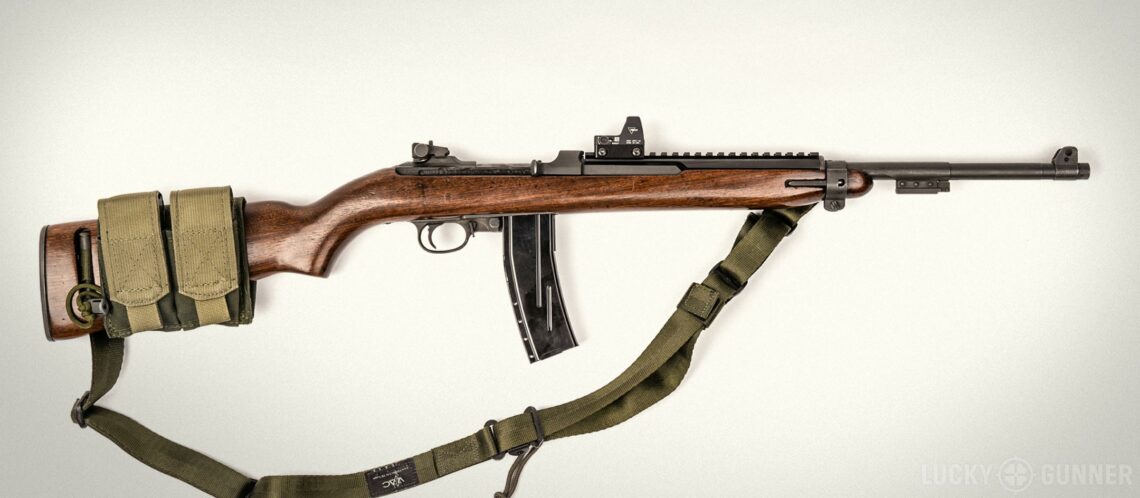
M1 Carbine
M1 Carbine rifle in .30 Carbine: specs, history, ammo and Colorado legal notes from the CO Boots gun library. Want hands-on time with a firearm like the M1 Carbine? Our certified instructors cover safe handling, operation and marksmanship in every firearms training class.
| Library ID | GT-371 |
|---|---|
| Manufacturer | Inland Manufacturing |
| Type | Rifle |
| Caliber | .30 Carbine |
| Action | Semi-automatic |
| Barrel Length | 18 inches (457 mm) |
| Country of Origin | United States |
| Year of Production | 1942 |
| Production Status | Discontinued |
| Typical Users | Military, Law Enforcement, Civilians |
| Rating | 4.5 |
M1 Carbine: Technical Specifications
The M1 Carbine is a lightweight, gas-operated semi-automatic rifle developed during World War II. Key specifications include:
- Caliber: .30 Carbine (7.62x33mm).
- Barrel Length: 18 inches (457 mm).
- Overall Length: Approximately 35.6 inches (903 mm).
- Weight: Around 5.2 pounds (2.36 kg) without ammunition.
- Material: Typically features a combination of steel and wood or fiberglass stocks; the receiver is usually made of machined steel.
- Action: Gas-operated, rotating bolt with a 15-round detachable magazine.
- Unique Features: The M1 Carbine employs a simple gas piston system, contributing to its reliability and ease of use. Its compact design makes it suitable for close-quarters combat and support roles. The rifle's lightweight construction and mild recoil make it accessible for a wide range of users, including non-combatants.
Overall, the M1 Carbine is known for its practicality, accuracy, and versatility in various combat situations.
M1 Carbine: Performance Characteristics
The M1 Carbine is a lightweight, gas-operated, semi-automatic rifle developed during World War II. Accuracy is generally good for its intended use, with effective ranges around 200-300 yards, optimal for close to mid-range engagements. Its reliability is commendable, with a robust design that functions well in various conditions, though it can be sensitive to ammunition quality.
In terms of handling, the M1 Carbine is praised for its low weight (around 5.2 lbs) and compact size, making it easy to maneuver and carry. The stock design allows for comfortable shooting, though some users report a lack of adjustment options.
The rate of fire is approximately 20-30 rounds per minute, limited by its semi-automatic operation. The 15 or 30-round magazine provides adequate firepower. Overall, the M1 Carbine excels in portability and ease of use, making it suitable for support roles and as a personal weapon during its service.
M1 Carbine: Design Features
The M1 Carbine features a lightweight, semi-automatic design with a compact length of approximately 35.6 inches, making it highly maneuverable. Its ergonomic stock, typically made of wood or fiberglass, provides a comfortable grip and is designed for quick handling. The carbine utilizes a 15-round detachable magazine, promoting ease of reloading.
Safety mechanisms include a manual safety located at the rear of the receiver, preventing accidental discharges. Its gas-operated action allows for reliable cycling, enhancing performance in various conditions.
Aesthetically, the M1 Carbine boasts a classic military look, with a simple yet functional design. The barrel is relatively short (18 inches), contributing to its lightweight profile. Notable innovative features include a folding rear sight and a front sight protected by ears, which improve aiming under combat conditions. Overall, the M1 Carbine combines practicality with a historical design, making it iconic in military firearm history.
M1 Carbine: Historical Context
The M1 Carbine was developed during World War II to meet the need for a lightweight, semi-automatic firearm for non-combat troops. The Army sought a weapon that was easier to handle than the M1 Garand, yet effective for close-quarters combat. The design process began in 1938, culminating in its adoption in 1941.
Key milestones include its production by various manufacturers, with over 6 million units made by the war's end. The M1 Carbine saw extensive use in WWII, Korea, and Vietnam, proving popular among soldiers for its manageable weight and firepower. Its .30 Carbine cartridge offered a balance between range and recoil, making it suitable for various roles.
The M1 Carbine's design influenced future firearms, promoting the use of intermediate cartridges and lightweight materials. Its legacy continues in modern military and civilian firearms, exemplifying the shift towards more versatile, user-friendly weapons in the post-war era.
M1 Carbine: User Experience
The M1 Carbine is widely praised for its lightweight design and manageable recoil, making it comfortable for a variety of shooters, including those who may struggle with heavier firearms. Users appreciate its ergonomic stock and the ease of handling, which contributes to a positive shooting experience.
In terms of ease of use, the M1 Carbine features a simple operation with a semi-automatic mechanism, allowing for quick follow-up shots. The sights are generally considered adequate, though some users opt to upgrade for improved accuracy.
Durability is a strong point, as the M1 Carbine has proven to withstand harsh conditions, though wear can occur on older models. Users often highlight its reliability, provided it is well-maintained.
Common complaints include limited effective range compared to more powerful rifles and a relatively small magazine capacity. Despite this, many users praise its historical significance and versatility, making it a beloved choice among collectors and enthusiasts.
M1 Carbine: Ammunition Information
The M1 Carbine utilizes the .30 Carbine cartridge, a lightweight round designed for semi-automatic rifles. The standard bullet diameter is .308 inches (7.62 mm), and the cartridge typically features a 110-grain full metal jacket (FMJ) bullet, providing moderate velocity and manageable recoil.
While the primary caliber is .30 Carbine, some specialized ammunition options include soft point (SP) rounds for hunting and hollow point (HP) variants for self-defense, which expand upon impact. Most .30 Carbine ammunition is compatible across various brands, including Winchester, Federal, and Remington, though performance may vary slightly.
For optimal performance, it's recommended to use ammunition that meets military specifications (e.g., M1 Carbine surplus ammo) or high-quality commercial variants. Reloading enthusiasts also utilize .30 Carbine brass for custom loads, allowing for tailored performance characteristics. Always ensure proper functioning with reliable magazines and inspect ammunition for compatibility with your specific firearm.
M1 Carbine: Usage Tips and Best Practices
M1 Carbine Usage Tips:
- Cleaning & Maintenance:
- Clean after every use. Use a cleaning rod with a bore brush and patches for the barrel.
- Disassemble the rifle regularly; clean the gas piston and operating rod.
- Lubricate moving parts lightly with gun oil to prevent rust and ensure smooth operation.
- Shooting Tips:
- Use the correct ammunition (.30 Carbine) for optimal performance.
- Practice proper stance and grip; the M1 Carbine is lightweight, so maintain control.
- Aim with both eyes open to enhance peripheral vision and target acquisition.
- Common Mistakes:
- Avoid over-lubrication; too much oil can attract dirt and debris.
- Don’t neglect the gas system; ensure it’s free of obstructions for reliable cycling.
- Don’t rush your shots; take time to align your sights for better accuracy.
By following these best practices, you can enhance the performance and longevity of your M1 Carbine.
Legal Considerations in Colorado
The M1 Carbine, originally a military firearm produced during World War II, is classified as a rifle under U.S. federal law. As a semi-automatic firearm, it is legal for civilian ownership in most states, provided it complies with federal regulations. However, state laws vary significantly; some states impose restrictions on magazine capacity, features, or outright bans on certain semi-automatic rifles.
Notably, California and New York have stringent regulations that may include registration and restrictions on certain models. In contrast, states like Texas and Florida have more permissive laws.
Legal cases involving the M1 Carbine often center around its classification and regulation. For instance, challenges have arisen regarding state bans on certain semi-automatic firearms, including the M1 Carbine, raising questions about Second Amendment rights and state authority.
Always check local laws for the most current regulations, as they frequently change.
M1 Carbine: Reviews and Ratings
User reviews for the M1 Carbine highlight several recurring themes. Reliability is frequently praised, with many users noting the firearm’s dependable functioning and minimal jams, even with various ammunition types. Accuracy receives positive remarks; shooters appreciate its ease of use and precision at moderate ranges, making it suitable for both target shooting and home defense.
However, some reviews mention a learning curve for new shooters, particularly regarding the sights. Customer service experiences are mixed, with some users reporting prompt and helpful responses, while others express frustration with delays and communication issues.
Overall, satisfaction levels are high, with many users expressing fondness for the M1 Carbine's historical significance and nostalgic value. Many consider it a great choice for collectors and enthusiasts, although some suggest improvements in modern versions. The consensus is that the M1 Carbine remains a fun and functional firearm with a rich legacy.
M1 Carbine: Appearances in Media
The M1 Carbine has appeared in various movies, TV shows, and video games. Here’s a brief list:
Movies:
1. Saving Private Ryan (1998) - Soldiers use the M1 Carbine during World War II combat scenes.
2. Band of Brothers (2001) - This miniseries features numerous scenes with soldiers using the M1 Carbine.
3. We Were Soldiers (2002) - The M1 Carbine is depicted in the Vietnam War setting.
4. American Sniper (2014) - The M1 Carbine is used in flashback scenes.
TV Shows:
1. MAS*H (1972-1983) - The M1 Carbine is seen in various episodes set during the Korean War.
2. The Pacific (2010) - Soldiers are shown using the M1 Carbine as part of the series' depiction of World War II.
Video Games:
1. Call of Duty series - Various titles in this franchise feature the M1 Carbine, particularly the World War II settings.
2. Battlefield V (2018) - The M1 Carbine appears among the weapons available for players.
3. Medal of Honor: Allied Assault (2002) - The game includes the M1 Carbine as a usable weapon.
These are just a few examples, and the M1 Carbine has appeared in many other contexts due to its historical significance and iconic status.
Related Firearms in the Library


More Rifle firearmsMore United States country firearmsBrowse all firearms