

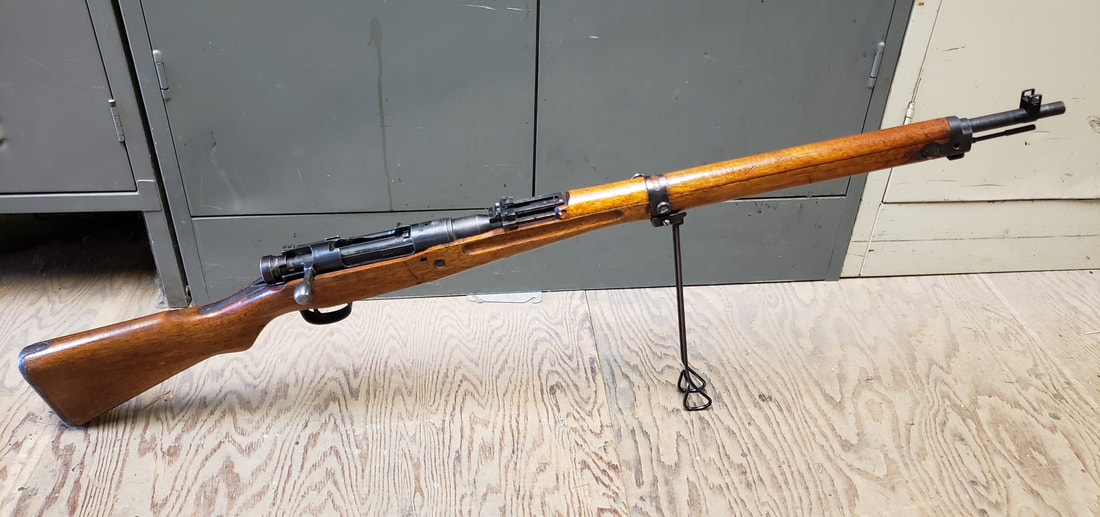

Photo source: pacificwarmuseum.org, cafmn.org
Arisaka Type 99
Arisaka Type 99 rifle in 7.7×58mm: specs, history, ammo and Colorado legal notes from the CO Boots gun library. Want hands-on time with a firearm like the Arisaka Type 99? Our certified instructors cover safe handling, operation and marksmanship in every firearms training class.
| Library ID | GT-262 |
|---|---|
| Manufacturer | Arisaka |
| Type | Rifle |
| Caliber | 7.7×58mm |
| Action | Bolt-action |
| Barrel Length | Type 99: 26 inches (660 mm) |
| Country of Origin | Japan |
| Year of Production | 1939 |
| Production Status | Discontinued |
| Typical Users | Military |
| Rating | 4.2 |
Arisaka Type 99: Technical Specifications
The Arisaka Type 99 is a bolt-action rifle developed by Japan during World War II. It is chambered for the 7.7×58mm Arisaka cartridge, which offers effective range and stopping power. The barrel length is typically 26 inches (660 mm), contributing to its accuracy.
Weighing approximately 9.5 lbs (4.3 kg) when unloaded, the Type 99 features a steel construction for durability, with a combination of wood (often walnut or birch) for the stock. The rifle is notable for its unique "Mum" or chrysanthemum emblem on the receiver, symbolizing the Japanese emperor.
The Type 99 also includes a 5-round internal magazine, a rear sight adjustable for range, and a distinctive anti-aircraft sight on some models. Its design reflects a blend of traditional craftsmanship and military efficiency, with a strong emphasis on reliability in various combat conditions. The Type 99 served as the standard infantry weapon for Japanese forces during the later years of the war.
Arisaka Type 99: Performance Characteristics
The Arisaka Type 99, a bolt-action rifle adopted by the Imperial Japanese Army in 1939, is known for its robust construction and effective performance characteristics.
Accuracy: The Type 99 features a 26-inch barrel chambered in 7.7×58mm Arisaka, providing commendable accuracy at ranges up to 600 meters. Its sights, including a rear aperture, facilitate precise aiming.
Reliability: The rifle is renowned for its reliability under various conditions, thanks to its strong design and quality materials, though early models occasionally faced issues due to wartime production standards.
Handling: Weighing around 9 pounds, the Type 99 is manageable but slightly heavy compared to contemporaries. The bolt action is smooth, allowing for quick cycling.
Rate of Fire: As a bolt-action rifle, its rate of fire is limited by the shooter’s ability to operate the bolt, typically around 10-15 rounds per minute.
Overall, the Type 99 is a durable and effective infantry weapon, combining good accuracy with reliable performance.
Arisaka Type 99: Design Features
The Arisaka Type 99, a Japanese bolt-action rifle introduced in 1939, features a robust design with a strong emphasis on functionality. Its ergonomic design includes a straight stock made of walnut, providing a comfortable hold and good control. The rifle's bolt is smooth and allows for rapid cycling, enhancing its usability in combat.
Safety mechanisms include a manual safety located at the rear of the bolt, which prevents accidental discharge. The Type 99 also features a dust cover to protect the action from debris.
Aesthetically, the Type 99 showcases a minimalist military design, with a blued finish and a prominent front sight. Some models feature a monopod and a bayonet lug, enhancing its tactical utility.
Innovative features include a unique adjustable rear sight for improved accuracy at varying ranges and a detachable box magazine. Overall, the Arisaka Type 99 combines practicality and simplicity, making it a reliable weapon for its time.
Arisaka Type 99: Historical Context
The Arisaka Type 99, developed in the late 1930s, was Japan's standard infantry rifle during World War II, succeeding the Type 38. It was designed to improve range and firepower, chambered for the 7.7×58mm Arisaka cartridge. The rifle featured a bolt-action mechanism, a five-round internal magazine, and a unique monopod and adjustable rear sight for long-range shooting.
Key milestones include its introduction in 1939 and various modifications throughout the war, such as lighter weights and simplified production methods due to resource shortages. The Type 99 saw extensive use in the Pacific Theater and during the Second Sino-Japanese War.
Its design influenced post-war firearms, showcasing the effectiveness of bolt-action rifles in warfare. The Type 99's durability and accuracy garnered respect, but its complexity also contributed to challenges in production, leading to variations in quality. Today, it is recognized as a significant example of early 20th-century military firearm design.
Arisaka Type 99: User Experience
The Arisaka Type 99 is generally appreciated for its robust design and reliability, which stem from its strong construction and quality materials. Users often praise its accuracy, particularly at longer ranges, making it effective for both hunting and historical reenactments.
In terms of comfort, the rifle's wooden stock can feel substantial, which some find adds to the shooting experience, while others note it can be somewhat heavy, leading to fatigue during extended use. The bolt-action mechanism operates smoothly, contributing to ease of use for experienced shooters, though newcomers may require time to adapt.
Durability is another strong point; many users report that the Type 99 can withstand harsh conditions, a testament to its military origins. However, common complaints include the lack of modern features, such as a more ergonomic stock design and sights that some find outdated. Additionally, finding aftermarket parts can be challenging due to its age, which can frustrate enthusiasts looking to customize or maintain their rifles. Overall, the Type 99 is respected for its historical significance and dependable performance.
Arisaka Type 99: Ammunition Information
The Arisaka Type 99, a Japanese bolt-action rifle introduced in 1939, primarily uses the 7.7×58mm Arisaka cartridge. This caliber is notable for its robust performance, featuring a bullet diameter of 7.7mm and a case length of 58mm. The standard ammunition includes full metal jacket (FMJ) rounds, which are designed for military use, and soft point (SP) ammunition for hunting applications.
While the Type 99 is specifically chambered for the 7.7mm Arisaka, it can also fire .303 British cartridges with some modifications, but this is not recommended due to safety concerns. For optimal performance, high-quality ammunition from brands like Prvi Partizan or Sellier & Bellot is recommended, particularly for target shooting or hunting. Additionally, using modern manufactured ammunition ensures better reliability and accuracy compared to older surplus rounds, which may be prone to degradation. Always verify the compatibility of any ammunition with your specific rifle variant.
Arisaka Type 99: Usage Tips and Best Practices
Arisaka Type 99 Usage Tips:
- Shooting Tips:
- Ensure proper stance and grip; the Type 99 can be heavy. Use a bench rest for stability.
- Familiarize yourself with the bolt operation before firing; ensure it cycles smoothly.
- Use quality ammunition; surplus rounds can be inconsistent.
- Cleaning & Maintenance:
- After each use, disassemble the rifle. Clean the barrel with a bore brush and solvent to remove fouling.
- Wipe down the action and bolt with a clean cloth. Lubricate lightly with gun oil to prevent rust.
- Store in a dry place; consider using a dehumidifier or silica gel packs in the storage area.
- Common Mistakes:
- Avoid dry-firing without a snap cap; it can damage the firing pin.
- Don’t neglect the wood; apply a light coat of oil to prevent cracking.
- Be cautious with aftermarket parts; they may affect functionality or safety.
Following these tips will enhance your shooting experience and maintain the integrity of your Arisaka Type 99.
Legal Considerations in Colorado
The Arisaka Type 99, a Japanese bolt-action rifle used during World War II, is classified as a curio and relic under the National Firearms Act (NFA) in the U.S., permitting civilian ownership without special restrictions. However, state laws vary widely.
In states like California and New York, there are additional restrictions on certain features or magazine capacities, potentially affecting the legality of modifications. Conversely, states like Texas have fewer restrictions, allowing for easier ownership.
Military use of the Arisaka is generally limited to collectors and historical reenactors, as it is no longer in active military service. Notable legal cases concerning the Arisaka often involve issues of importation and the classification of surplus military firearms. Overall, the legal landscape for the Arisaka Type 99 is influenced by federal regulations and individual state laws, making it crucial for owners to be aware of their local regulations.
Arisaka Type 99: Reviews and Ratings
User reviews for the Arisaka Type 99 generally highlight its historical significance and robust construction. Many enthusiasts praise its reliability, noting that the rifle performs well even after decades of service. Accuracy is frequently mentioned, with users appreciating its performance at the range, particularly with proper ammunition.
However, some reviews point out the challenge of finding compatible parts and ammunition, which can be a drawback for those looking to maintain or restore the rifle. Customer service experiences vary, with some users reporting positive interactions and timely support, while others express frustration with delays and lack of availability of parts.
Overall satisfaction tends to be high among collectors and history buffs, who value the Type 99 for its heritage and unique design. However, practical users may find limitations due to parts availability and the specific needs of the rifle.
Arisaka Type 99: Appearances in Media
The Arisaka Type 99, a Japanese bolt-action rifle used during World War II, has appeared in various movies, TV shows, and video games. Here’s a brief list:
Movies:
1. Flags of Our Fathers (2006) - The film depicts the experiences of U.S. Marines during the Battle of Iwo Jima, featuring Japanese soldiers armed with Arisaka rifles.
2. The Pacific (2010) - This miniseries, which follows the experiences of Marines in the Pacific Theater, includes scenes with Japanese troops using the Arisaka Type 99.
3. Letters from Iwo Jima (2006) - This film presents the Japanese perspective of the Battle of Iwo Jima and features the Arisaka Type 99 prominently.
TV Shows:
1. Band of Brothers (2001) - In this acclaimed miniseries about World War II, Japanese soldiers are depicted with various firearms, including the Arisaka Type 99.
2. The Man in the High Castle (2015-2019) - This alternate history series features various WWII-era weapons, including the Arisaka Type 99, in its depiction of a world where the Axis powers won the war.
Video Games:
1. Call of Duty: World at War (2008) - The game features the Arisaka Type 99 as a usable weapon in the multiplayer and campaign modes.
2. Battlefield V (2018) - The game includes the Arisaka Type 99 as one of the available weapons for players.
3. Medal of Honor: Pacific Assault (2004) - This game features the Arisaka Type 99 among the weapons used by Japanese forces.
These examples showcase the Arisaka Type 99's representation in various media, highlighting its historical significance and impact during World War II.
Related Firearms in the Library


More Rifle firearmsMore Japan country firearmsBrowse all firearms