


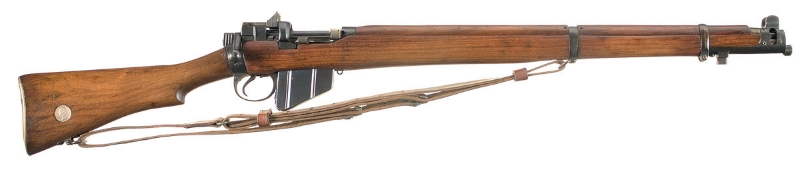
Photo source: upload.wikimedia.org, gunmagwarehouse.com
Lee-Enfield
Lee-Enfield rifle in .303 British: specs, history, ammo and Colorado legal notes from the CO Boots gun library. Want hands-on time with a firearm like the Lee-Enfield? Our certified instructors cover safe handling, operation and marksmanship in every firearms training class.
| Library ID | GT-252 |
|---|---|
| Manufacturer | Enfield |
| Type | Rifle |
| Caliber | .303 British |
| Action | Bolt-action |
| Barrel Length | 25.2 inches (640 mm) |
| Country of Origin | United Kingdom |
| Year of Production | 1895 |
| Production Status | Discontinued |
| Typical Users | Military, civilians |
| Rating | 4.5 |
Lee-Enfield: Technical Specifications
The Lee-Enfield is a series of bolt-action rifles that served as the standard issue for the British armed forces from the late 19th century through World War II.
Caliber: The most common model, the Lee-Enfield No. 1 Mk III, is chambered for the .303 British cartridge.
Barrel Length: The barrel length is typically 25.2 inches (640 mm) for the No. 1 Mk III.
Weight: The rifle weighs approximately 9.5 lbs (4.3 kg) when loaded.
Material: The receiver and barrel are made from steel, while the stock is usually constructed from hardwood, often beech or walnut.
Unique Engineering Aspects: The Lee-Enfield features a five-round magazine, which is loaded using a charger clip. Its distinctive fast-action bolt allows for quick follow-up shots, contributing to a cyclic rate of around 30 rounds per minute. The rifle also has a unique "smokeless powder" design, enhancing its accuracy and range. The rear aperture sight allows for precise aiming, and its overall design emphasizes reliability and durability in varied conditions.
Lee-Enfield: Performance Characteristics
The Lee-Enfield is a bolt-action rifle renowned for its accuracy and reliability. Its design, particularly the No. 4 variant, features a smooth, fast-cycling bolt that allows for a high rate of fire, typically around 15-20 rounds per minute with practice. The rifle's accuracy is enhanced by its robust construction and effective sights, capable of consistent groupings at 100-300 meters.
Handling is well-regarded; the Lee-Enfield’s ergonomic stock and balanced weight make it manageable in various conditions. Its magazine holds 10 rounds, providing ample firepower without frequent reloads. The rifle is also known for its durable and rugged design, which performs reliably in adverse environments.
Additionally, the .303 British cartridge offers significant stopping power and effective range, contributing to its overall effectiveness as a service rifle. Overall, the Lee-Enfield combines historical significance with practical performance metrics, making it a favored choice among military historians and collectors.
Lee-Enfield: Design Features
The Lee-Enfield rifle, particularly the No. 4 variant, features a robust, bolt-action design with a distinctive 10-round magazine fed from the top. Ergonomically, it has a straight bolt handle for smooth operation, allowing quick cycling, and a comfortable, pronounced stock that aids in stability during firing. The rifle's safety mechanism includes a two-position safety catch, which locks the bolt when engaged, preventing accidental discharge.
Aesthetically, the Lee-Enfield has a classic military look with a wooden stock and metal components, often finished in a blued or parkerized surface. The rear sight is adjustable for distance, while the front sight is a protected blade, enhancing durability and accuracy.
Innovative features include the charger loading system, allowing quick reloading of the top-mounted magazine, and its capability to fire the .303 British cartridge, known for its power and accuracy. The rifle's design reflects both functionality and historical significance, making it a beloved choice among collectors and enthusiasts.
Lee-Enfield: Historical Context
The Lee-Enfield rifle, developed in the late 19th century, originated from the Lee action designed by James Paris Lee and was adopted by the British Army in 1895 as the .303 Lee-Metford. It was later modified to the Lee-Enfield, incorporating improvements like the more robust Enfield bolt design. Key milestones include its adoption in the Second Boer War (1899-1902) and its extensive use during World War I and World War II, where it became known for its accuracy and rapid-fire capability due to its detachable magazine and smooth bolt action.
The rifle's design influenced subsequent military firearms, showcasing the benefits of magazine-fed systems. Its legacy includes variants like the No. 4 Mk I, which served well into the 20th century. The Lee-Enfield's reputation for reliability and performance made it a staple of British and Commonwealth forces, ultimately shaping military rifle development and fostering advancements in bolt-action designs worldwide.
Lee-Enfield: User Experience
The Lee-Enfield rifle, particularly the No. 4 model, is often praised for its robust design and reliability. Users appreciate its comfortable, ergonomic stock, which allows for a natural shooting position. The bolt action is smooth, and the rifle's overall balance contributes to ease of use, making it suitable for both novice and experienced shooters.
Durability is a significant highlight, as the Lee-Enfield is built to withstand harsh conditions, evidenced by its extensive service history. The quality of construction, including the strong metal components, garners user confidence.
However, common complaints include the weight, which can be cumbersome during extended use, and the recoil, which some find intense compared to more modern firearms. Additionally, the sights may be considered less user-friendly than contemporary options. Despite these issues, many users praise the rifle's historical significance and performance, often expressing satisfaction with its accuracy and reliability in the field.
Lee-Enfield: Ammunition Information
The Lee-Enfield is a bolt-action rifle primarily chambered in .303 British, a caliber developed in the late 19th century. The standard military ammunition consists of a full metal jacket (FMJ) round, typically weighing 174 grains, designed for effective range and accuracy.
In addition to the .303 British, some variants, like the No. 4 Mk I, can be adapted to use .308 Winchester ammunition with modifications, although this is less common. Compatibility with different brands varies, but reputable manufacturers like Sellier & Bellot, PPU (Prvi Partizan), and Barnaul produce reliable .303 cartridges.
For optimal performance, particularly in accuracy and terminal ballistics, the use of soft point (SP) or hollow point (HP) rounds is recommended for hunting. Handloaders often favor specific powders and bullet weights (150-180 grains) tailored to their Lee-Enfield's unique characteristics, enhancing performance in both target shooting and hunting scenarios.
Lee-Enfield: Usage Tips and Best Practices
The Lee-Enfield rifle, renowned for its reliability, requires careful handling and maintenance for optimal performance.
Cleaning & Maintenance:
1. Disassembly: Familiarize yourself with disassembly procedures. Remove the bolt carefully and ensure the rifle is unloaded before cleaning.
2. Cleaning: Use a bore snake or cleaning rod with patches and solvent to clean the barrel. Pay special attention to the chamber.
3. Lubrication: Lightly oil moving parts, including the bolt and trigger mechanism, to prevent rust and ensure smooth operation.
4. Storage: Store in a cool, dry place. Use a silicone cloth to wipe down metal surfaces to prevent corrosion.
Shooting Tips:
1. Stance: Utilize a stable shooting position; a proper stance will enhance accuracy.
2. Sights: Familiarize yourself with the iron sights; they can be tricky for beginners.
3. Trigger Control: Practice smooth trigger pulls to avoid jerking, which can affect accuracy.
Common Mistakes to Avoid:
1. Neglecting Maintenance: Regular cleaning prevents malfunctions.
2. Incorrect Ammo: Always use the correct caliber (.303 British) t
Legal Considerations in Colorado
The Lee-Enfield rifle, originally a British military firearm, has varying legal status and restrictions based on its model and the jurisdiction in which it is located. Generally, older Lee-Enfield models, such as the SMLE (Short Magazine Lee-Enfield), are classified as C&R (Curio & Relic) firearms in the U.S., allowing collectors to purchase them with fewer restrictions.
Civilian use is typically allowed, but state laws vary significantly. States like California and New York impose strict regulations on firearms, including potential assault weapon designations for certain modified versions. Military use is generally restricted to government entities.
Notable legal cases involving the Lee-Enfield are rare, but issues often arise related to its classification under federal and state laws, especially concerning modifications or historical status. Always check local regulations, as compliance is essential for ownership and use.
Lee-Enfield: Reviews and Ratings
User reviews for the Lee-Enfield firearm model often highlight its reliability and durability, with many users praising it as a dependable rifle for both hunting and historical shooting. The bolt-action mechanism receives positive remarks for smooth operation, and many shooters appreciate the solid construction that has stood the test of time.
Accuracy is another recurring theme, with numerous users noting that the Lee-Enfield is capable of impressive precision, especially at medium to long ranges. Shooters often mention the effective sights and the rifle's inherent stability, contributing to a satisfying shooting experience.
Customer service experiences vary; while some users report positive interactions and support, others express frustration with parts availability and service responsiveness.
Overall satisfaction is generally high, with many enthusiasts valuing the Lee-Enfield for its historical significance, performance, and classic design, making it a favorite among collectors and sport shooters alike.
Lee-Enfield: Appearances in Media
The Lee-Enfield rifle has appeared in various movies, TV shows, and video games. Here’s a brief list of notable appearances:
Movies:
1. Saving Private Ryan (1998) - The Lee-Enfield is used by British troops in the film.
2. The Man Who Knew Too Much (1956) - Features a Lee-Enfield in a climactic scene.
3. Zulu (1964) - British soldiers are depicted using the Lee-Enfield during the Battle of Rorke's Drift.
TV Shows:
1. Band of Brothers (2001) - Various characters use the Lee-Enfield during the series, particularly in scenes set in the European theater.
2. The Pacific (2010) - Some characters are seen with Lee-Enfield rifles, especially in flashbacks or scenes involving British forces.
3. Sharpe (1993-2008) - The series features the Lee-Enfield prominently as it follows a British soldier during the Napoleonic Wars.
Video Games:
1. Battlefield 1 (2016) - The Lee-Enfield is available as an infantry weapon in the game, representing its use during World War I.
2. Call of Duty: World at War (2008) - The rifle appears in the game, particularly in the campaign missions set in the Pacific.
3. Arma 3 (2013) - The Lee-Enfield rifle is included as part of the game's extensive weapon customization and modding community.
These examples illustrate the Lee-Enfield’s historical significance and its representation in various forms of media.
Related Firearms in the Library


More Rifle firearmsMore 303 British caliber firearmsMore United Kingdom country firearmsBrowse all firearms