
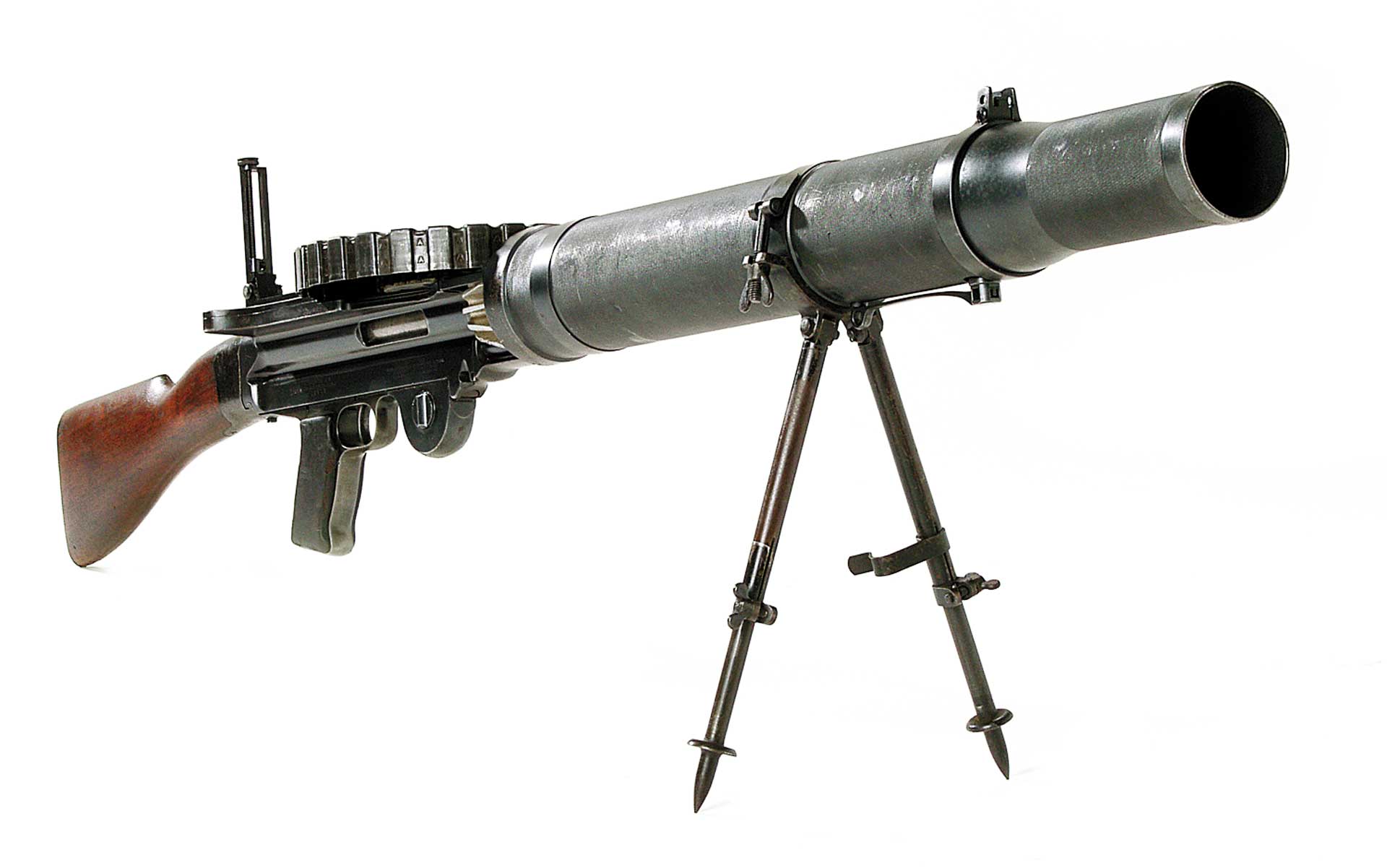


Photo source: americanrifleman.org, upload.wikimedia.org, static.wikia.nocookie.net
Lewis Gun
Lewis Gun machine gun in .303 British: specs, history, ammo and Colorado legal notes from the CO Boots gun library. Want hands-on time with a firearm like the Lewis Gun? Our certified instructors cover safe handling, operation and marksmanship in every firearms training class.
| Library ID | GT-749 |
|---|---|
| Manufacturer | Vickers. |
| Type | Machine Gun |
| Caliber | .303 British |
| Action | Gas-operated |
| Barrel Length | The barrel length of the Lewis Gun is 28 inches (710 mm). |
| Country of Origin | United Kingdom |
| Year of Production | 1911 |
| Production Status | Discontinued |
| Typical Users | Military, Law Enforcement |
| Rating | 4.2 |
Lewis Gun: Technical Specifications
The Lewis Gun is a light machine gun developed in the early 20th century, notably used in World War I and beyond. It fires the .303 British cartridge, though some variants used .30-06 Springfield or .248 caliber. The standard barrel length is approximately 24 inches (610 mm), allowing for effective range and accuracy.
The Lewis Gun weighs around 28 pounds (12.7 kg) when fully loaded, making it relatively portable for a machine gun of its era. It features a distinctive cylindrical cooling jacket around the barrel, which helps dissipate heat during sustained fire.
Constructed primarily of steel and aluminum, the Lewis Gun is designed for reliability and durability. Its unique top-mounted pan magazine holds 47 rounds, allowing for a low profile during operation. The gas-operated, air-cooled mechanism contributes to its efficient firing rate of about 500-600 rounds per minute, making it a notable engineering achievement in early automatic weapon design.
Lewis Gun: Performance Characteristics
The Lewis Gun, developed in the early 20th century, is a light machine gun renowned for its unique design and performance characteristics.
Accuracy: The Lewis Gun features a 0.303-inch caliber barrel with a maximum effective range of about 1,500 yards. Its accuracy is commendable, particularly in sustained fire, due to its consistent barrel cooling and relatively low recoil.
Reliability: Known for its robust construction, the Lewis Gun operates reliably in various conditions. Its gas-operated mechanism minimizes jams, though it requires regular maintenance to ensure optimal performance.
Handling: Weighing approximately 28 pounds, it is portable for a crew-served weapon, but can be cumbersome for individual soldiers. Its distinctive top-mounted pan magazine holds 47 rounds, facilitating quick reloads.
Rate of Fire: The Lewis Gun boasts a cyclic rate of fire between 500-600 rounds per minute, allowing for effective suppression.
Overall, the Lewis Gun's combination of accuracy, reliability, and manageable handling made it a formidable asset on the battlefield durin
Lewis Gun: Design Features
The Lewis Gun, developed in 1911 by Isaac Newton Lewis, features a distinctive design characterized by its long, cylindrical cooling jacket surrounding the barrel, which aids in heat dissipation during sustained fire. Ergonomically, it boasts a wooden pistol grip and a rear buttstock, allowing for stable handling. The gun's weight, around 27 pounds, is offset by its balanced design, enhancing maneuverability.
Safety mechanisms include a manual safety catch to prevent accidental discharge and a simple operating mechanism. Aesthetically, the Lewis Gun presents a robust, industrial look, with a mix of metal and wood finishes that evoke a sense of utilitarian strength.
Innovatively, it employs a gas-operated, air-cooled system and a top-mounted, 97-round drum magazine, facilitating high-capacity fire and reducing reloading frequency. Its unique design and functionality made it a significant advancement in automatic weaponry during World War I.
Lewis Gun: Historical Context
The Lewis Gun, designed by American engineer Isaac Newton Lewis in 1911, was a pioneering light machine gun characterized by its unique cooling system using a shroud and a top-mounted pan magazine. Initially developed for the U.S. military, it gained prominence during World War I after being adopted by British forces due to its reliability and portability.
Key milestones include its debut on the battlefield in 1914, where it saw extensive use by British and Commonwealth troops. The gun's effectiveness in trench warfare made it a vital asset, influencing subsequent light machine gun designs. The Lewis Gun was also adopted by various countries, seeing action in conflicts beyond WWI, including the Spanish Civil War and World War II.
Its impact on firearm design is notable; it helped establish the concept of light machine guns as essential infantry support weapons, influencing the design of later models such as the Browning Automatic Rifle and the German MG34. The Lewis Gun remains a significant example of early 20th-century military innovation.
Lewis Gun: User Experience
The Lewis Gun is generally well-regarded for its distinct design and operational features. Users praise its lightweight construction, which enhances portability and comfort during extended use. The gun’s unique cooling system, featuring a prominent cooling shroud, helps manage overheating, contributing to reliable performance in sustained fire scenarios.
In terms of ease of use, the Lewis Gun is noted for its intuitive controls and smooth operation, making it accessible for both experienced and novice users. The magazine's top-mounted design allows for quick reloading, further enhancing usability in combat situations.
Durability is another strong point; the Lewis Gun is built to withstand rigorous conditions, although some users have reported issues with the reliability of older models. Common complaints include the weight of the ammunition drum, which can be cumbersome, and maintenance challenges due to its complex assembly. Overall, the Lewis Gun is appreciated for its effectiveness and historical significance, with most feedback highlighting its performance and handling characteristics.
Lewis Gun: Ammunition Information
The Lewis Gun, a distinctive light machine gun developed in the early 20th century, primarily uses .303 British ammunition, which was standard for British military firearms during World War I and II. This caliber features a rimmed cartridge, designed for optimal performance in belt-fed systems.
While the Lewis Gun was specifically designed for .303, it can also be adapted to use .30-06 Springfield cartridges with modifications, though this is less common. The gun utilizes a unique pan magazine system, allowing for a high rate of fire, and it can accept both 47-round and 97-round drum magazines.
For optimal performance, it is recommended to use high-quality, military-grade ammunition to ensure reliability and function, particularly in the heat of battle. Special tracer or incendiary rounds were sometimes used for specific tactical roles, enhancing visibility and incendiary effects. Overall, the .303 British remains the quintessential ammunition for the Lewis Gun, ensuring historical authenticity and operational effectiveness.
Lewis Gun: Usage Tips and Best Practices
Lewis Gun Usage Tips and Best Practices
- Familiarization: Understand the Lewis Gun's operation, including the gas-operated mechanism and its unique barrel cooling system. Practice loading and unloading safely.
- Cleaning and Maintenance:
- After Every Use: Disassemble the gun to clean the barrel, receiver, and moving parts. Use a bore snake for the barrel and a soft brush for other components.
- Lubrication: Apply a light coat of gun oil to moving parts to prevent rust and ensure smooth operation. Avoid over-lubrication.
- Inspect Regularly: Check for wear on the barrel and feed mechanism. Replace any worn parts promptly.
- Shooting Tips:
- Stance: Use a stable shooting position, ideally supported by a bipod or similar mount.
- Controlled Firing: Fire in short bursts to maintain control and accuracy.
- Common Mistakes:
- Neglecting Maintenance: Regular cleaning is crucial to prevent jams.
- Improper Loading: Ensure magazines are seated correctly to avoid feeding issues.
By following these tips, you can ensure optimal performance and longevity of the Lew
Legal Considerations in Colorado
The Lewis Gun, a light machine gun developed in the early 20th century, is generally classified as a Title II weapon under the National Firearms Act (NFA) in the United States. This means it is considered a machine gun, and its civilian ownership is heavily restricted. Individuals must undergo a rigorous application process, pay a tax stamp fee, and comply with federal regulations, including background checks.
Military use is permitted, as the Lewis Gun was widely used by armed forces during World War I and II. However, civilian ownership is limited and regulated at both federal and state levels. Many states have additional restrictions, with some outright banning machine guns. States like California and New York have stringent laws against ownership, while others like Texas may allow it under strict regulations.
Legal cases involving the Lewis Gun are infrequent but typically revolve around the legality of possession and the interpretation of the NFA. As a historical firearm, it may also be subject to collector exemptions under certain conditions.
Lewis Gun: Reviews and Ratings
User reviews for the Lewis Gun generally highlight its historical significance and unique design, with many praising its reliability in various conditions. Reviewers often note its impressive accuracy, particularly at longer ranges, making it favored for both collectors and reenactors.
However, some users express concerns about the weight and handling, which can make it cumbersome in rapid-fire situations. Positive feedback frequently mentions the gun's iconic status and aesthetic appeal, contributing to overall satisfaction among enthusiasts.
Customer service experiences vary, with some users reporting prompt and helpful responses regarding parts and maintenance, while others encountered delays. Overall, the Lewis Gun garners a strong appreciation for its performance and heritage, although potential buyers should consider its weight and maintenance needs before purchase.
Lewis Gun: Appearances in Media
The Lewis Gun has appeared in various movies, TV shows, and video games. Here is a brief list of notable appearances:
Movies:
1. Lawrence of Arabia (1962) - The Lewis Gun is used by British troops during World War I scenes.
2. The Great War (1964) - A film about World War I that features various period firearms, including the Lewis Gun.
3. 1917 (2019) - This World War I film includes scenes with soldiers using the Lewis Gun.
TV Shows:
1. Band of Brothers (2001) - The Lewis Gun is depicted in this miniseries about WWII soldiers.
2. The Pacific (2010) - Similar to Band of Brothers, this miniseries features the Lewis Gun in the context of the Pacific Theater.
Video Games:
1. Battlefield 1 (2016) - The Lewis Gun is a playable weapon in this World War I shooter game.
2. Call of Duty: World War II (2017) - The Lewis Gun appears as a weapon option in the game.
3. Sniper Elite series - The Lewis Gun is featured in various titles of this tactical shooter series.
This list highlights the versatility and historical significance of the Lewis Gun across different forms of media.
Related Firearms in the Library


More Machine Gun firearmsMore 303 British caliber firearmsMore United Kingdom country firearmsBrowse all firearms