

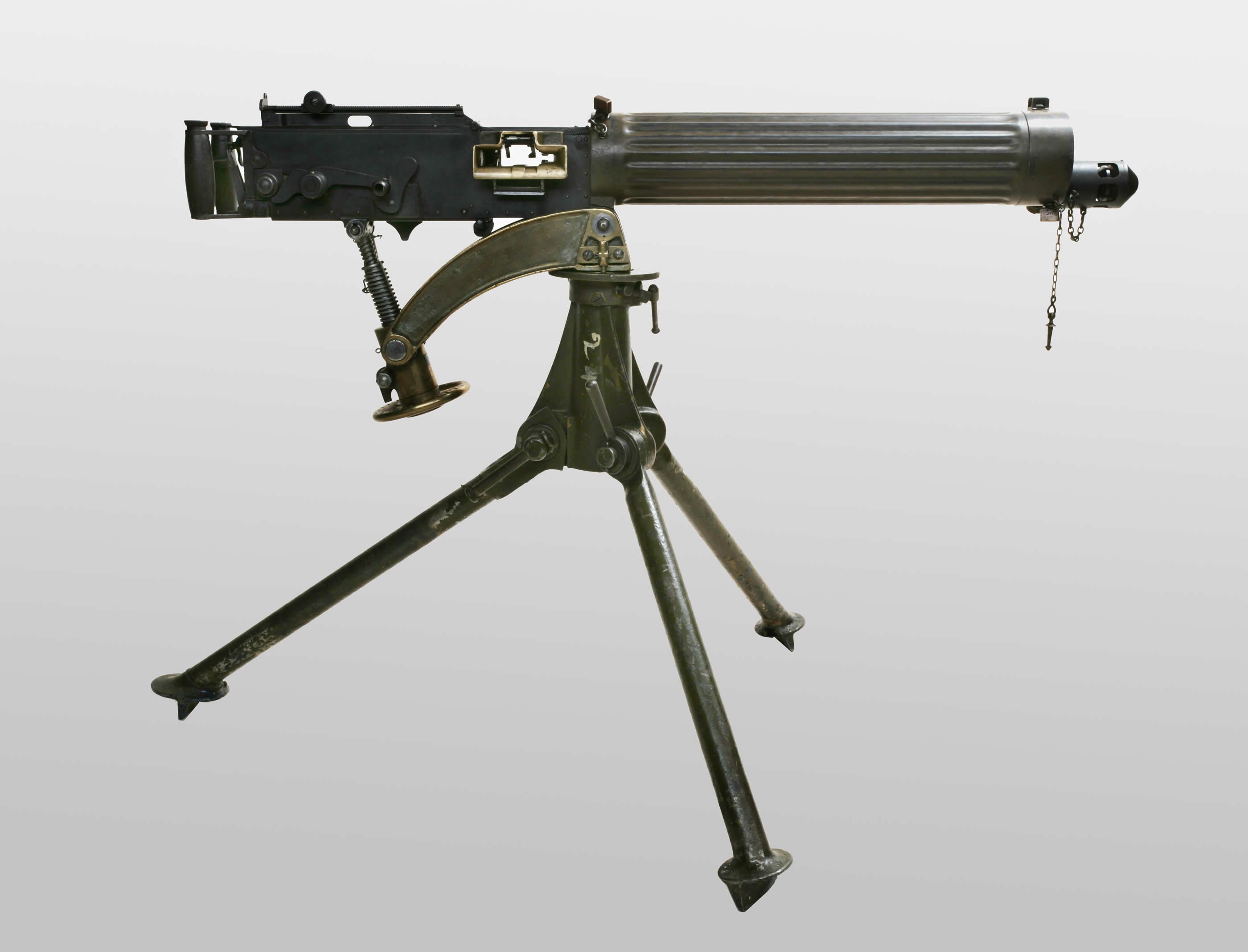

Photo source: upload.wikimedia.org, warmuseum.ca
Vickers Machine Gun
Vickers Machine Gun machine gun in .303 British: specs, history, ammo and Colorado legal notes from the CO Boots gun library. Want hands-on time with a firearm like the Vickers Machine Gun? Our certified instructors cover safe handling, operation and marksmanship in every firearms training class.
| Library ID | GT-748 |
|---|---|
| Manufacturer | Vickers |
| Type | Machine Gun |
| Caliber | .303 British |
| Action | Automatic |
| Barrel Length | The barrel length of the Vickers Machine Gun is 30 inches (762 mm). |
| Country of Origin | United Kingdom |
| Year of Production | 1912 |
| Production Status | Discontinued |
| Typical Users | Military, Law enforcement |
| Rating | 4.5 |
Vickers Machine Gun: Technical Specifications
The Vickers Machine Gun, developed in the late 19th century, is a water-cooled, belt-fed machine gun renowned for its reliability. It typically fires the .303 British cartridge, with a caliber of 7.7mm. The barrel length is approximately 30 inches (76 cm), allowing for sustained fire. The Vickers weighs around 28 pounds (12.7 kg) without the tripod, making it relatively portable for a machine gun of its era.
Constructed primarily from steel, the Vickers features a distinctive water jacket surrounding the barrel to dissipate heat during prolonged firing, enhancing its durability and performance. Its unique toggle-lock mechanism allows for a smooth operation and ensures consistent firing. The gun can achieve a rate of fire of about 450–600 rounds per minute. The Vickers is also notable for its adaptability, being mountable on various platforms, including vehicles and aircraft, which contributed to its widespread use in World War I and World War II.
Vickers Machine Gun: Performance Characteristics
The Vickers Machine Gun, developed in the early 20th century, is renowned for its robust performance characteristics.
Accuracy: The Vickers is known for its exceptional accuracy, capable of delivering sustained fire at ranges up to 2,000 yards. Its water-cooled barrel mitigates overheating, maintaining precision over extended engagements.
Reliability: The Vickers exhibits outstanding reliability, functioning effectively in various conditions. Its design minimizes jamming, a crucial factor in combat scenarios.
Handling: Weighing approximately 30 pounds, the Vickers is relatively cumbersome, yet its tripod mount allows for stability and ease of use. Crews typically operate it, enhancing maneuverability in fixed positions.
Rate of Fire: The Vickers has a cyclic rate of fire of around 450-600 rounds per minute, with a sustained rate of about 250 rounds per minute, allowing for effective suppression of enemy forces.
Overall, the Vickers Machine Gun is celebrated for its durability, accuracy, and effective rate of fire, making it a formidable asset on the battlefield.
Vickers Machine Gun: Design Features
The Vickers Machine Gun, designed in the early 20th century, features a robust, all-metal construction, contributing to its durability and reliability in combat. Its ergonomic design includes a distinctive water-cooling system housed in a cylindrical jacket, allowing for prolonged firing without overheating. The gun is typically mounted on a tripod, enhancing stability and accuracy during use.
Safety mechanisms include a manual safety lever to prevent accidental discharges and a unique feed mechanism that reduces the risk of jams. Aesthetically, the Vickers has a utilitarian look, with a polished exterior and a characteristic green or gray finish, emphasizing its military function.
Innovative features include its belt-fed ammunition system, which allows for sustained fire, and a quick-change barrel system for ease of maintenance. The Vickers' combination of effective ergonomics, safety features, and practical design elements have made it a reliable choice for military forces throughout its operational history.
Vickers Machine Gun: Historical Context
The Vickers Machine Gun, developed in the 1890s by the British engineer Sir Frederick Vickers, was an evolution of earlier machine gun designs, notably the Maxim gun. Officially adopted by the British Army in 1912, it was renowned for its reliability and effectiveness in sustained fire. Key milestones include its use during World War I, where it played a critical role in trench warfare, and its subsequent adoption by numerous countries.
The Vickers demonstrated versatility in various conflicts, including World War II and the post-war period in colonial conflicts. Its water-cooled design allowed for prolonged firing without overheating, influencing future machine gun designs.
The Vickers' legacy includes its impact on military tactics and machine gun design, emphasizing reliability and sustained fire. It laid the groundwork for modern automatic weapons, with lessons learned informing subsequent developments in firearm technology. The Vickers remained in service until the 1960s, a testament to its enduring design.
Vickers Machine Gun: User Experience
The Vickers Machine Gun is renowned for its robust design and reliability, offering a solid user experience. Users praise its durability, noting that it can withstand harsh conditions and prolonged use without significant wear. The weight of the gun, while contributing to stability during operation, can be a drawback in terms of portability and comfort.
Ease of use is generally positive; the Vickers has a straightforward operating mechanism, though it requires some training for optimal handling. Users appreciate the smooth action and the effective cooling system, which minimizes overheating during extended fire.
Common complaints include the gun's heavy weight, making it cumbersome for prolonged carrying. Additionally, some users find the maintenance process, particularly cleaning the water jacket, to be labor-intensive. Overall, the Vickers Machine Gun is celebrated for its reliability and performance in combat, though potential users should be prepared for its physical demands.
Vickers Machine Gun: Ammunition Information
The Vickers Machine Gun, primarily chambered in .303 British caliber, was designed for sustained fire and reliability. It utilizes belt-fed ammunition, typically linked in fabric or metal belts containing 250 rounds. While the .303 British is the standard, some Vickers guns have been adapted to fire other calibers, such as 7.62×51mm NATO, particularly in post-WWII variants.
Ammunition compatibility is largely limited to the specific caliber of the Vickers model in use. Standard ammunition types include ball, tracer, and armor-piercing rounds. For optimal performance, it is recommended to use high-quality, reliable brands that adhere to military specifications, ensuring consistent ignition and accuracy.
Specialized ammunition, such as incendiary or explosive rounds, can also be employed for specific tactical roles. Proper maintenance and the use of clean, dry ammunition are crucial for the Vickers to function effectively in various environments.
Vickers Machine Gun: Usage Tips and Best Practices
Vickers Machine Gun Usage Tips:
- Cleaning and Maintenance:
- After each use, disassemble the Vickers MG carefully. Clean the barrel, receiver, and mechanism with a suitable solvent to remove fouling.
- Lubricate moving parts with high-quality gun oil to prevent rust and ensure smooth operation.
- Inspect the belt feed mechanism and replace worn parts to avoid jams.
- Shooting Tips:
- Use proper mounting on a tripod for stability; ensure the gun is level.
- Maintain a consistent rate of fire to prevent overheating. Allow the barrel to cool periodically.
- Train to use the sights effectively for accurate targeting; practice controlled bursts.
- Common Mistakes:
- Avoid over-lubrication as it attracts dirt and can cause malfunctions.
- Don’t neglect the belt feed; ensure it is loaded correctly to prevent jams.
- Be cautious of overheating, as it can lead to cook-offs; always monitor barrel temperature.
Following these guidelines will enhance performance and reliability.
Legal Considerations in Colorado
The Vickers Machine Gun, a British .303 caliber weapon, is classified as a Title II firearm under the National Firearms Act (NFA) in the United States, meaning it is regulated as a machine gun. Civilian ownership is legal, but it is heavily restricted; individuals must undergo extensive background checks, pay a $200 tax for registration, and obtain ATF approval. Civilian use is primarily limited to collectors and is often subject to state laws.
State-by-state regulations vary: some states, like California and New York, outright prohibit ownership of machine guns, while others, like Texas and Arizona, allow it under federal law. Notable legal cases include United States v. Miller (1939), which upheld the regulation of firearms not seen as contributing to a well-regulated militia, indirectly impacting the legal landscape for military-style weapons like the Vickers. Always check local laws for specific requirements and restrictions.
Vickers Machine Gun: Reviews and Ratings
User reviews for the Vickers Machine Gun highlight several recurring themes. Reliability is frequently praised, with many users noting its consistent performance in various conditions. Reviewers appreciate its robust construction and durability, often referencing its historical significance and proven battlefield effectiveness.
Accuracy is another strong point, with users reporting exceptional precision at range, making it a favorite for both collectors and reenactors. However, some users mention the weight and bulkiness as potential drawbacks when handling or transporting the gun.
Customer service experiences are generally positive, with users noting responsive support and helpfulness regarding maintenance and parts.
Overall satisfaction is high, with many users feeling that the Vickers Machine Gun represents a valuable investment, both for its historical relevance and functional performance. The combination of reliability, accuracy, and solid customer service contributes to a favorable view among enthusiasts and collectors alike.
Vickers Machine Gun: Appearances in Media
The Vickers Machine Gun has appeared in various movies, TV shows, and video games. Here’s a brief list of notable appearances:
Movies:
1. Lawrence of Arabia (1962) - Features Vickers machine guns used by British forces.
2. The Bridge on the River Kwai (1957) - Depicts the use of the Vickers in the context of WWII.
3. 1917 (2019) - Shows British soldiers using the Vickers during World War I.
TV Shows:
1. Band of Brothers (2001) - Several scenes feature the Vickers machine gun as part of the WWII setting.
2. The Pacific (2010) - Similar to Band of Brothers, it includes the Vickers in the context of the Pacific Theater during WWII.
Video Games:
1. Battlefield 1 - Features the Vickers as one of the available support weapons in the game.
2. Call of Duty: World War II - Includes the Vickers machine gun as part of its WWII setting.
3. Hell Let Loose - The game features the Vickers as a usable machine gun for British forces.
This list highlights the Vickers Machine Gun's historical significance and its representation in various media.
Related Firearms in the Library


More Machine Gun firearmsMore 303 British caliber firearmsMore United Kingdom country firearmsBrowse all firearms