
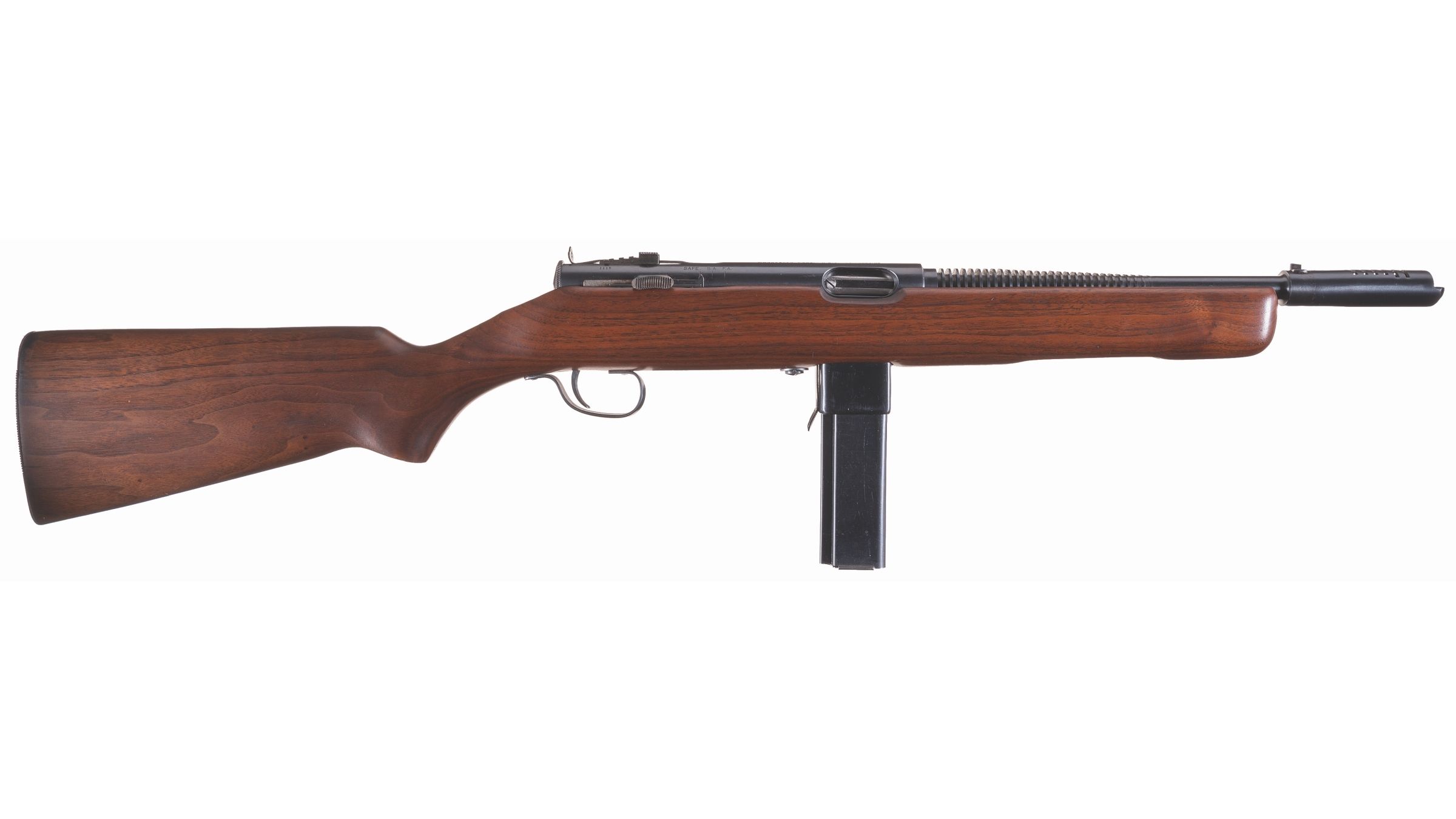

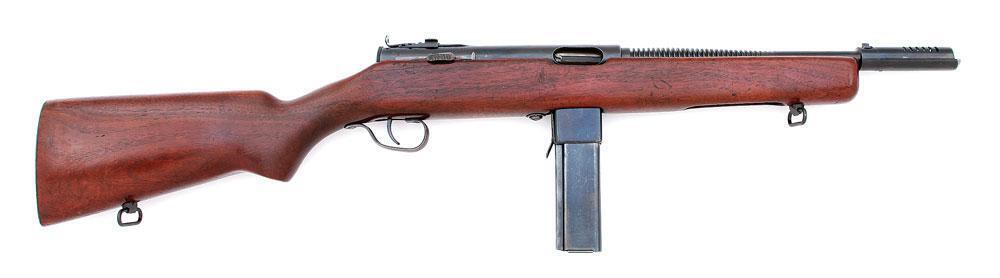
Photo source: cdn.rockislandauction.com, dygtyjqp7pi0m.cloudfront.net, live.amoskeagauction.com
Reising Model 50
Reising Model 50 submachine gun in .45 ACP: specs, history, ammo and Colorado legal notes from the CO Boots gun library. Want hands-on time with a firearm like the Reising Model 50? Our certified instructors cover safe handling, operation and marksmanship in every firearms training class.
| Library ID | GT-735 |
|---|---|
| Manufacturer | Reising |
| Type | Submachine Gun |
| Caliber | .45 ACP |
| Action | Submachine gun |
| Barrel Length | The barrel length of the Reising Model 50 is 12 inches (305 mm). |
| Country of Origin | Germany |
| Year of Production | 1942 |
| Production Status | Discontinued |
| Typical Users | Military, Law Enforcement |
| Rating | 3.5 |
Reising Model 50: Technical Specifications
The Reising Model 50 is a .45 ACP submachine gun developed in the 1930s, primarily for the U.S. Marine Corps. It features a barrel length of 12 inches, contributing to its compact design. Weighing approximately 8.5 pounds, it offers a balance of handling and stability in fire. The construction primarily utilizes steel, ensuring durability and reliability.
Key features include a closed-bolt operation, which enhances accuracy and control during firing. The Reising Model 50 has a cyclic rate of fire around 450-500 rounds per minute and utilizes a 20 or 30-round detachable box magazine. Its unique engineering aspect is the use of a gas-operated system, which was relatively uncommon in submachine guns of its time, allowing for reduced recoil and improved reliability. The Reising Model 50 was notable for its use in World War II but was eventually phased out in favor of other designs such as the M3 Grease Gun.
Reising Model 50: Performance Characteristics
The Reising Model 50 is a .45 ACP submachine gun known for its compact design and unique features.
Accuracy: The Reising Model 50 is considered reasonably accurate for a submachine gun, with a maximum effective range of around 150 yards. Its accuracy is enhanced by the use of a fixed barrel and a simple open sights system.
Reliability: While initially praised, the Reising has a mixed reputation for reliability, particularly in military use. Issues such as sensitivity to dirt and a tendency to jam under adverse conditions were noted, especially in combat scenarios.
Handling: Weighing approximately 8.5 pounds, it balances well, making it manageable in close-quarters. The stock can be folded for easier transport.
Rate of Fire: The Reising Model 50 has a cyclic rate of fire of about 450-500 rounds per minute, which is moderate for submachine guns, providing controlled bursts.
Overall, while it offers decent handling and accuracy, its reliability issues limited its widespread military adoption.
Reising Model 50: Design Features
The Reising Model 50 is a submachine gun characterized by its robust construction and ergonomic design. It features a lightweight, all-metal body, which enhances maneuverability. The weapon has a distinctive wooden stock and front grip, providing a comfortable hold and improving stability during firing.
Safety mechanisms include a thumb-operated safety switch located near the trigger, enabling quick engagement or disengagement. The Model 50 employs a blowback operation and has a closed bolt firing mechanism, which contributes to accuracy and reduced recoil.
Aesthetically, the Reising exhibits a utilitarian design, with clean lines and minimal embellishments, reflecting its military purpose. Notable innovative features include a detachable magazine with a capacity of 20 or 30 rounds, and the option for a suppressor, enhancing its versatility for various combat scenarios. Overall, the Reising Model 50 combines practicality with effective design for its intended use in military settings.
Reising Model 50: Historical Context
The Reising Model 50, developed by Eugene Reising in the late 1930s, emerged as a response to the need for a reliable submachine gun. Designed for military use, it featured a unique gas-operated mechanism and a distinctive appearance. The prototype was adopted by the U.S. Marine Corps in 1941, mainly for use in World War II.
Key milestones include its production by the Reising Company and its deployment in the Pacific Theatre. However, it faced criticism for reliability issues, particularly in harsh conditions, leading to limited adoption compared to other submachine guns like the Thompson.
The Reising Model 50 saw action in various conflicts, including the Battle of Guadalcanal, but was largely phased out by the end of the war. Its design influenced later submachine guns, showcasing the challenges of gas operation in compact firearms. Ultimately, while it did not achieve widespread success, the Reising Model 50 remains a notable example in the evolution of military firearms.
Reising Model 50: User Experience
The Reising Model 50, a submachine gun used primarily during World War II, offers a unique user experience characterized by its distinctive features. Users often praise its ergonomic design, which provides a comfortable grip and aids in handling. The weight of the firearm, while contributing to stability, can be perceived as slightly cumbersome during prolonged use.
Ease of use is generally noted, with straightforward controls and a relatively simple loading mechanism. However, some users report issues with reliability, particularly in feeding, which can lead to frustration during operational scenarios.
Durability is a mixed bag; while the construction is solid, the materials used can be prone to wear and tear under heavy use. Common complaints include sensitivity to ammunition quality and the need for regular maintenance to ensure optimal performance. Overall, the Reising Model 50 is appreciated for its historical significance and handling, though it requires careful attention to function reliably.
Reising Model 50: Ammunition Information
The Reising Model 50 is a submachine gun that primarily utilizes the .45 ACP (Automatic Colt Pistol) cartridge, a caliber renowned for its stopping power and effectiveness in close-quarters combat. Developed in the early 1940s, the Model 50 was designed to use standard .45 ACP ammunition, which is widely available and produced by numerous manufacturers, including Remington, Winchester, and Federal.
For optimal performance, it is recommended to use high-quality ball ammunition, such as the 230-grain full metal jacket (FMJ) rounds, which ensure reliable feeding and cycling. Additionally, some users opt for hollow-point ammunition for enhanced terminal ballistics in defensive scenarios.
While the Reising Model 50 is specifically chambered for .45 ACP, it is not compatible with other calibers or ammunition types, making it crucial for users to source the correct ammunition to maintain performance and safety.
Reising Model 50: Usage Tips and Best Practices
The Reising Model 50 is a .45 caliber submachine gun known for its reliability and accuracy. Here are some best practices for its use:
Cleaning and Maintenance:
1. Field Strip Regularly: After each use, disassemble the gun for thorough cleaning. Ensure the bolt, receiver, and barrel are free of carbon buildup.
2. Lubrication: Use high-quality gun oil on moving parts, especially the bolt and trigger mechanism, but avoid over-lubrication to prevent fouling.
3. Inspect for Wear: Regularly check for signs of wear on springs and other components. Replace any worn parts promptly.
Shooting Tips:
1. Stance and Grip: Use a stable shooting stance and maintain a firm grip to control recoil.
2. Sights Alignment: Focus on proper sight alignment for improved accuracy. Practice shooting at varying distances.
Common Mistakes to Avoid:
1. Neglecting Maintenance: Failing to clean and lubricate can lead to malfunctions.
2. Overconfidence in Rapid Fire: While the Reising can fire quickly, controlled shots yield better accuracy.
3. Ignoring Safety: Always follow firearm safety rules, including keeping the m
Legal Considerations in Colorado
The Reising Model 50 is a .45 caliber submachine gun, primarily used by the U.S. military during World War II and later by law enforcement. As a firearm classified under the National Firearms Act (NFA), it is considered a Title II weapon, meaning it is subject to strict regulations.
In civilian markets, ownership requires a federal tax stamp, background check, and registration with the Bureau of Alcohol, Tobacco, Firearms and Explosives (ATF). Restrictions vary by state; for example, states like California and New York impose additional regulations or outright bans on certain features of automatic firearms.
Notable legal cases involving the Reising Model 50 include discussions on its classification and legality as a military surplus weapon. Its use in criminal activities has also led to scrutiny regarding its regulation. Overall, the Reising Model 50 is tightly regulated and requires compliance with both federal and state laws for civilian ownership.
Reising Model 50: Reviews and Ratings
User reviews of the Reising Model 50 generally highlight both positive and negative aspects. Many users appreciate its unique historical design and solid build quality, noting that it is a classic firearm with a distinctive appearance. In terms of reliability, feedback is mixed; some users report smooth operation and dependable performance, while others experience frequent jams and feeding issues, especially with certain ammunition types.
Accuracy is frequently praised, with many users stating that the Model 50 is capable of impressive precision at various ranges. However, some reviewers mention that it requires careful maintenance to maintain this accuracy.
Customer service experiences vary, with some users appreciating responsive support, while others report delays or insufficient assistance. Overall satisfaction tends to be moderate, with many enthusiasts valuing it for its history and uniqueness despite reliability concerns. Collectors often recommend it for its charm but caution potential buyers about its operational quirks.
Reising Model 50: Appearances in Media
The Reising Model 50 submachine gun has appeared in various movies, TV shows, and video games. Here’s a brief list:
Movies
1. "The Pacific" (2010) - This miniseries features the Reising Model 50 among the weapons used by U.S. Marines during World War II.
2. "The Thing from Another World" (1951) - The Reising is seen among the weapons carried by the military personnel in the film.
3. "The Last Man on Earth" (1964) - The firearm is used by characters in this post-apocalyptic film.
TV Shows
1. "Combat!" (1962-1967) - The Reising Model 50 is featured in various episodes of this war television series set during World War II.
2. "Band of Brothers" (2001) - Some characters are shown using the Reising Model 50 during the series depicting the experiences of Easy Company in WWII.
Video Games
1. "Call of Duty: World at War" (2008) - The Reising Model 50 appears as a weapon available to players set in World War II.
2. "Medal of Honor: Pacific Assault" (2004) - The Reising is featured among the weapons players can use during the game's missions.
3. "Battlefield V" (2018) - The Reising Model 50 has been included in this entry of the well-known Battlefield series.
This list highlights some notable appearances of the Reising Model 50 across different media.
Related Firearms in the Library




More Submachine Gun firearmsMore Reising manufacturer firearmsMore .45 ACP caliber firearmsMore Germany country firearmsBrowse all firearms