
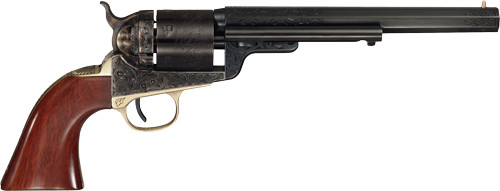

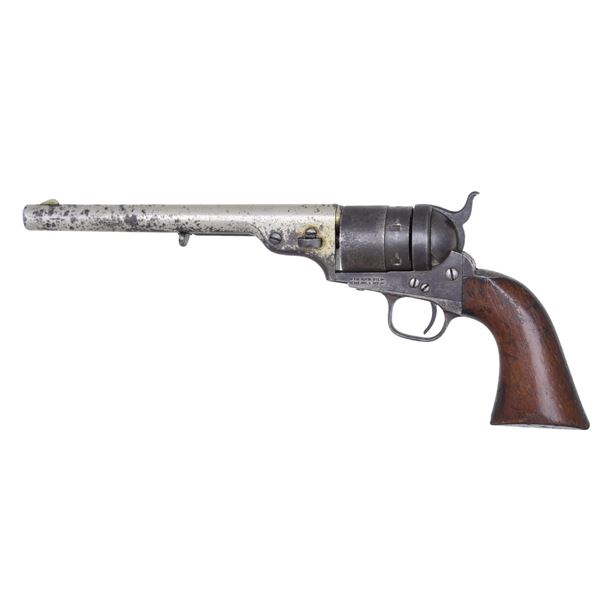
Photo source: cdn11.bigcommerce.com, cimarron-firearms.com, dygtyjqp7pi0m.cloudfront.net
Colt Richards-Mason Conversion
Colt Richards-Mason Conversion revolver in .44 Colt: specs, history, ammo and Colorado legal notes from the CO Boots gun library. Want hands-on time with a firearm like the Colt Richards-Mason Conversion? Our certified instructors cover safe handling, operation and marksmanship in every firearms training class.
| Library ID | GT-122 |
|---|---|
| Manufacturer | Colt's Manufacturing Company |
| Type | Revolver |
| Caliber | .44 Colt |
| Action | Single-action |
| Barrel Length | 7.5 inches |
| Country of Origin | United States |
| Year of Production | 1865 |
| Production Status | Discontinued |
| Typical Users | Civilians, Military |
| Rating | 4.2 |
Colt Richards-Mason Conversion: Technical Specifications
The Colt Richards-Mason Conversion is a notable revolver model that transitioned the Colt Model 1860 Army into a metallic cartridge firearm. Key specifications include:
- Caliber: Typically chambered in .44 Colt or .44-40 Winchester.
- Barrel Length: Common configurations feature a barrel length of 7.5 inches, although variations exist.
- Weight: Approximately 2.5 pounds (around 1.13 kg).
- Material: Constructed primarily from blued steel with a brass trigger guard, featuring wooden grips.
- Engineering Aspects: The Richards-Mason Conversion utilized a unique system that replaced the percussion cylinder with a new, elongated cartridge cylinder, allowing for a more reliable ignition system. The revolver's design included a loading gate on the right side and a rebated cylinder, which was a significant advancement in firearm technology for its time.
This model exemplified the shift from cap-and-ball to cartridge-based firearms in the late 19th century.
Colt Richards-Mason Conversion: Performance Characteristics
The Colt Richards-Mason Conversion, produced in the late 19th century, is a notable transition from cap-and-ball revolvers to cartridge-firing firearms. Accuracy is generally good for its time, with a smooth bore and the rifled barrel aiding in precision, suitable for its intended use as a sidearm. Reliability is commendable, though it can be affected by the age of the firearm and the condition of its components; proper maintenance is crucial. Handling is enhanced by its revolver design, with a manageable weight that allows for comfortable carry and quick deployment. The rate of fire is limited compared to modern firearms, as it operates on a single-action mechanism, requiring the hammer to be cocked before each shot. Overall, the Colt Richards-Mason Conversion represents a significant evolution in firearm technology, balancing historical significance with practical performance metrics for its era.
Colt Richards-Mason Conversion: Design Features
The Colt Richards-Mason Conversion, developed in the late 19th century, features a distinctive design that marks a transition from cap-and-ball revolvers to cartridge-firing models. Ergonomically, it retains the classic Colt revolver grip, providing a comfortable hold that aligns with the shooter's hand.
Safety mechanisms include a half-cock notch, which prevents the hammer from falling unless fully cocked, enhancing user safety. The design has a solid frame, ensuring durability and stability during firing.
Aesthetically, the Richards-Mason Conversion showcases elegant lines, often adorned with ornate engravings and finishes that reflect the craftsmanship of the era. The innovative feature of this model is its conversion cylinder, allowing the use of metallic cartridges while maintaining the revolver's original profile.
Overall, its combination of historical significance, functional ergonomics, and artistic design makes the Colt Richards-Mason Conversion a notable piece in firearm history.
Colt Richards-Mason Conversion: Historical Context
The Colt Richards-Mason Conversion, developed in the late 1860s, transformed Colt's cap-and-ball revolvers into cartridge-firing models. Following the Civil War, demand for more efficient firearms spurred innovations. The design was named after firearms designer William Mason and Colt's official, Charles Richards.
The conversion utilized a simple mechanism to allow the use of metallic cartridges, specifically the .44 caliber, enhancing reliability and speed of fire. The first conversions emerged around 1872, with the Colt Army Model 1860 and Navy Model 1851 being notable examples.
These revolvers saw use in various conflicts, including the Indian Wars and by lawmen and outlaws of the Old West. The Richards-Mason design influenced later developments, paving the way for subsequent Colt models and other manufacturers, marking a significant shift from percussion to cartridge revolvers, which became the standard in handgun design. Its legacy endures in modern handgun mechanics.
Colt Richards-Mason Conversion: User Experience
The Colt Richards-Mason Conversion, a historical revolver, is praised for its unique blend of classic design and functionality. Users appreciate its comfortable grip, which allows for extended shooting sessions without discomfort. The revolver's weight and balance contribute to a stable shooting experience, enhancing accuracy.
Ease of use is a significant highlight, as the conversion to metallic cartridges simplifies loading and firing compared to earlier cap-and-ball models. Many users find the operation intuitive, making it accessible for both novice and experienced shooters.
Durability is generally rated highly; the robust construction withstands regular use, though some users note that as a vintage firearm, it may require occasional maintenance to keep it in optimal condition.
Common complaints include the relatively limited capacity compared to modern firearms, and some users express concerns about the availability of parts and ammunition. Overall, the Colt Richards-Mason Conversion is celebrated for its historical significance and practical shooting experience.
Colt Richards-Mason Conversion: Ammunition Information
The Colt Richards-Mason Conversion is a notable transitional firearm that converted the Colt 1860 Army revolver from cap and ball to metallic cartridge operation. It primarily utilized the .44 Colt cartridge, which was a centerfire round designed specifically for this conversion. The .44 Colt cartridge features a 200-grain bullet with a diameter of approximately .454 inches.
While the Colt Richards-Mason Conversion is designed for .44 Colt, it can also fire .44 Russian cartridges due to their similar dimensions, although performance may vary. It is important to note that the revolver is not compatible with modern .44 Magnum or .44 Special cartridges due to the pressure levels and dimensions.
For optimal performance, using specially manufactured or original .44 Colt rounds is recommended, as these cartridges provide the best fit and reliability. Additionally, hand-loaded ammunition tailored for the Richards-Mason can enhance performance, ensuring proper pressure and bullet weight for accuracy and safety.
Colt Richards-Mason Conversion: Usage Tips and Best Practices
The Colt Richards-Mason Conversion is a historic revolver that requires careful handling and maintenance. Here are some tips:
Cleaning and Maintenance:
1. Disassembly: Follow the manufacturer's guidelines to disassemble for cleaning. Avoid forcing parts.
2. Cleaning: Use a soft brush and patches to clean the barrel and chambers. Ensure all fouling is removed.
3. Lubrication: Apply a light oil to moving parts and the cylinder axis. Use minimal oil to avoid attracting dirt.
4. Storage: Store in a dry environment, ideally with silica gel packs to prevent moisture.
Shooting Tips:
1. Ammunition: Use appropriate, quality ammunition designed for conversions. Avoid overpressure loads.
2. Grip: Maintain a firm grip to control recoil. Practice aiming at a consistent target.
Common Mistakes:
1. Neglecting Maintenance: Regular cleaning prevents rust and malfunction.
2. Incorrect Loading: Ensure proper loading sequence and avoid overloading the cylinder.
3. Improper Grip: A loose grip can lead to inaccurate shooting and potential misfires.
Stay safe and enjoy this classic firearm responsibly!
Legal Considerations in Colorado
The Colt Richards-Mason Conversion, a revolver produced in the 1870s, is classified as an antique firearm under U.S. federal law due to its age (manufactured before 1899). This classification means it is not subject to the same regulations as modern firearms, allowing civilian ownership without a federal background check.
State regulations vary. Some states treat antique firearms like modern ones, requiring permits or background checks, while others have more relaxed rules. For instance, in California, antique firearms are exempt from many restrictions, while New York has stricter controls.
Notable legal cases specifically involving the Colt Richards-Mason are rare, but antique firearms have been involved in broader legal discussions about firearm regulations and ownership rights, particularly in cases concerning the definition of "antique" versus "modern" firearms. Always check local laws for the most current regulations.
Colt Richards-Mason Conversion: Reviews and Ratings
User reviews for the Colt Richards-Mason Conversion often highlight its historical significance and unique design, appealing to collectors and enthusiasts. Many users praise the firearm's reliability, noting that it functions well with proper maintenance and care. Accuracy is frequently mentioned, with several reviewers appreciating its precision for both target shooting and historical reenactments.
However, some users have encountered issues with the fit and finish, suggesting that quality control can vary. Customer service experiences are mixed, with some users reporting prompt and helpful responses, while others describe delays and unhelpful interactions.
Overall satisfaction tends to be positive, especially among collectors who value the firearm's craftsmanship and heritage. While some concerns exist regarding consistency in quality and service, the Colt Richards-Mason Conversion is generally regarded as a worthwhile addition for those interested in vintage firearms.
Colt Richards-Mason Conversion: Appearances in Media
The Colt Richards-Mason Conversion, a model of revolver, has appeared in various films, TV shows, and video games. Here’s a brief list of notable appearances:
Movies:
1. The Good, the Bad and the Ugly (1966) - The revolver is used by various characters throughout the film.
2. The Outlaw Josey Wales (1976) - Featured prominently in the hands of the main character.
3. Tombstone (1993) - Various characters use this model during gunfights.
TV Shows:
1. Deadwood (2004-2007) - Characters in this Western series utilize the Colt Richards-Mason Conversion.
2. Justified (2010-2015) - The series features period firearms, including this revolver.
Video Games:
1. Red Dead Redemption (2010) - The revolver is included in the game's arsenal, reflecting its historical use in the Old West.
2. Call of Juarez: Gunslinger (2013) - Players can use the Colt Richards-Mason Conversion as part of the game's weaponry.
This list highlights some notable instances where the Colt Richards-Mason Conversion has been depicted in popular media.
Related Firearms in the Library


More Revolver firearmsMore Colt manufacturer firearmsMore United States country firearmsBrowse all firearms