


Photo source: wildwestoriginals.com, imfdb.org, i.redd.it
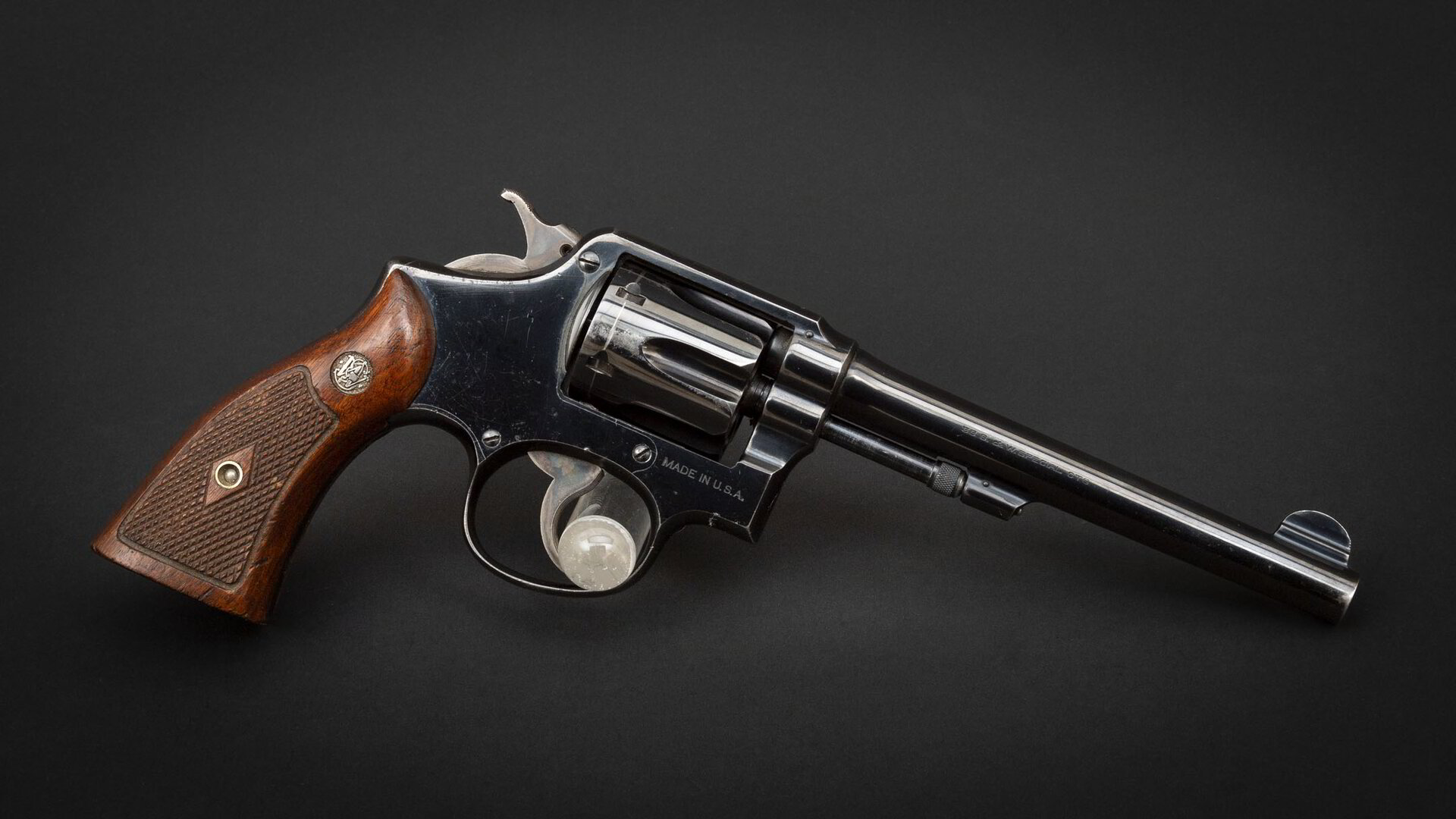
Smith & Wesson Model 3 Schofield
Smith & Wesson Model 3 Schofield revolver in .45 Schofield: specs, history, ammo and Colorado legal notes from the CO Boots gun library. Want hands-on time with a firearm like the Smith & Wesson Model 3 Schofield? Our certified instructors cover safe handling, operation and marksmanship in every firearms training class.
| Library ID | GT-1011 |
|---|---|
| Manufacturer | Smith & Wesson |
| Type | Revolver |
| Caliber | .45 Schofield |
| Action | Revolvers |
| Barrel Length | 7 inches (178 mm) |
| Country of Origin | United States |
| Year of Production | 1875 |
| Production Status | Discontinued |
| Typical Users | Military, civilians |
| Rating | 4.2 |
Smith & Wesson Model 3 Schofield: Technical Specifications
The Smith & Wesson Model 3 Schofield, introduced in the 1870s, is a significant revolver known for its innovative design. Key specifications include:
- Caliber: .45 Schofield, designed for use with .45 Colt cartridges as well.
- Barrel Length: Typically 7 inches, though variations exist.
- Weight: Approximately 2.5 pounds (40 ounces).
- Material: Primarily constructed from steel with a blued finish and walnut grips.
Unique engineering aspects include its break-top design, allowing for quick reloading by pivoting the barrel upward, which was revolutionary for its time. The Schofield also features a single-action mechanism with a notable latch mechanism for securing the barrel. Its ergonomic grip design and balanced weight contributed to its popularity among soldiers and law enforcement during the late 19th century. The Schofield's historical significance and innovative features make it a notable firearm in American history.
Smith & Wesson Model 3 Schofield: Performance Characteristics
The Smith & Wesson Model 3 Schofield, introduced in 1875, is a single-action revolver known for its innovative design and performance characteristics.
Accuracy: The Schofield features a 7-inch barrel, providing good muzzle velocity and effective range, typically achieving solid accuracy at distances up to 50 yards, especially with .44 S&W American cartridges.
Reliability: Renowned for its robust construction, the Schofield is reliable under various conditions. However, due to its age and design, modern ammunition can sometimes lead to misfires in original models.
Handling: The revolver has an ergonomic grip and a smooth trigger pull, making it easy to handle. Its top-break design allows for quick reloading, enhancing usability.
Rate of Fire: The Schofield's single-action mechanism limits its rate of fire compared to modern semi-automatics, but skilled shooters can achieve rapid follow-up shots.
Overall, the Schofield is celebrated for its historical significance, functional design, and balance of power and accuracy.
Smith & Wesson Model 3 Schofield: Design Features
The Smith & Wesson Model 3 Schofield, introduced in the 1870s, is a single-action revolver notable for its innovative design and ergonomic features. Its distinctive top-break mechanism allows for quick reloading, as the entire barrel and cylinder pivot open to the left, facilitating easy cartridge replacement.
Ergonomically, the Schofield features a smooth, rounded grip that enhances comfort and control, accommodating a variety of hand sizes. The trigger is designed for a smooth pull, contributing to accuracy.
Safety features include a transfer bar mechanism that prevents accidental discharge if the revolver is dropped.
Aesthetically, the Schofield showcases elegant lines and a polished finish, often adorned with intricate engraving. Its 7-inch barrel provides a balanced look while enhancing performance.
Innovatively, the Schofield was one of the first revolvers to utilize a swing-out cylinder, influencing future revolver designs. Overall, the Schofield combines functionality with a classic, striking appearance.
Smith & Wesson Model 3 Schofield: Historical Context
The Smith & Wesson Model 3 Schofield, introduced in 1875, was a pivotal revolver in the evolution of firearms. Developed by Smith & Wesson in collaboration with Major George Schofield, it featured a unique hinged design allowing for rapid reloading, a significant advancement over traditional revolvers.
The Schofield was adopted by the U.S. Army in 1875, becoming a standard sidearm during the Indian Wars and the Spanish-American War. Its design influenced subsequent revolvers, promoting the use of break-action mechanisms.
Key milestones include its adoption by the U.S. military and its use by notable figures like Wild Bill Hickok. The Schofield's combination of firepower, speed, and ease of use set the stage for future revolver innovations and established a standard for military sidearms. Its legacy endures in modern revolver designs and serves as an iconic representation of late 19th-century American firearms.
Smith & Wesson Model 3 Schofield: User Experience
The Smith & Wesson Model 3 Schofield is often praised for its historical significance and unique design. Users appreciate its comfortable grip and balanced weight, making it easy to handle and shoot accurately. The single-action mechanism allows for smooth operation, although some find the double-action feature less intuitive.
Durability is generally rated highly; many owners report that the revolver withstands regular use well, maintaining its performance over time. However, some users express concerns about the availability of replacement parts and the difficulty of finding skilled gunsmiths familiar with this older model, which can affect long-term maintenance.
Common complaints include the limited capacity (six rounds) compared to modern firearms and a heavier trigger pull in double-action mode. Nonetheless, many enthusiasts celebrate its historical value and craftsmanship, noting that it’s a reliable and enjoyable firearm for both collectors and shooters.
Smith & Wesson Model 3 Schofield: Ammunition Information
The Smith & Wesson Model 3 Schofield is primarily chambered for the .45 Schofield cartridge, a rimmed revolver round developed in the 1870s. This caliber features a bullet diameter of .454 inches and a case length of 1.1 inches, making it compatible with .45 Colt ammunition, although the Schofield's shorter case length can lead to issues if .45 Colt is used without caution.
For optimal performance, it is recommended to use ammunition specifically loaded for the Schofield, as this ensures proper fit and function. Many manufacturers, including Winchester, Remington, and Hornady, produce .45 Schofield rounds. Specialty loads, such as cowboy action shooting ammunition, often offer lower velocities and lighter bullets, which are well-suited for this revolver. Additionally, lead round-nose or flat-nose projectiles are ideal for historical accuracy and performance, while modern hollow points may provide enhanced terminal ballistics for self-defense purposes, though they are less commonly associated with this historical firearm.
Smith & Wesson Model 3 Schofield: Usage Tips and Best Practices
The Smith & Wesson Model 3 Schofield is a historic revolver known for its unique top-break design. Here are tips for effective use and maintenance:
Usage Tips:
1. Grip: Hold the revolver firmly but not too tightly; a relaxed grip aids accuracy.
2. Sighting: Use the fixed sights; focus on the front sight for better alignment.
3. Stance: Adopt a stable shooting stance, such as isosceles or Weaver, to enhance control.
Cleaning & Maintenance:
1. Disassembly: Follow the manual for safe disassembly; ensure it's unloaded before cleaning.
2. Cleaning: Use a bore brush and solvent for the barrel. Wipe down the cylinder and frame with a soft cloth.
3. Lubrication: Apply a light oil to moving parts and the hinge but avoid over-lubrication.
Common Mistakes:
1. Neglecting Maintenance: Regular cleaning prevents rust and build-up.
2. Overlooking Ammunition: Use only recommended ammunition to avoid damage.
3. Rushing Shots: Take your time to aim; accuracy is key with this revolver.
Legal Considerations in Colorado
The Smith & Wesson Model 3 Schofield, a single-action revolver introduced in the late 19th century, is classified as a curio and relic under U.S. federal law, allowing civilian ownership without the same restrictions as modern firearms. However, state regulations vary significantly. Some states may have restrictions on antique firearms, while others may impose no restrictions at all.
Military use of the Schofield occurred primarily in the late 1800s, notably during the Indian Wars and the Spanish-American War, but it is not in military service today.
Notable legal cases involving the Schofield often revolve around its classification as an antique, which can affect ownership laws and regulations. States like California and New York may have stricter regulations, while others may allow easier access. Always check local laws for specific regulations regarding antique firearms.
Smith & Wesson Model 3 Schofield: Reviews and Ratings
User reviews for the Smith & Wesson Model 3 Schofield highlight a mix of admiration and critique. Many users praise its historical significance and craftsmanship, noting its classic design and solid construction. Reliability is frequently mentioned, with most users reporting dependable performance during use, though occasional issues with extraction and ejection are noted.
Accuracy is another strong point; many users find the Schofield to be precise at various ranges, contributing to overall satisfaction. However, some reviews mention a learning curve for new shooters due to its unique action.
Customer service experiences vary, with some users reporting positive interactions and prompt resolutions, while others encountered delays or unhelpful responses. Overall, the Smith & Wesson Model 3 Schofield garners a generally favorable reception, especially among collectors and enthusiasts, with a few caveats regarding its functionality and customer support.
Smith & Wesson Model 3 Schofield: Appearances in Media
The Smith & Wesson Model 3 Schofield, a notable revolver used in the late 19th century, has appeared in various movies, TV shows, and video games. Here’s a brief list of notable appearances:
Movies
1. The Good, the Bad and the Ugly (1966) - Used by the character Tuco.
2. Unforgiven (1992) - Appears in the hands of several characters.
3. Tombstone (1993) - Featured prominently, especially by characters like Doc Holliday.
4. The Quick and the Dead (1995) - Various characters utilize the revolver.
TV Shows
1. Deadwood (2004-2007) - Featured as a common firearm among characters in the Old West setting.
2. Hell on Wheels (2011-2016) - Used by various characters in this period drama about the construction of the transcontinental railroad.
Video Games
1. Red Dead Redemption (2010) - The Schofield revolver is a prominent weapon in the game.
2. Red Dead Redemption 2 (2018) - Returns as a usable firearm with a similar design.
3. Call of Juarez: Gunslinger (2013) - The revolver is featured as a classic Old West weapon.
These appearances highlight the Schofield's iconic status as a symbol of the Old West and its continued presence in popular culture.
Related Firearms in the Library


More Revolver firearmsMore Smith & Wesson manufacturer firearmsMore United States country firearmsBrowse all firearms